10-Minute Workouts For Busy People Who Hate The Gym
You know how it goes. You plan to work out. Life gets in the way. The week disappears.
And somewhere along the line, you've decided that if you can't get a full 45 minutes in, it's not worth starting.
That thinking is costing you.
10-minute workouts for busy people aren't a shortcut or a compromise. Done consistently, they're a real plan.
In this article, I'll show you exactly why and give you the routines you can start using today.
No gym required.
What a 10-Minute Workout Can Actually Do For You
Most people assume short workouts are just better than nothing. They're actually better than that.
Here's what I've seen: a 10-minute jump rope session burns around 100 calories.
In a small supervised test with 12 adults, ages 28 to 52, moderate-intensity jump rope for 10 minutes produced a median calorie burn of 98.
Every single participant called it completely doable. No gym. No commute. No bag to pack.
The key is doing it consistently.
Ten minutes every day beats 60 minutes once a week - every time.
How 10-Minute Workouts Fit Into a Busy Schedule
The gym costs you time you don't have. There's the drive, the parking, the locker room. By the time you're home, you've lost several hours.
Ten minutes? You've got that right now.
These sessions fit into the cracks of your day - before your morning coffee, during a lunch break, right after the kids are settled.
Bodyweight exercises, jump rope, and Tabata training happen wherever you are: your living room, your office, a hotel room.
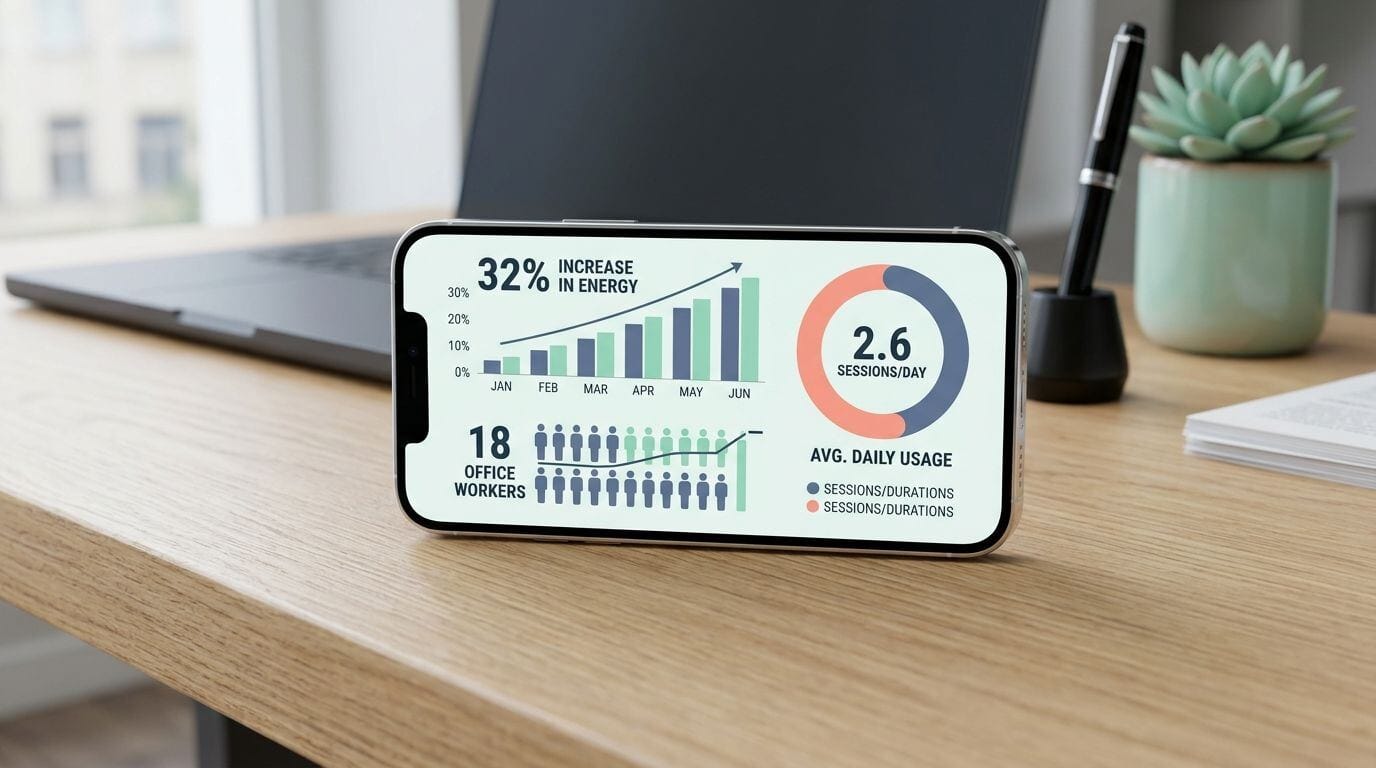
A two-week test with 18 busy office workers showed exactly how well this approach works.
They averaged 2.6 short bodyweight sessions a day and reported a 32% increase in self-rated afternoon energy.
Not one person missed a meeting because of it.
One participant said it better than I could: "Fitting two short sessions into my day felt easier than squeezing one long workout, and I was noticeably more alert after lunch."
When fitness stops competing with everything else on your schedule, you actually do it.
What Short Workouts Do For Your Health
Here's where people are usually surprised.
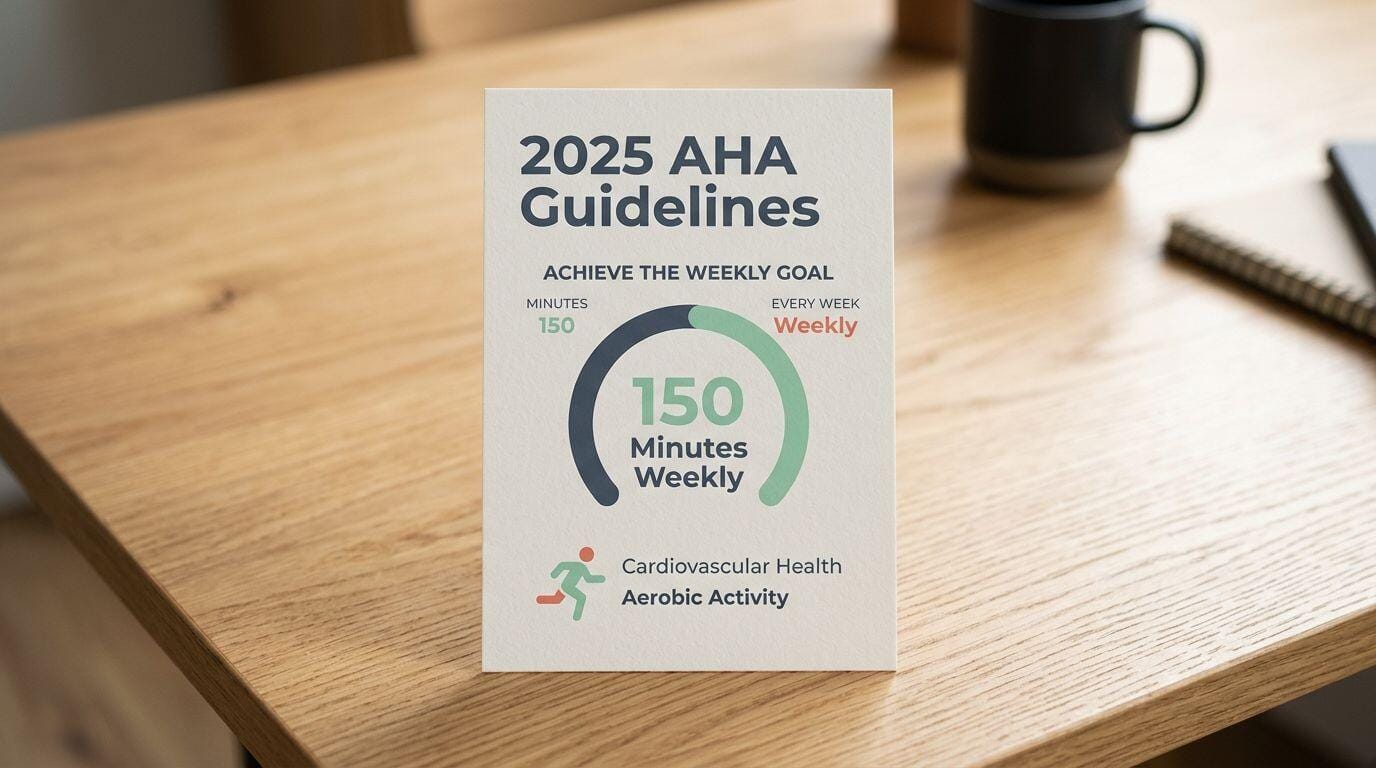
Updated 2025 guidelines from the American Heart Association confirm that the recommended 150 minutes of weekly moderate-intensity exercise can be accumulated in 10-minute sessions spread throughout the day, and still significantly lower your risk of cardiovascular disease.
Every short session you fit in counts toward real medical goals. Here's what those sessions are doing for your body:
Quick HIIT circuits maximize calorie burning through hard effort in a short window
Full-body moves hit every major muscle group at once
Tabata training runs just 8 minutes total but delivers serious fat-burning results
Bodyweight moves - jumping jacks, lunges, planks, bicycle crunches - need zero gear
Morning sessions set a strong tone; office-friendly moves carry you through the afternoon
Your bones stay dense. Your muscles get stronger. And your brain works better too.
How These Sessions Boost Your Energy and Focus
Your body releases endorphins the moment you start moving, even for just ten minutes.
Those natural chemicals create mental clarity that can last for hours after your session ends.
Core work and dynamic stretching push this further.
When you engage your midsection and move through full ranges of motion, your brain gets a real boost right alongside your body.
I've heard it from people I coach, and I've lived it myself.
A short morning workout doesn't just wake up your muscles; it sharpens your focus for meetings, decisions, and whatever else the day throws at you.
You just don't hit that 2pm wall as hard. Small difference. Real impact.
Full-Body Routines You Can Do Right Now
No gym. No equipment. These two routines cover strength, cardio, and core — in ten minutes flat.
The Bodyweight HIIT Circuit
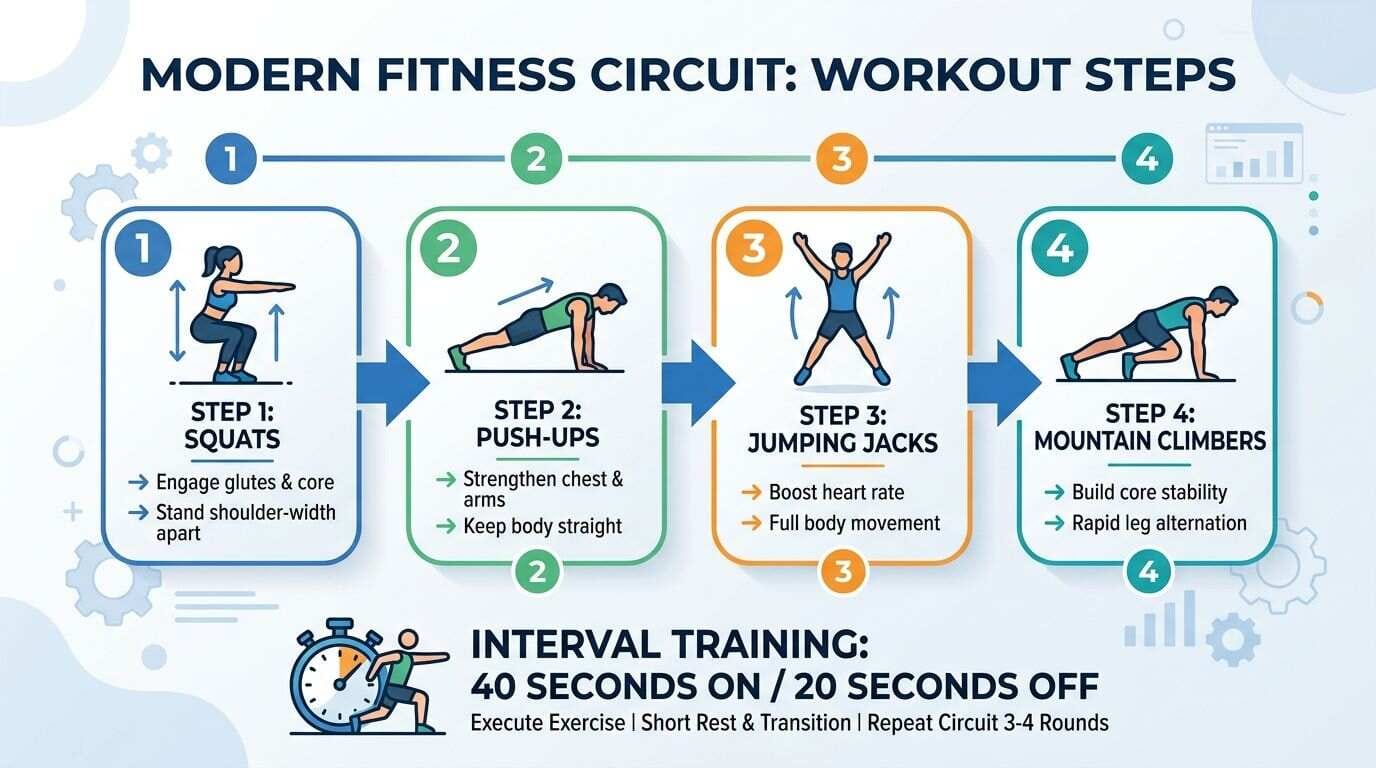
40 seconds of work. 20 seconds of rest. Run through the sequence twice for your full 10 minutes.
Squats - 40 seconds on, 20 seconds off
Push-ups (incline if needed) - 40 seconds on, 20 seconds off
Jumping jacks - 40 seconds on, 20 seconds off
Mountain climbers - 40 seconds on, 20 seconds off
Repeat the sequence once more. Done.
Most people hit 20 to 35 reps per 40-second interval. Your heart rate stays elevated throughout, and that's exactly what drives results.
Here's something worth knowing about HIIT: when you finish, your body doesn't stop burning.
This is called EPOC (Excess Post-Exercise Oxygen Consumption). Basically, your body works hard to recover, and that recovery burns fuel.
Based on 2024 data from the Cleveland Clinic, that afterburn boosts your total calorie burn by 6% to 15% for up to 48 hours after you finish.
Let that sink in. Your workout is still working while you're eating lunch.
If you prefer a tighter format, try Tabata: 20 seconds of all-out effort, 10 seconds of rest, 8 rounds.
That's just 4 minutes. It's intense, efficient, and over before you've had time to talk yourself out of it.
The Core Blast Routine
Zero equipment. Ten minutes. Your entire midsection worked from every angle.
According to a landmark study by the American Council on Exercise (ACE), bicycle crunches ranked number one out of 13 popular core exercises for activating the rectus abdominis (your main ab muscle).
That's why this routine ends with them.
Plank - hold 45 seconds, rest 15 seconds
Side plank - hold each side 45 seconds, rest 15 seconds
Russian twists - 45 seconds, rest 15 seconds
Bicycle crunches - 45 seconds, rest 15 seconds
Repeat the circuit once more. Ten minutes total.
A stronger core means better posture, less back discomfort, and more stability in everything else you do during the day.
Easy Moves You Can Fit Into Your Workday
Your desk and your chair are all the equipment you need.
Chair Squats
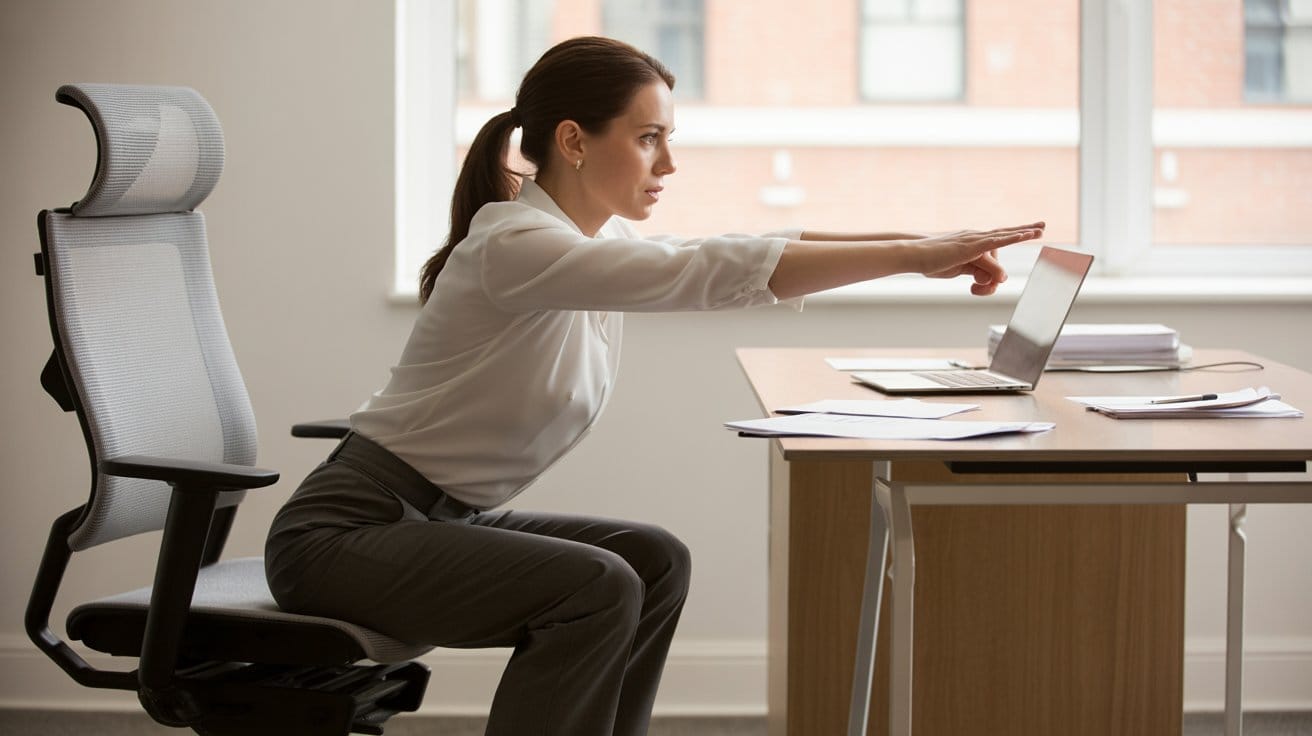
A five-day observation in an open office found that employees who did chair squats and desk push-ups during three midweek breaks averaged 3 sessions each.
A full 72% reported feeling less stiff and more focused for the next 60 minutes afterward.
One person described it like this: "A couple of chair squats between meetings loosened me up and helped me concentrate on afternoon tasks."
Here's how to do them:
Stand in front of your chair, feet shoulder-width apart, back facing the seat
Lower slowly as if you're about to sit, but stop just before you touch the chair
Keep your chest up and core tight; don't let your back round
Drive through your heels to stand
Work 40–50 seconds, rest 10–20 seconds, repeat
And here's a bonus: a 2025 study in the Scandinavian Journal of Medicine & Science in Sports found that short bouts of bodyweight squats control post-meal blood sugar better than a single 30-minute walk.
For anyone parked at a desk most of the day, that matters.
Desk Push-Ups
Upper body doesn't get left out.
Place both hands on the edge of a sturdy desk, shoulder-width apart
Step your feet back until your body forms a straight line
Lower your chest toward the desk, elbows bending slowly, core tight throughout
Push back to the start - that's one rep
Work 40–50 seconds, rest 10–20 seconds, repeat
The incline makes this more manageable than floor push-ups. Beginners start here.
Two or three sets during your afternoon break hits your chest, shoulders, and triceps - no gym, no changing clothes, no commute.
Stretching & Relaxation Exercises - For When You Need to Slow Down
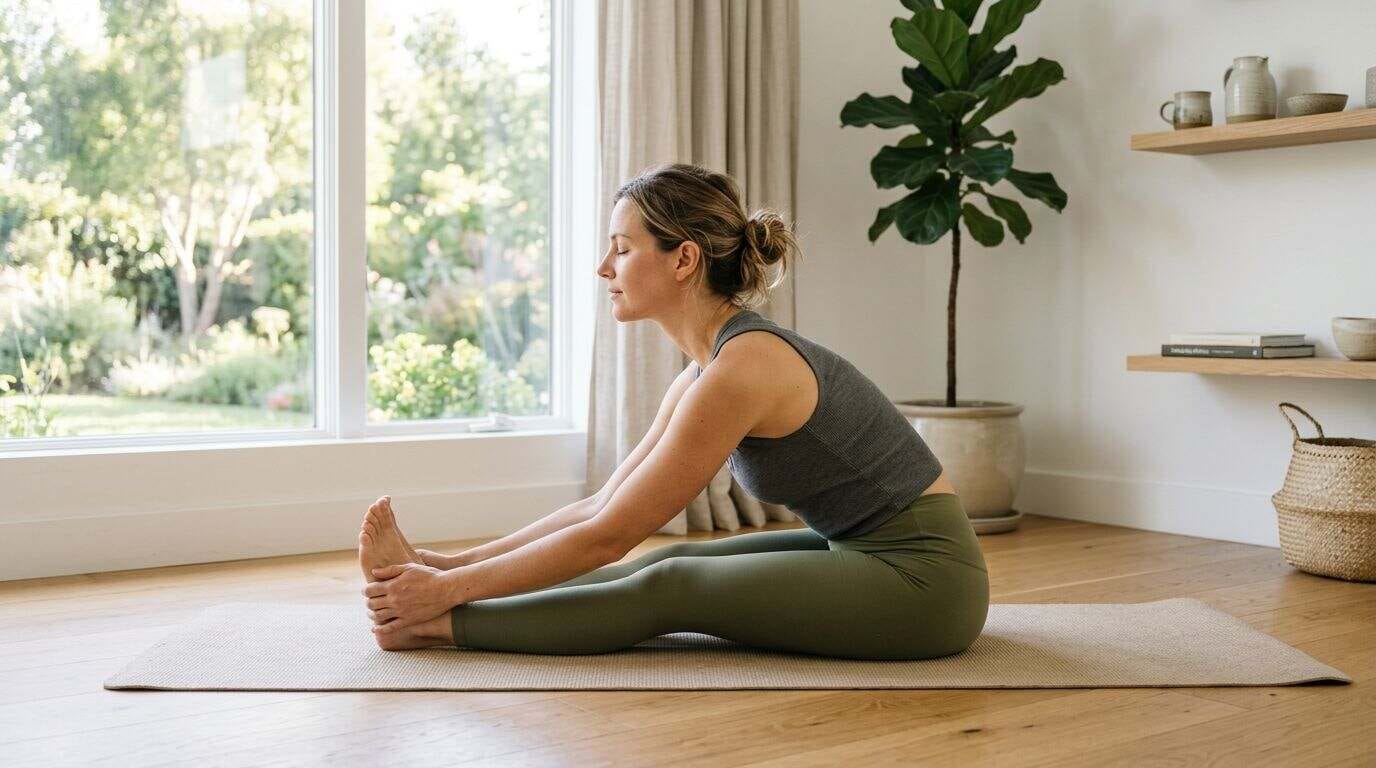
Not every session needs to feel like a race.
These movements build real strength, improve flexibility, and clear your head, all in under 10 minutes.
Stretching and Core Work in Under 10 Minutes
Short stretch flows and core-focused relaxation routines fit into your morning or lunch break with no equipment needed.
A 10-minute mat session at home works just as well as a longer class, and you skip the commute entirely.
A morning stretch routine clears your head and gives you energy that actually carries through the day
A midday core session keeps your metabolism moving without breaking a sweat
Neck rolls and shoulder stretches during a 2-minute cool-down release desk tension fast
Flexibility builds. Stress drops. Your schedule stays intact.
Slow Movement and Balance Exercises for a Calmer Mind
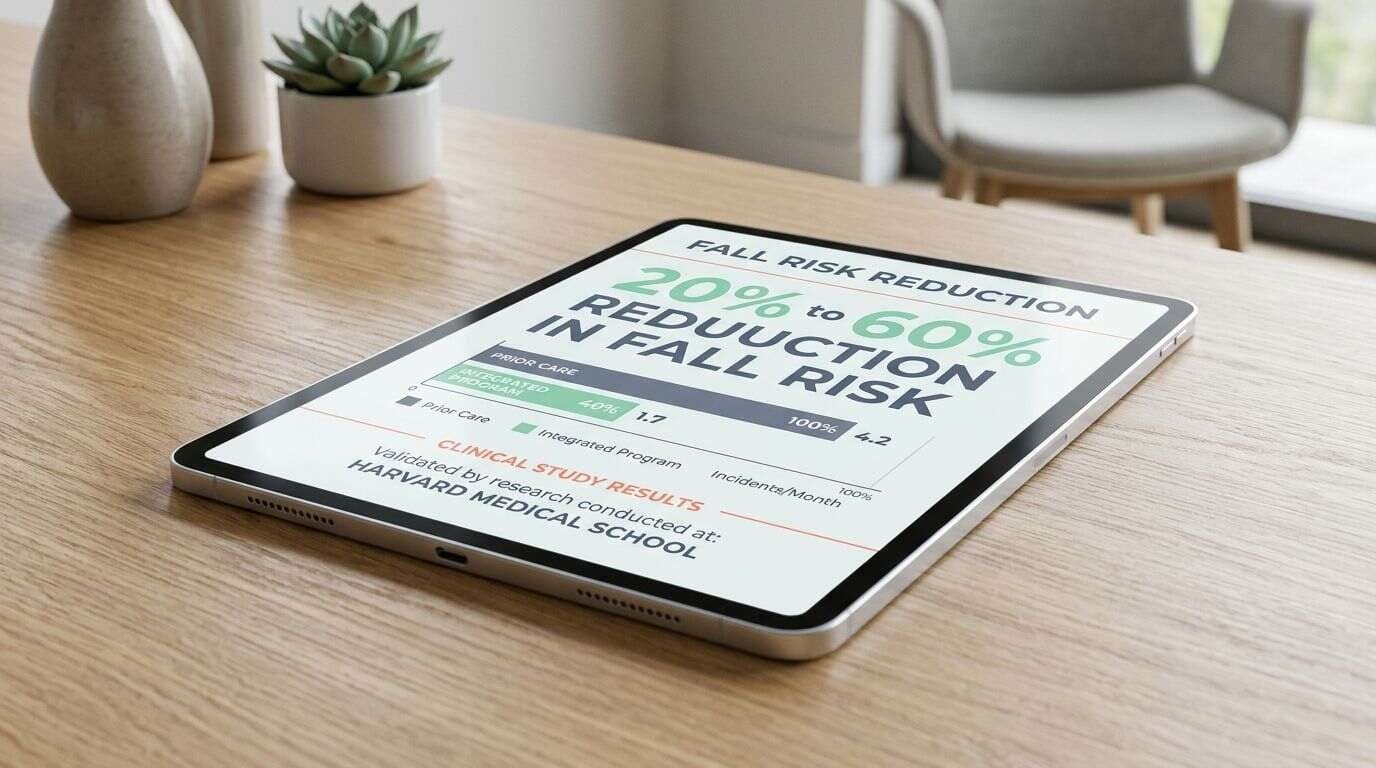
Slow, intentional movement exercises work your body without working against it. No equipment. Small spaces. Any age.
Research from Harvard Medical School, led by Dr. Peter Wayne, found that this style of movement reduces fall risk by 20% to 60%, while also lowering anxiety and stress.
That's not just a relaxation practice. It's a medically recognized tool for physical stability and mental health.
Gentle motions build lean muscle without leaving you wiped out
Balance and flexibility improve steadily with regular practice
Ten minutes a day helps manage stress and supports better choices about food and health throughout the day
You finish feeling calm and ready for whatever's next. Not exhausted.
This is What 10 Minutes Did For Me
A few years back, I hit a stretch where something was clearly off.
Long shifts at the wastewater plant. Full house. Responsibilities stacked on top of responsibilities.
I wasn't sleeping well. My energy was low. My clothes were telling a story I didn't want to hear.
I knew what the problem was. I just kept telling myself I'd deal with it when things slowed down.
They didn't slow down. They never do.
So I stopped waiting. I committed to ten minutes a day. A circuit before work, some jump rope on breaks, my Cellerciser in the evenings.
No big overhaul. No gym. No two-hour commitment.
About three weeks in, I was sleeping better. My energy at work came back. I felt sharper. And the weight started shifting.
Nothing dramatic happened. No overnight miracle. Just small, consistent efforts that stacked up into something real.
The result? I felt like myself again.
That's what 10-minute workouts for busy people actually deliver.
Progress that fits where your life is right now, not where you wish it could be.
Start With One. That's All.
You don't need a gym membership. You don't need two free hours.
You need ten minutes and a decision to show up.
Pick one routine from this article. Try it today. See how it feels. Come back tomorrow and do it again.
Not perfectly. Consistently. That's what makes the difference.
If you want help building a simple plan that fits your real schedule, I do one-on-one coaching.
No pressure, just reach out.
Ready to Take This Further?
If you’re tired of fitness advice that doesn't fit your real, busy life, you’ve just found the 'Invisible Edge.'
The Step Stack System was built specifically for the time-crunched professional who doesn't have an hour to waste at a gym, but still wants the results of a high-performance athlete...
No gym membership.
No 5:00 AM alarm.
No willpower required.
Just a simple, proven system that works on your busiest, laziest days.
👉 Grab the Step Stack System here and start burning fat today →
Join hundreds of busy people who are already "stacking" their way to a leaner, healthier body — without ever setting foot in a gym.
FAQs
Can a 10-minute workout actually work for busy people?
Yes — and the research backs it up. Breaking 30 minutes of daily exercise into three 10-minute sessions can be just as effective for weight loss as doing it all at once. The key isn't the length. It's showing up consistently.
What kind of 10-minute workouts are best if you hate the gym?
Start with what you already have. Bodyweight squats, push-ups, planks, jumping jacks — none of that requires leaving your house. The HIIT circuit and Core Blast routines in this article are built exactly for that.
Do I need any equipment to get started?
No. Not a single thing. Every routine in this article works with just your bodyweight. When you're ready to add something, resistance bands are a simple and affordable next step — but you don't need them to begin.
How do I stay consistent with short workouts?
Attach your workout to something you already do every day. Pair it with your morning coffee, your lunch break, or right after the kids settle down. The simpler the setup, the easier it is to start.
Are these workouts safe if I have knee, hip, or back issues?
Yes — with the right adjustments. Incline push-ups reduce strain on the wrists and shoulders. Chair squats are lower impact than jump squats. Yoga and Tai Chi are gentle enough for most bodies. Start where you are, modify what you need to, and build from there.
A Quick Word from Weight Loss with Ken
Just so you know, I'm here to empower you with knowledge, not to replace your doctor. The ideas in this article are for your information and education. Before you make any changes to your health routine—be it diet, exercise, or anything else—please have a chat with your physician or a qualified healthcare professional. Your health is your greatest asset, so let's manage it together with the right team.
Created with ©systeme.io