The Secrets of Exercise Stacking Your Way to Health
I work at a wastewater treatment plant. Long shifts, early mornings, and zero energy left for the gym when I got home.
But a few years back, my clothes were getting tight, I was winded on stairs, and my energy hit a wall every afternoon around three.
I didn't join a gym. I started doing squats while my coffee brewed. Short walks during phone calls. Pushups before shutting my laptop.
Six months later, I was down weight, sleeping better, and breathing easier.
No gym. No major schedule changes. Just small movements attached to things I was already doing every day.
That's exercise stacking. And it's what I coach every day.
What Is Exercise Stacking?
Exercise stacking means attaching short movements to habits you already do every single day.
You're not finding new time for exercise. You're using time you're already spending.
Brew your morning coffee? Do ten squats while it drips. Take a phone call? Walk around the house instead of sitting at your desk.
Your existing habits become the trigger, and the movement rides along with them.
Most people assume building a new habit takes 21 days. Research shows it actually takes closer to 10 weeks.
A 2012 study published in the British Journal of General Practice found that habit formation averages around 66 days.
Exercise stacking cuts through that struggle because instead of building a brand-new habit from scratch, you're borrowing the mental momentum of routines you never miss.
And the results are the real deal.
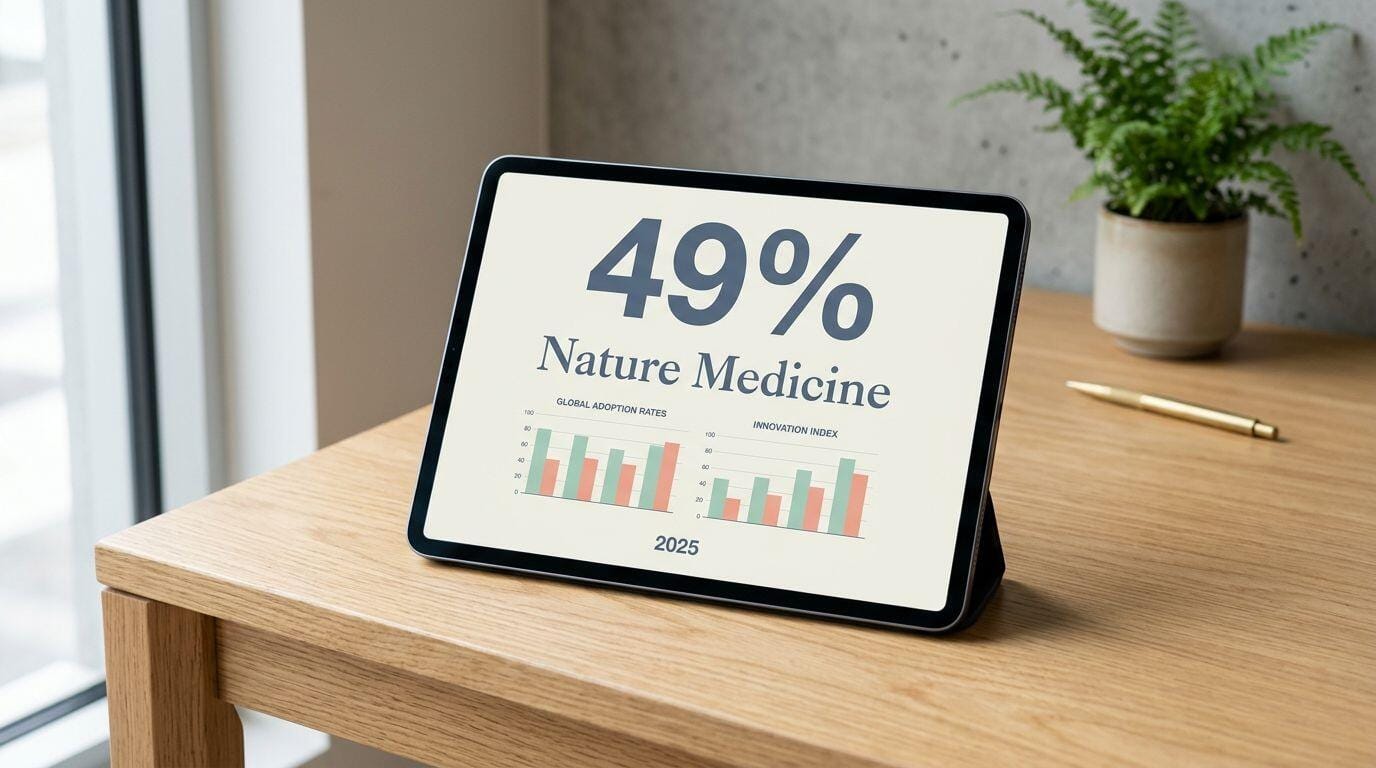
A 2025 study published in Nature Medicine found that just three to four 1-minute bursts of vigorous activity per day can reduce cardiovascular death risk by up to 49 percent.
Ten squats here. A two-minute walk there. These micro-sessions genuinely move the needle.
The American College of Sports Medicine backs this approach. Short, consistent movement bursts deliver real fitness results even without a gym.
Why Exercise Stacking Works
When you pair movement with something you already do every day, your brain starts treating the two things as one habit, not two.
You stop fighting your schedule. The movement just happens. You're also not relying on motivation or willpower.
Those both fade. But your morning coffee doesn't. Your phone calls don't. Your lunch break doesn't. Those are already locked into your day.
Your body expects them, and your schedule protects them.
Research from the British Journal of Health Psychology found that linking a new habit to a specific existing routine, called "implementation intentions", boosts habit success rates to 91 percent.
That's compared to just 34 percent for people relying on motivation alone. The difference is enormous.
Stacking movement onto what you already do removes the biggest barrier: deciding when to exercise.
You don't have to rearrange your whole day. The decision is already made.
Finding Hidden Movement Time in Your Day
You probably have more movement time than you think. You just can't see it yet.
Start by mapping out your typical day, hour by hour. Mark the spots where you're sitting.
Most people find they're sitting during their morning coffee, at their desk, during lunch, and on the couch at night.
A 2025 meta-analysis from the American Heart Association's Circulation Research found that over 25 percent of American adults report zero leisure-time physical activity.
And sitting more than 10.4 hours a day more than doubles the risk of all-cause mortality.
That's a lot of sitting, and a lot of room to move more without adding a single extra hour to your schedule.
This isn't about finding new time. It's about using the time you already spend.
Look at your commute. Your meal prep. Your phone calls. Your household chores. Those are all pockets of movement waiting to happen.
The Mayo Clinic confirms that breaking up long sitting periods reduces chronic health problems and cardiovascular risk.
Your schedule isn't the enemy here; it's your best tool.
Here's where exercise stacking fits easily:
Stretch for five minutes while your coffee brews
Do light stretching or Pilates right after brushing your teeth
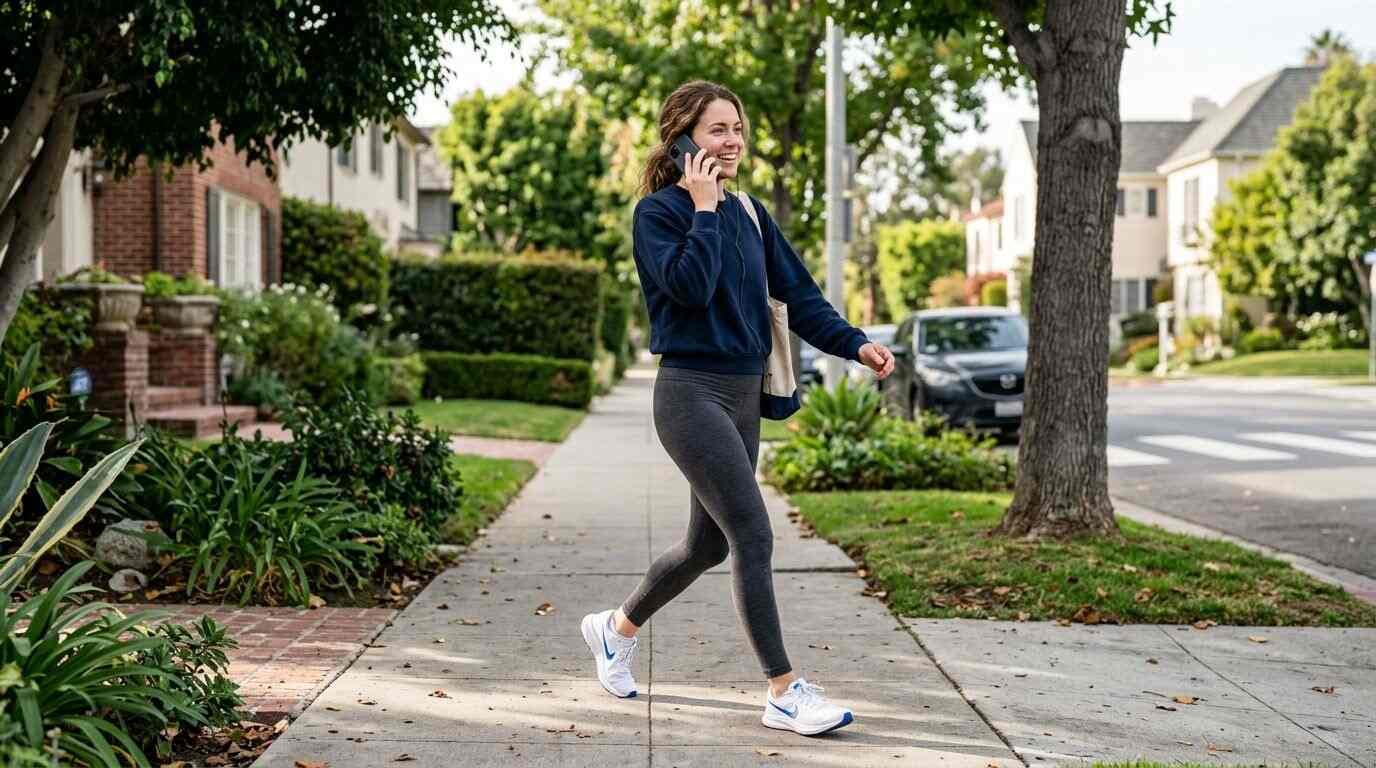
Walk during phone calls instead of sitting at your desk
Take the stairs when you hear a door close
Do calf raises while waiting for something to load
Read More: How to Stack Exercise Into Your Existing Daily Habits
Exercise Stacking Examples You Can Start Today
Here are movements that fit into everyday life without extra time or equipment.
Seniors benefit from this kind of stacking just as much as anyone else. The moves are low-impact and easy to adjust.
In the morning:
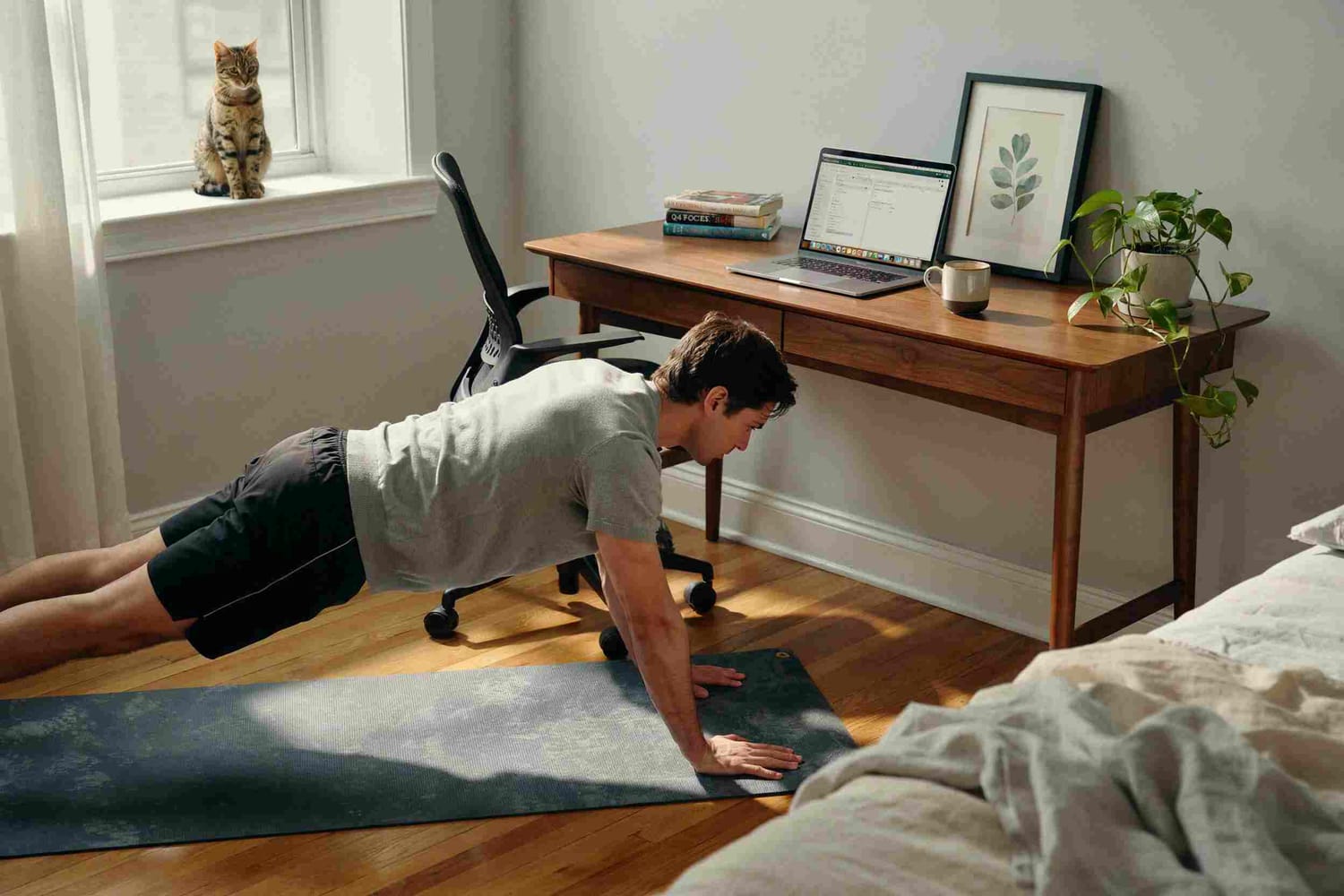
Hold a wall sit for 15 seconds while your coffee brews. Stretch while the shower warms up. Do 10 push-ups after shutting your laptop.
In the evening:
Dance while cooking dinner. Foam roll for five minutes after dinner. Do a short bodyweight circuit during commercial breaks.
A small trial tested the morning coffee stretch routine with 14 participants over six weeks.
By week four, 12 of them were doing the stretch at least five days per week, averaging about two minutes per session.
One participant said it felt completely automatic by week three.
That's how exercise stacking works. It stops feeling like exercise and starts feeling like just part of the morning.
You can also break movement into chunks. Three 10-minute sessions spread across your day adds up to 30 minutes of real activity.
The 2018 Physical Activity Guidelines confirmed that short movement bursts throughout the day work just as well for weight loss as one longer gym session.
How to Stay Consistent With Exercise Stacking
Start Small — The Two-Minute Rule
Start with movements so small they feel almost too easy.
James Clear's Atomic Habits calls this the Two-Minute Rule: scale any new habit down to two minutes or less. That removes the mental friction of starting.
You're not committing to a full workout. You're just moving for two minutes.
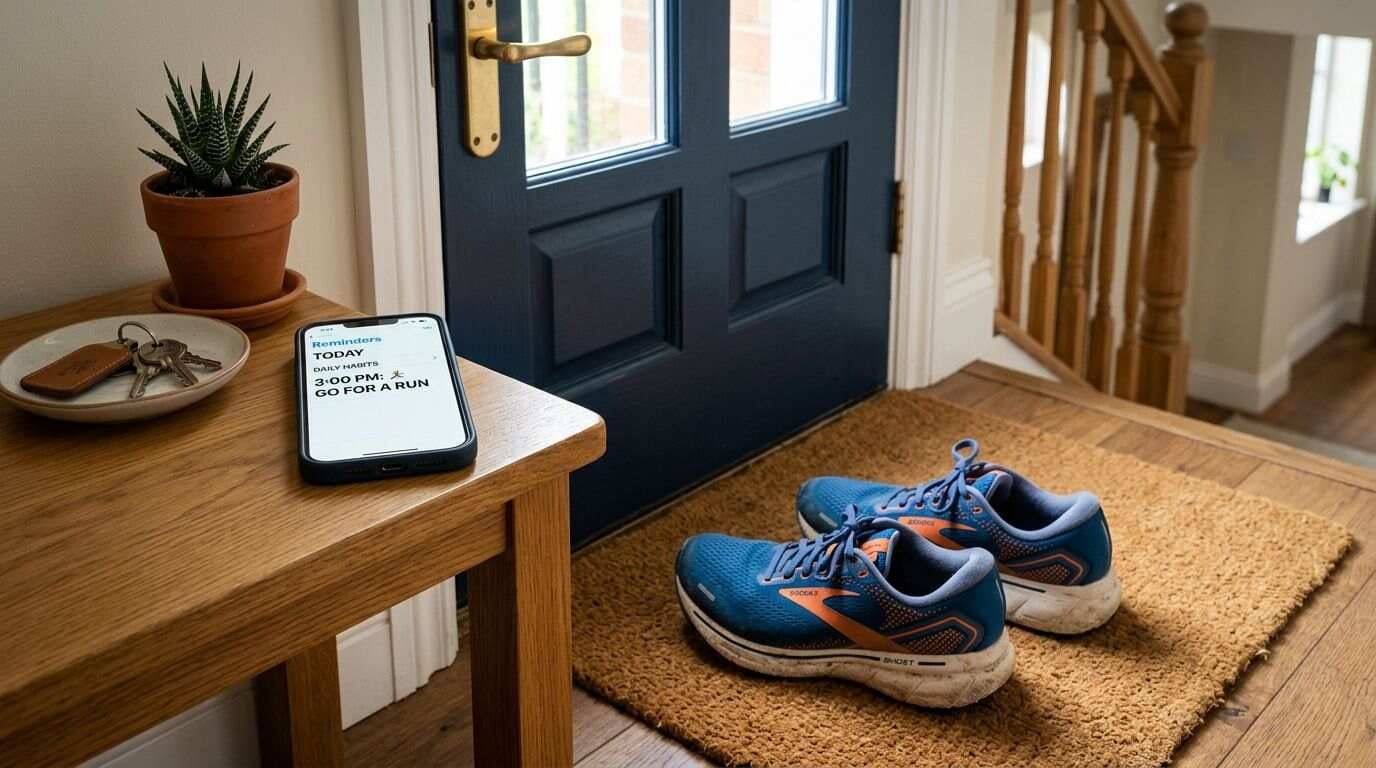
Lay your workout shoes by the door before bed. Do five minutes of stretching after lunch instead of scrolling your phone.
One week of five-minute sessions adds up to 35 minutes of real activity. That's genuine progress without the gym dread.
A workplace trial showed just how effective small changes can be.
30 office workers replaced 60 percent of their non-confidential phone calls with walking breaks over two weeks.
The result: an average of 2,100 additional steps per day and an 18 percent climb in perceived energy scores.
One participant said it added real steps without rearranging anything.
Use Reminders and Triggers
Your phone buzzes. Your coffee brews. Your alarm goes off. Those are perfect moments to slip movement in.
And you don't need to feel guilty about skipping the gym to make it happen.
Set a phone reminder for 3 p.m., right when your energy dips. Lay your shoes by the door the night before. Let the sound of your coffee maker become the cue to move.
A home trial put this to the test with 20 users over four weeks: shoes by the door, a 3 p.m. phone reminder, and a five-minute walk when it fired.
85 percent responded to the first reminder.
Average compliance hit 4.6 out of 7 days per week. One participant said the shoes by the door made the reminder feel like less effort to act on.
Visual cues plus phone nudges remove friction. Apps like Centr can send movement nudges at the right time too.
The decision is already made. You just move.
Try Different Movements
Not every movement fits every person. And that's completely fine.
Joe Wicks proved this during the COVID-19 pandemic when millions ditched gym memberships and found real success with home-based routines instead.
Maybe you hate treadmills but love walking your dog. That's cardio.
ACSM guidelines suggest functional fitness training two to three days per week and flexibility work two to three days per week, giving you a lot of room to find what actually feels good.
Hate the treadmill? Walk your dog or in your neighborhood instead
Love music? Dance in your kitchen for 10 minutes
Short on time? Try back-to-back stacking: 20 minutes of movement followed by 30 minutes of strength work
Work from home? Use quick movement snacks at your desk throughout the day
Start with one experiment this week.
Pick something that sounds less painful than your usual routine. Try it for five days. If it works, keep it. If it doesn't, try something else.
This is about finding what you'll actually do, not finding perfection.
Tracking Progress and Staying Accountable
Set Realistic Goals
Skip the "lose 50 pounds by summer" goal. Pick something small and measurable instead.
Walk an extra 10 minutes three times per week, or do five push-ups after your morning coffee. Something you can actually check off.
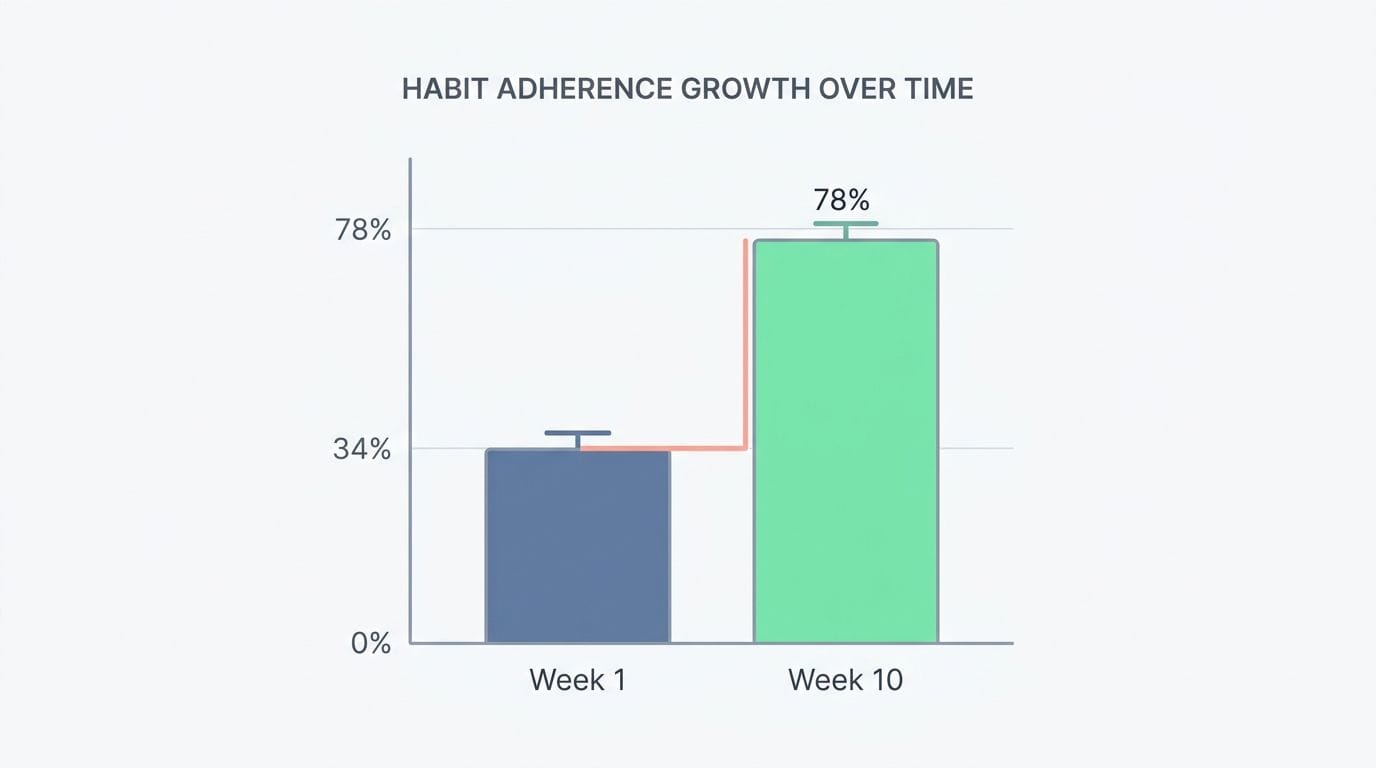
A 10-week pilot study tracked participants who logged three micro-workout stacks per day using a basic checklist.
In week one, adherence sat at just 34 percent of planned stacks completed.
By week ten, it jumped to 78 percent, and the median number of weekly stacks rose from 9 to 22.
One participant said seeing the checkmarks made showing up feel less like a choice and more like part of the day.
Track what matters to you. How your clothes fit, your energy, or the number of workouts completed.
Simple pen-and-paper logs or a basic app both work fine.
Build in one to two rest days per week for recovery and mark those on your calendar too.
That keeps burnout from creeping in and stops one missed day from becoming an excuse to quit entirely.
The Mayo Clinic found that spreading exercise throughout the week works just as well as cramming it into fewer days.
Every stack you do counts. No matter when it happens.
Find an Accountability Partner
You don't have to do this alone.
A landmark study from the American Society of Training and Development found that committing to a goal with an accountability partner and scheduling specific check-ins increases your probability of completing that goal to 95 percent.
That's compared to going it alone.
Apps like Peloton offer built-in community features and tracking tools that let you see your daily movement right on your phone.
You log your exercise stacking sessions, watch your streaks grow, and feel that small rush when you hit a milestone.
But an accountability partner doesn't have to be an app. It can be a friend, a coworker, or someone in an online group who checks in on you.
Either way, having someone in your corner changes things.
Reward Your Milestones
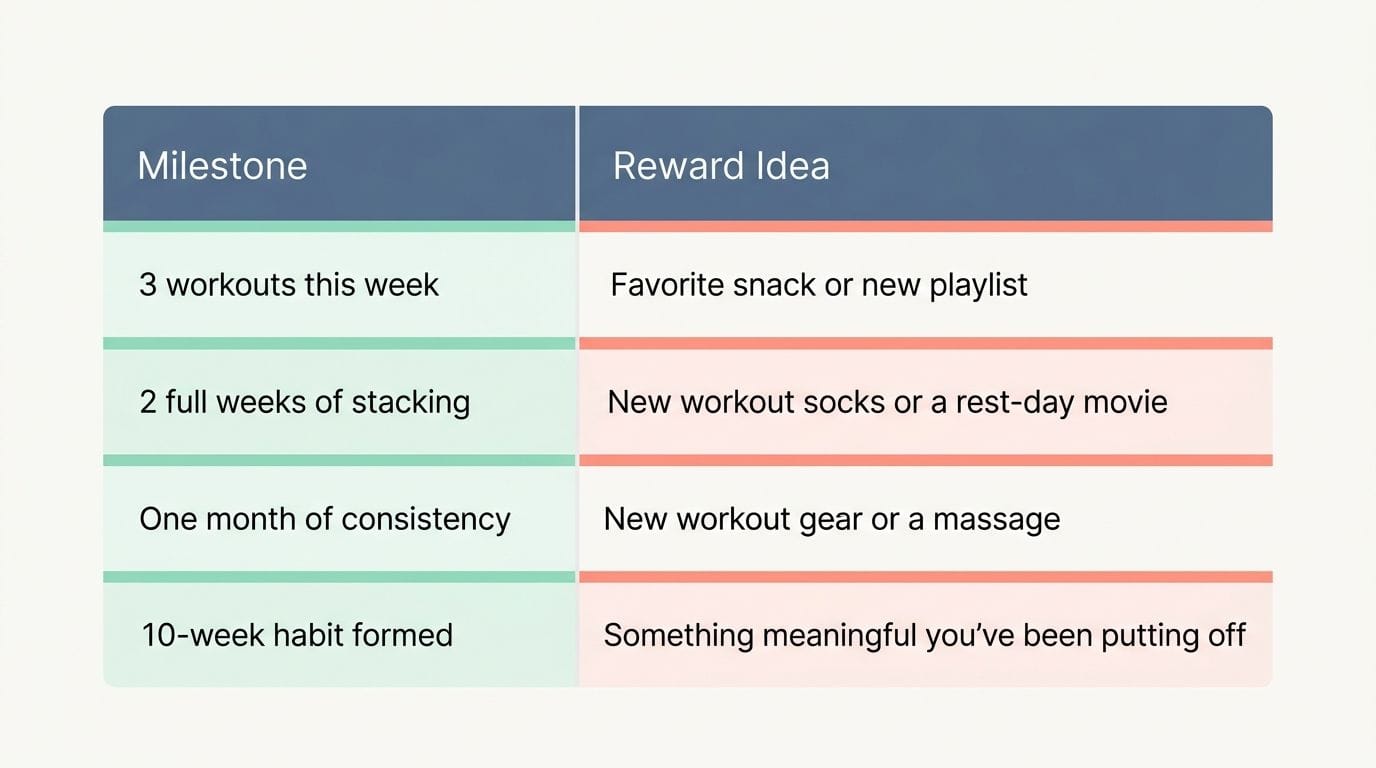
Every time you hit a goal, your brain releases chemicals that make you feel good.
That feeling sticks, and it makes the next workout easier to start. So celebrate the small wins, because they matter more than most people think.
The ACSM's Health and Fitness Journal backs this up with data showing how rewards shape behavior over time.
This isn't bribing yourself. It's training your brain to connect movement with something positive.
Conclusion
Exercise stacking turns movement into something that fits your life — not something that fights it.
A stretch while your coffee brews. A walk during a phone call. Ten push-ups before you shut your laptop.
These small sessions add up, and the research backs that up clearly.
Dr. Wes Troyer from the Mayo Clinic notes that starting small also protects you from overuse injuries.
People who jump into intense exercise too fast get hurt.
Pain that disrupts your sleep or shows up during daily tasks is a signal to slow down. Build gradually, and you stay in the game long-term.
Here's where to start:
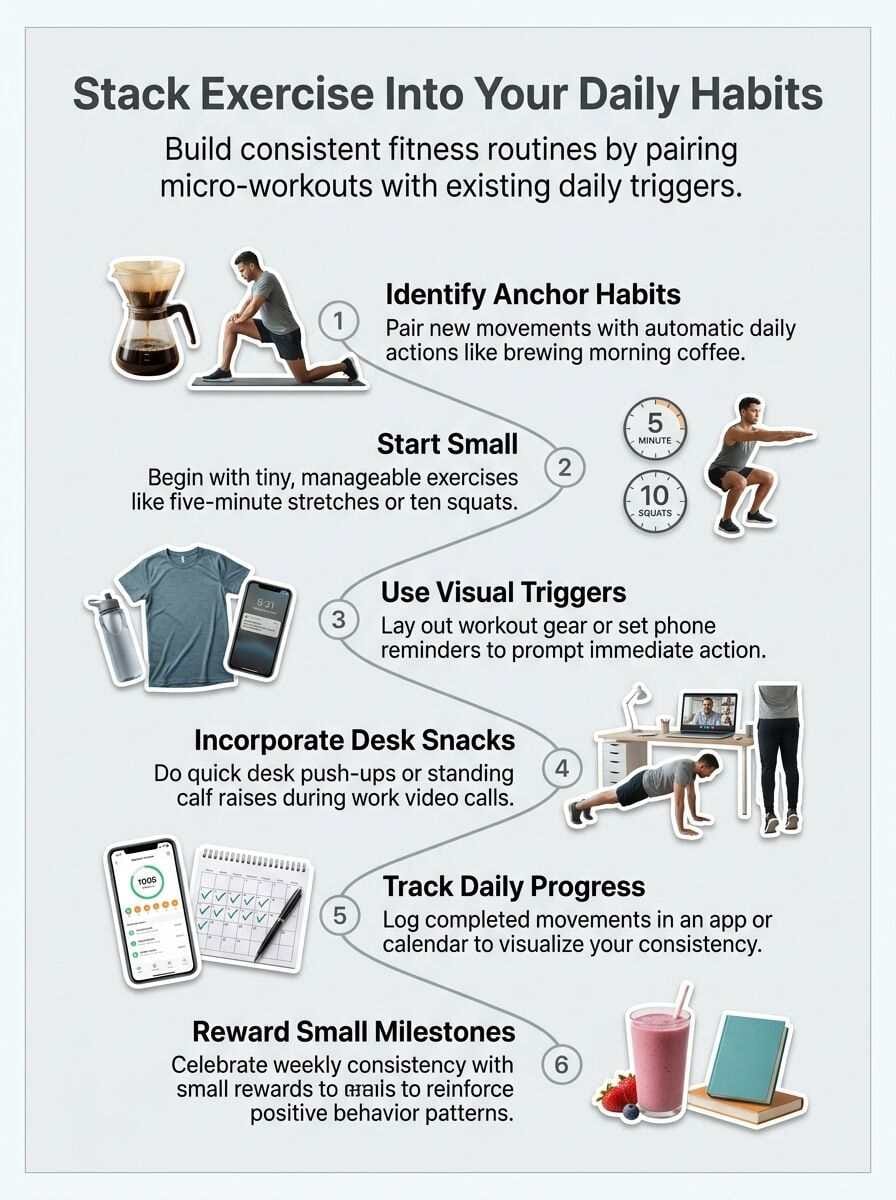
Pick one movement and attach it to something you already do every day
Set a visual cue or phone reminder to trigger it without thinking
Find one person to check in with
Celebrate every milestone, no matter how small it feels
One stack. One habit. One day at a time. That's how exercise stacking works.
Ready to Take This Further?
If you’re tired of fitness advice that doesn't fit your real, busy life, you’ve just found the 'Invisible Edge.'
The Step Stack System was built specifically for the time-crunched professional who doesn't have an hour to waste at a gym, but still wants the results of a high-performance athlete...
No gym membership.
No 5:00 AM alarm.
No willpower required.
Just a simple, proven system that works on your busiest, laziest days.
👉 Grab the Step Stack System here and start burning fat today →
Join hundreds of busy people who are already "stacking" their way to a leaner, healthier body — without ever setting foot in a gym.
FAQs
What does it mean to stack exercise into daily habits?
It means attaching a short movement to something you already do every day — like doing squats while your coffee brews. Research from University College London shows that pairing a new habit with an existing one makes it stick much faster than trying to carve out separate workout time.
How does ACSM suggest I start with exercise stacking?
Start with just one to two minutes of movement attached to a habit you never skip. ACSM's Health & Fitness Journal recommends simple moves like counter push-ups while your toast cooks or calf raises while you brush your teeth.
Can exercise stacking really work for busy people?
Yes. And you don't need gym time. The 2018 Physical Activity Guidelines confirmed that short movement bursts throughout the day work just as well for weight loss as one long gym session. You just have to actually do them.
What's the easiest way to begin exercise stacking today?
Pick one thing you do every single day without fail. Then add two minutes of any movement right after it. That's the whole formula.
Resources
A Quick Word from Weight Loss with Ken
Just so you know, I'm here to empower you with knowledge, not to replace your doctor. The ideas in this article are for your information and education. Before you make any changes to your health routine—be it diet, exercise, or anything else—please have a chat with your physician or a qualified healthcare professional. Your health is your greatest asset, so let's manage it together with the right team.
Created with ©systeme.io