
This Is Why NASA says Rebounding is So Powerful
You hate the gym, but you still want to lose weight and get fit at home. Most people think mini trampoline workouts are just fun bouncing with no real fitness benefits.
I thought the same in the beginning. It was crazy to think that a child's toy could solve the chronic pain problem doctors rarely mentioned.
So, I'm here to show you the science behind rebounding and how it can help your strength, balance, and heart health right in your living room.
Get ready to bounce your way to better health.
What Does Science Really Say About Rebounding?
Let me be straight with you about rebounding claims you see online.
Most of the stuff about lymphatic flow and detox doesn't have solid science backing it up.
Studies haven't shown rebounding beats other cardio exercises for lymphatic health.
The real benefits of rebounding have nothing to do with your lymph system. Research shows it works great for balance, strength, and mobility instead.
I've seen people get caught up in the made-up claims about lymph drainage, but the research just doesn't support them.
The actual benefits are way more exciting than the myths, and that's what we'll dig into next.
Real Benefits of Rebounding
You might think rebounding is just bouncing up and down, but this simple exercise packs a serious punch.
Science shows regular bouncing sessions boost your bone health, improve circulation, and strengthen your core in ways that surprise most people.
I actually have three rebounders myself. My first one was a cheap model that only lasted a few months - you get what you pay for, I guess.
My second one is an Urban Rebounder that's over 10 years old. I used it to help rehab my knee and back issues. And I still use it multiple times a week.
My third and favorite is my Cellerciser. Love, love, love this one.
It's also hard to keep the grandkids off it. Every time they come over, guess where they run to?
How Does Rebounding Improve Balance and Stability?
Your body works hard to stay balanced on that bouncy surface. Unlike walking on solid ground, rebounding forces your muscles to make quick adjustments every second.
Your core, back muscles, and deep stabilizers around your spine all fire up to keep you upright. This unstable surface creates way more demand for balance than regular exercise.
Each bounce builds better body control through constant muscle work. Your body gets better at sensing where you are in space.
This improved awareness helps prevent falls and balance problems, especially as you get older.
Studies show real improvements in balance scores after regular bouncing sessions. It targets balance control in ways that squats and other gym exercises simply can't match.
What Challenges Does Rebounding Pose to Your Body?
Rebounding throws your body into controlled chaos, and that's exactly what makes it so effective.
Your brain works overtime to coordinate what you see, your inner ear balance, and muscle feedback all at once.
The mini trampoline creates instability that challenges your normal balance responses. This forces quick adjustments that stress your nervous system in ways a regular gym workout can't match.
Your muscles, inner ear, and position sensors all work together, creating the perfect storm of physical challenge.
This bouncing tests your body's ability to stay balanced under constantly changing conditions.
Your core and leg muscles adapt to these new demands, working harder than they would during static exercises.
The result? Your body becomes stronger, more coordinated, and better at handling unexpected movements in daily life.
How Does Rebounding Enhance Body Awareness?
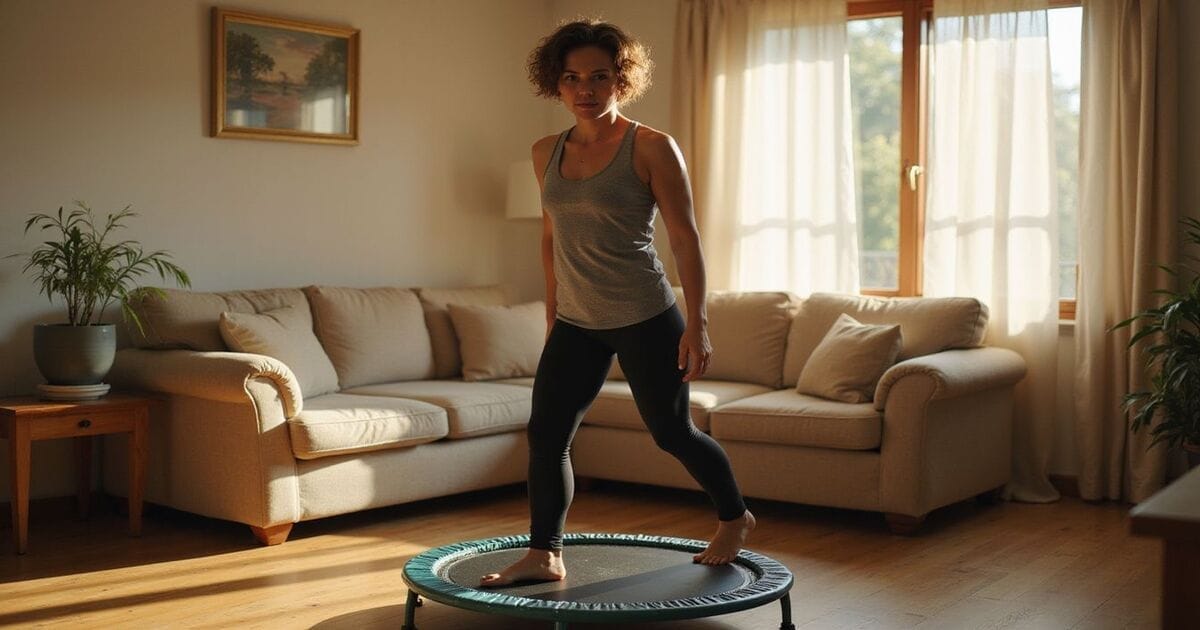
Bouncing on a mini trampoline forces your brain to work overtime.
Your nervous system gets constant feedback about where your body sits in space. The unpredictable surface makes you adjust your posture every second.
Your brain learns to sense and correct body position more efficiently during each session. Your spatial skills get sharper with every bounce.
This improved body awareness shows up in daily life. People who bounce regularly report fewer missteps and better balance while walking.
The activity requires ongoing attention to posture, which trains your mind-body connection.
Better body awareness supports safer movement and daily activities, especially for those worried about falls.
How Are Feedback Loops Strengthened by Rebounding?
Your body has an amazing communication system between your muscles, joints, and brain. Rebounding strengthens these channels in ways that surprise most people.
This system stays constantly engaged to monitor and adjust your position while you bounce.
This repeated bouncing taxes and trains these pathways better than most gym exercises. Feedback loops get stronger through the frequent need for quick corrections during each bounce.
Stronger feedback loops lead to faster reaction times and more precise movement. The benefits show up most in lower body control and joint stability.
How Does Rebounding Improve Inner Ear Function?
Rebounding works magic on your inner ear system, which controls how you sense motion and gravity. This bouncy exercise stimulates your balance system way more than regular workouts.
I discovered this firsthand when I started bouncing on my mini trampoline. Within weeks, I felt more steady on my feet during everyday activities.
The unpredictable movements create the perfect training ground for your inner ear. Each bounce challenges it to adapt and respond, building better balance over time.
This improvement helps reduce dizziness and boosts confidence when moving around. Better inner ear function prevents falls and supports both daily tasks and athletic performance.
Which Deep Muscles Does Rebounding Activate?
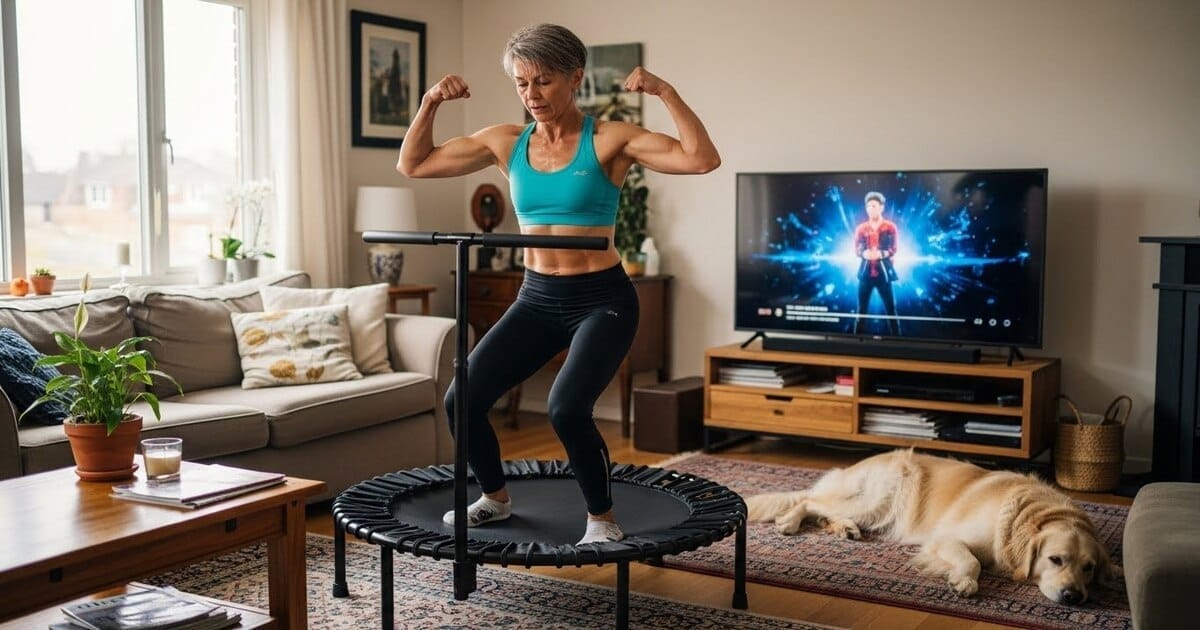
Bouncing works muscles you never knew you had. Your core fires up to keep you stable with every bounce. Your pelvic floor gets stronger too, which helps with bladder control issues.
Your hip muscles work overtime to maintain balance during each jump. Even your ankle and foot muscles get a serious workout as they adjust to the unstable surface.
These deep muscles support your spine and keep your body aligned. Traditional gym exercises often miss these important stabilizers, but rebounding hits them all at once.
The muscles work both ways - they hold steady and move with each bounce.
This makes your whole body more efficient at moving. Strong stabilizing muscles protect you from injury during other activities.
How Does Rebounding Enhance Coordination?
I have my Cellerciser in my rec room in front of the TV. I put on some jamming music and go to town.
I could talk all day about how much my trampolines have helped me stay healthy and strong throughout the years.
Your brain receives signals from three main sources during each bounce: your eyes, inner ears, and muscle sensors.
Rebounding demands rapid integration of all this information, forcing these systems to work together faster.
My first week on a mini-trampoline felt like learning to walk again. My body had to figure out how to sync visual, balance, and muscle inputs all at once.
This constant challenge sharpens motor planning as you adapt to the unpredictable surface.
Better coordination leads to quicker reaction times and more precise movement in everything you do. Movement tests show measurable gains after just a few weeks of regular sessions.
This is one of the tools I use that has helped me continue to play basketball and other sports at a high level against guys young enough to be my grandkids.
Most people who don't know me personally can't believe my age.
What Studies Show Improved Balance from Rebounding?
The research on rebounding shows amazing results for balance improvement. If you hate the gym but need to get moving, these findings might surprise you.
| Study Detail | Key Finding | What This Means for You |
|---|---|---|
| Young women participants | Greater than **40% improvement** in static balance scores | Even young, healthy people see **major balance gains** |
| Training frequency tested | **Three sessions per week** for only three weeks | You don't need daily workouts to see results |
| Measurement method | Standardized balance assessments were used | Results were **measured properly**, not just guessed |
| Statistical significance | Results showed clear **statistical significance** | The improvements weren't just luck or chance |
These numbers tell a clear story. Better balance means fewer falls, more confidence moving around, and improved quality of life.
The 40% improvement happened fast, too. Most gym programs take months to show results like this.
How Does Rebounding Help Increase Strength?
Rebounding creates significant strength gains, and I've seen this with people who refuse to step foot in a traditional gym.
This bouncing workout provides resistance and explosive stimulus through repetitive movements.
Both upper and lower body show measurable improvements after consistent sessions. Research shows strength improvements occur regardless of age or current fitness level.
My Cellerciser has a stability bar that doubles as a strength instrument for me.
I found many uses for toning with this bar on YouTube. It can work your chest, back and arms without weights. Genius.
What Research Supports Strength Gains from Rebounding?
Strength claims about mini trampolines need solid proof to back them up.
| Study Details | Findings |
|---|---|
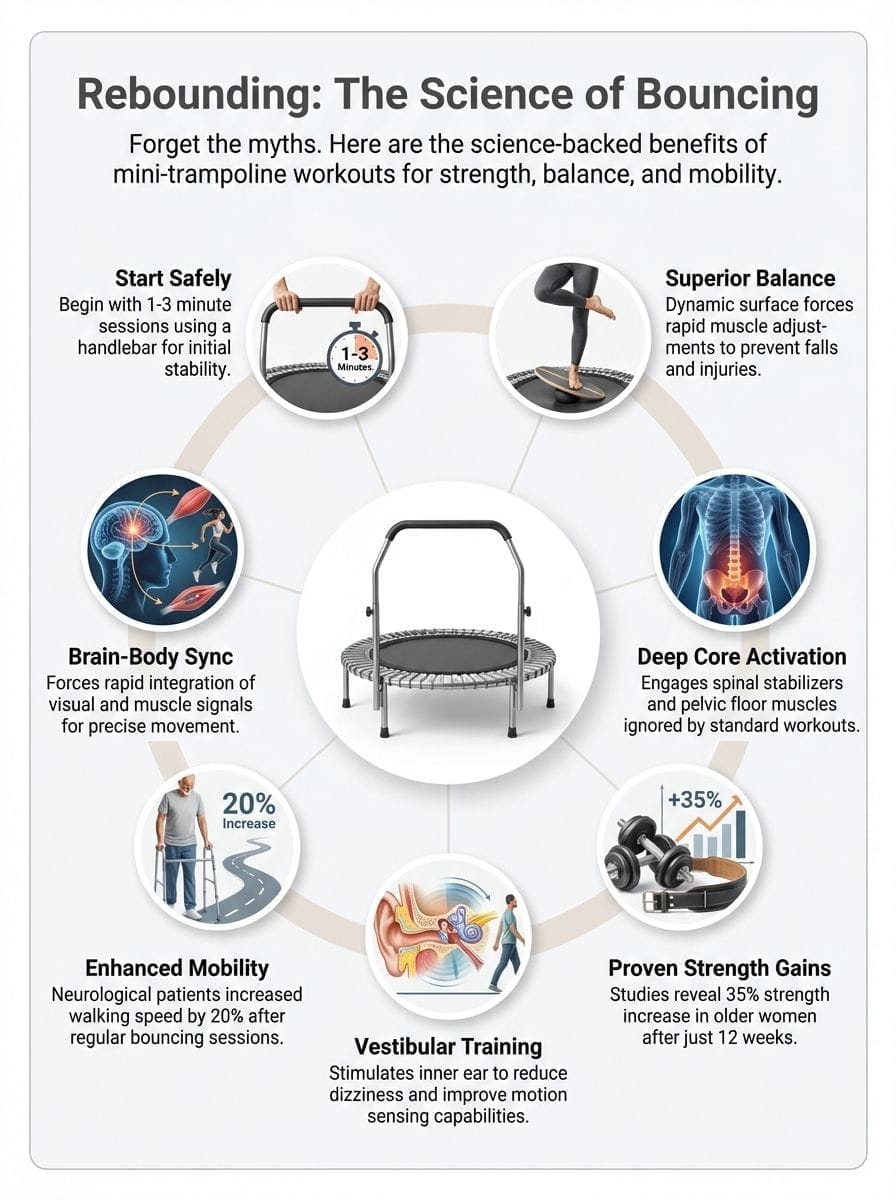
| 2019 research with older women who had bone density issues | **35% increase** in upper body strength after 12 weeks |
| Same 2019 study group | **36% increase** in lower body strength over 12 weeks |
| Training frequency used in study | Participants bounced **twice weekly** for 12 weeks |
| Safety record | **No adverse effects** reported among any participants |
This study gives me hope because it shows real people got stronger without stepping foot in a gym.
These weren't young athletes. They were older women dealing with bone density problems. Yet they still saw amazing results.
Numbers don't lie when it comes to strength gains.
A 35% jump in upper body strength sounds almost too good to be true.
But the 36% boost in lower body strength proves this wasn't just luck.
Two sessions per week made all the difference. That's less time than most people spend scrolling social media each day.
How Does Rebounding Enhance Mobility?

Rebounding works like magic for your body's movement abilities.
This gentle bouncing makes your joints more flexible and helps your body move with greater ease through regular sessions.
The low-impact nature means you can keep doing it for years without wearing out your joints like harsh gym workouts do.
Older adults see amazing improvements in their walking speeds after just a few weeks of bouncing.
Studies show people with balance problems can move around much better after rebounding training.
Daily activities become easier when your body can move freely and smoothly. This simple exercise helps you stay independent and reduces your risk of dangerous falls.
Why Is Mobility Important for Safety and Quality of Life?
Mobility acts as your body's safety net against dangerous falls. Good mobility directly affects your fall risk, and this becomes more important as you age.
Strong mobility skills help you navigate stairs, uneven surfaces, and daily obstacles with confidence.
Your ability to move well determines whether you can live independently or need help with basic tasks.
Moving well opens doors to a richer, more active life. Better mobility supports your participation in social activities, family gatherings, and fun events.
People with better mobility report improved mental health and greater life satisfaction.
What Evidence Shows Improved Walking Speeds in Older Adults?
A 2024 study revealed something amazing about rebounding and older adults with brain conditions. Researchers tracked people with neurological disorders who bounced just one to two times per week.
After 12 weeks, these participants walked nearly 20% faster than before. This improvement was huge and real, not just a lucky accident.
The study lasted three months and focused on walking speed as the main measurement. Scientists chose this because walking speed shows how well someone moves in daily life.
How Should You Practice Rebounding Safely?
You need to start slow and listen to your body when you begin bouncing. Smart planning and proper form will keep you safe while you build strength and balance.
I have a love hate relationship with my trampoline - I love getting on it and I hate when it's time to get off. It's so much fun and the time just flies by.
How Can Rebounding Fit Into Daily Routines?
Making rebounding part of your day doesn't require a gym membership or fancy schedule. Smart placement and simple habits turn this fun exercise into an easy daily routine.
1. Place your mini trampoline in the living room where you spend most of your time. You'll see it every day and remember to use it.
2. Start bouncing during TV commercial breaks or between shows. This breaks up long sitting periods and makes exercise feel less like work.
3. Use your rebounder as a warm-up before morning coffee or as a cool-down after work. Just five minutes helps your body wake up or wind down.
4. Bounce while listening to your favorite music or podcasts. This makes the time pass quickly and turns exercise into entertainment.
5. Let family members share the rebounder to create group fun and motivation. Kids love trampolines, and their excitement can inspire your workout habits.
6. Take short bouncing breaks every hour if you work from home. This fights the negative effects of sitting all day.
7. Keep sessions brief but regular rather than long and infrequent. Ten minutes daily beats one hour weekly for building lasting habits.
What Are Beginner Safety Tips?
Starting your rebounding journey doesn't need to feel scary or hard. Smart beginners focus on safety first, then slowly build up their bounce time.
1. Start with gentle sessions that last only one to three minutes. Your body needs time to get used to this new movement.
2. Try multiple short sessions throughout your day instead of one long workout. This helps you build strength without getting too tired.
3. Use a rebounder with a handlebar, especially if you're new to bouncing. The support bar keeps you steady and prevents falls.
4. Focus on proper form and safety rather than jumping high or fast. Good technique protects your joints and makes bouncing more effective.
5. Gradually increase your session length as you feel more comfortable. Your balance and confidence will grow with practice.
6. Keep both feet on the trampoline surface during your first few weeks. Simple up and down movements work your muscles without risk.
7. Wear supportive athletic shoes to protect your feet and ankles. Good footwear prevents injuries and makes bouncing more comfortable.
Concluding Thoughts on Rebounding Benefits
Rebounding stands out as an enjoyable, practical, and efficient exercise that delivers real results for strength, balance, and stability.
I've seen countless gym-haters transform their fitness routines simply by bouncing for 15-20 minutes daily.
This simple activity challenges your body in ways that traditional workouts can't match. It activates deep stabilizing muscles while improving coordination.
Sure, those wild claims about lymphatic drainage lack solid evidence, but the proven benefits are impressive enough on their own.
Science backs up what many of us experience firsthand: rebounding works.
Studies show improved balance, increased walking speeds in older adults, and significant strength gains in both young adults and older women.
For people who dread the gym but want to lose weight, this exercise offers a fun alternative that doesn't feel like punishment.
Adding rebounding to your fitness routine gives you diverse benefits that support long-term health and weight management goals.
Visual of: Rebounding and The Science
Conclusion
Who knew bouncing could pack such a punch? This simple exercise transforms your body in ways that surprise most people, and it doesn't require a gym membership or fancy equipment.
Science backs up what many bouncing fans already know: this workout delivers real results.
Start small, bounce gently, and watch your body thank you for choosing something that actually feels good.
Your future self will appreciate every gentle bounce you take today.
Ready to Take This Further?
If you’ve realized that you don't need a room full of expensive equipment to get in the best shape of your life, you’ve already won half the battle.
The Steps Stack System takes that 'minimalist' philosophy to the next level by turning your existing daily routine into your primary workout
No gym membership.
No 5:00 AM alarm.
No willpower required.
Just a simple, proven system that works on your busiest, laziest days.
👉 Grab the Steps Stack System here and start burning fat today →
Join hundreds of busy people who are already "stacking" their way to a leaner, healthier body — without ever setting foot in a gym.
FAQs
What makes rebounding so powerful for your body?
Rebounding works your whole body at once, and it's way gentler on your joints than running on hard ground. The bouncing motion challenges multiple systems while your muscles get stronger with each jump.
How often should I rebound to see real results?
Just 10 to 15 minutes a day can make a huge difference in how you feel. You don't need hours of bouncing to get the benefits.
Can rebounding really help with weight loss better than other exercises?
Yes, rebounding burns more calories per minute than many other workouts because your body fights gravity with every bounce. Plus, it boosts your metabolism for hours after you finish jumping.
Is rebounding safe for people with joint problems or older adults?
Rebounding is actually perfect for people with sore joints because the trampoline absorbs most of the impact. Many physical therapists recommend it for recovery, and older adults love how it builds balance without stress on their knees and hips.
Resources:
A Quick Word from Weight Loss with Ken
Just so you know, I'm here to empower you with knowledge, not to replace your doctor. The ideas in this article are for your information and education. Before you make any changes to your health routine—be it diet, exercise, or anything else—please have a chat with your physician or a qualified healthcare professional. Your health is your greatest asset, so let's manage it together with the right team.
Created with ©systeme.io