15-Minute Living Room Workout for Complete Beginners
You know the biggest hurdle with a 15-minute workout is not the moves, it's making the plan simple enough that you actually do it.
This living-room routine is built for complete beginners who want a clear, repeatable workout at home.
A workout with bodyweight (plus small dumbbell options) and short cardio bursts to keep your heart rate up.
In the U.S., the CDC's latest guidance update (December 2025) still points most adults to at least 150 minutes a week of moderate activity.
Those who are serious about getting the most bang for their buck should also include muscle-strengthening on 2 or more days per week.
Understand that short sessions like this work best when paired with walks and consistency.
Here's the plan: you'll do a quick warm-up, then four beginner-friendly moves (squats, knee push-ups, bird dog, side-lying leg lifts), and finish with an easy cool-down.
You'll work for 30 seconds per move, then do 30 seconds of light cardio between sets.
Key Takeaways
This 15-minute routine is a beginner-friendly workout using bodyweight or small dumbbells, with a warm-up, four main moves, and a cool-down.
Use a simple interval format: 30 seconds of work per exercise, plus 30 seconds of low-impact cardio between sets.
Main moves: squat, knee push-ups, bird dog, side-lying leg lifts, aim for 10+ reps where noted.
Warm-up includes marching and arm circles, cool-down includes seated forward fold and child's pose, hold each stretch for 10+ seconds.
Follow a free 30-day plan for strength, mobility, and fat loss, and consult a health provider if you have concerns.
Warm-Up Exercises
Start with a light, dynamic warm-up to raise your heart rate and wake up your core muscles before the 15-minute workout.
A quick note on timing: the American Heart Association commonly recommends warming up for about 5 to 10 minutes before exercise.
If you only have 15 minutes total, do at least 1 to 2 focused minutes now, then build toward the longer warm-up as your fitness level improves.
Equipment needed: a clear patch of floor, supportive shoes or bare feet on a non-slip surface, and a chair or wall for balance.
If you want a dumbbell workout, grab light weights you can control without shrugging your shoulders or holding your breath.
Marching in place
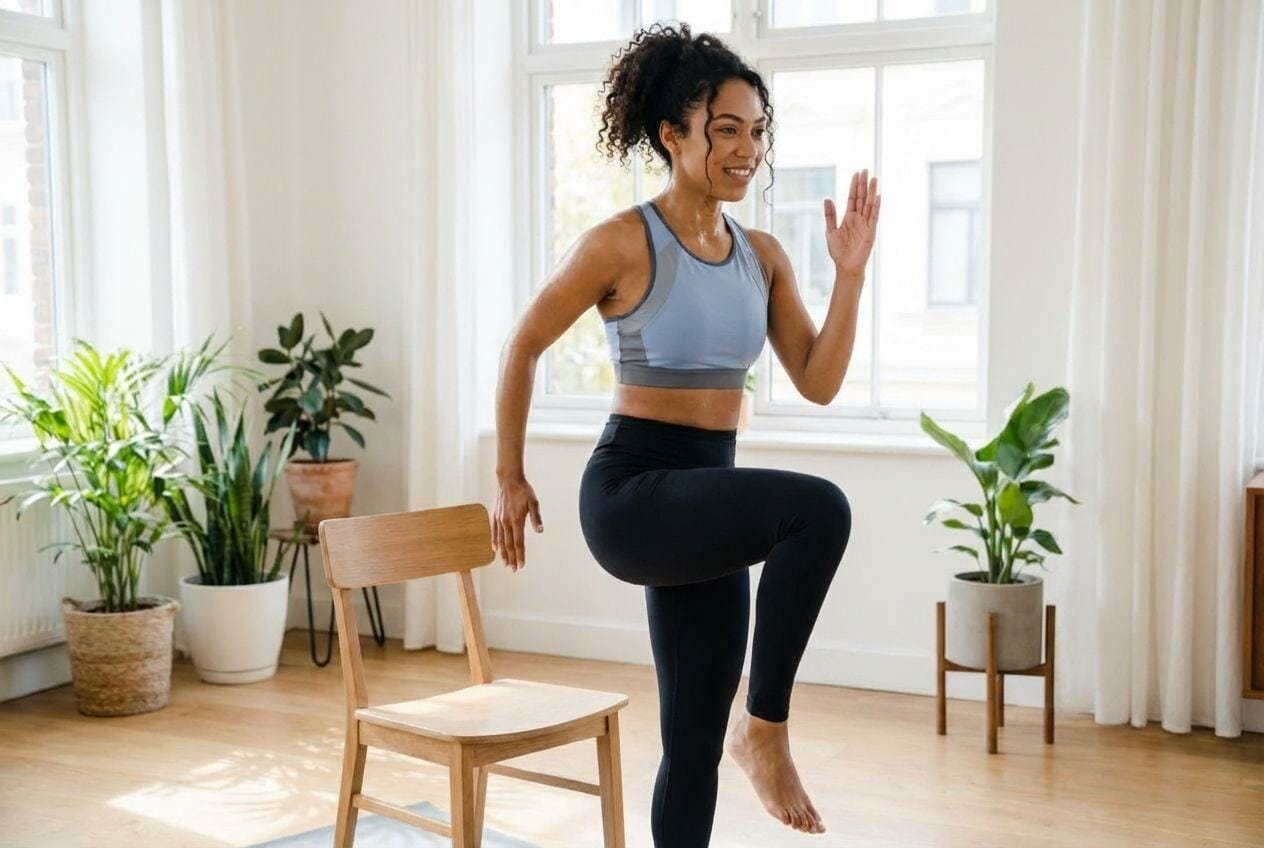
Keep moving, one step at a time.
March in place for 30 seconds between exercises to raise your heart rate. This is your cardio burst in a 15-minute at-home session.
Start near a wall or chair for balance, then march unsupported as you feel steadier.
Keep knees soft (do not lock them) and stand tall so you engage your core and glutes instead of tipping forward.
Make it easier: smaller steps, slower pace, hands on a chair back.
Make it harder: bigger arm swings, higher knees, or a wider “power march” stance.
Quick intensity check: you should be breathing faster, but you can still speak in short sentences.
Arm circles
Arm circles warm your shoulders and upper body, which matters more than most beginners expect.
When your shoulders feel “online,” push-ups and planks feel safer and smoother.
Do 30 seconds per set. Aim for two sets in this warm-up if your shoulders are tight, or one set if you're already moving well.
Start with small circles forward, then small circles backward.
Progress to medium circles, keep your ribs down and your ab muscles gently braced.
If you add light dumbbells or a water bottle, go smaller and slower, and stop if you feel pinching in the shoulder.
Full-Body 15-Minute Workout
This full body workout hits every major muscle group with four simple patterns: a knee-dominant lower-body move (squats), an upper-body push (push-ups), a core stability move (bird dog), and a hip strength move (side-lying leg lifts).
You don't need fancy gear, just a mat or carpet and a stable chair if you want support.
Keep your spine straight, and stop a set early if your form falls apart.
If you like numbers, think in effort: the Cleveland Clinic's 0 to 10 RPE scale lists “moderate” effort as about a 4 to 5, and “vigorous” as about a 6 to 7.
For complete beginners, aim for moderate most of the time, and let the last few seconds of each work block feel challenging.
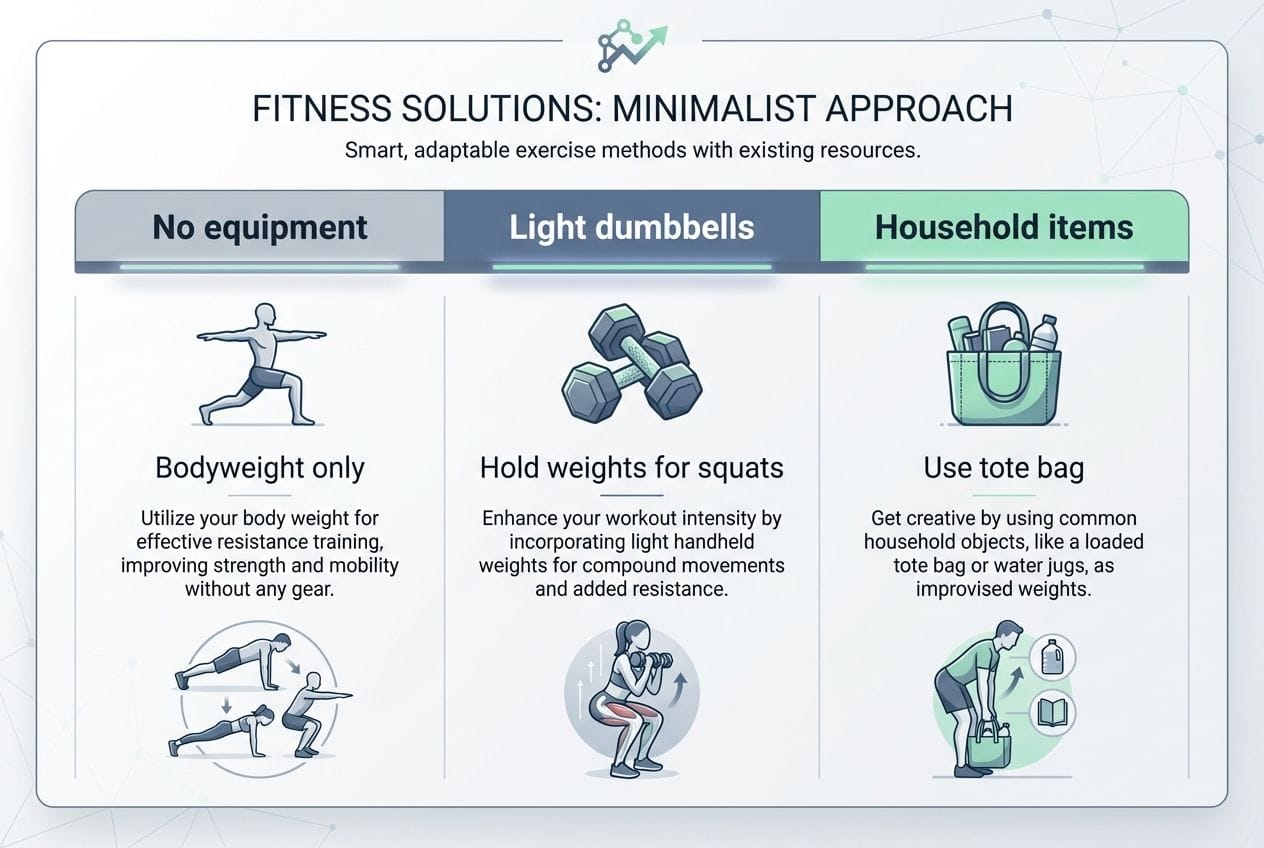
| What you have | What to do | Why it works |
|---|---|---|
| No equipment | Bodyweight only, use a chair for balance | You build control first, which protects joints and helps you build strength faster |
| Light dumbbells | Hold weights for squats, keep push-ups and core bodyweight | You add load where it's safest, especially for lower body and glutes |
| Household items | Use a tote bag or water bottles as weights | You keep the workout routine consistent even without gym gear |
Squats
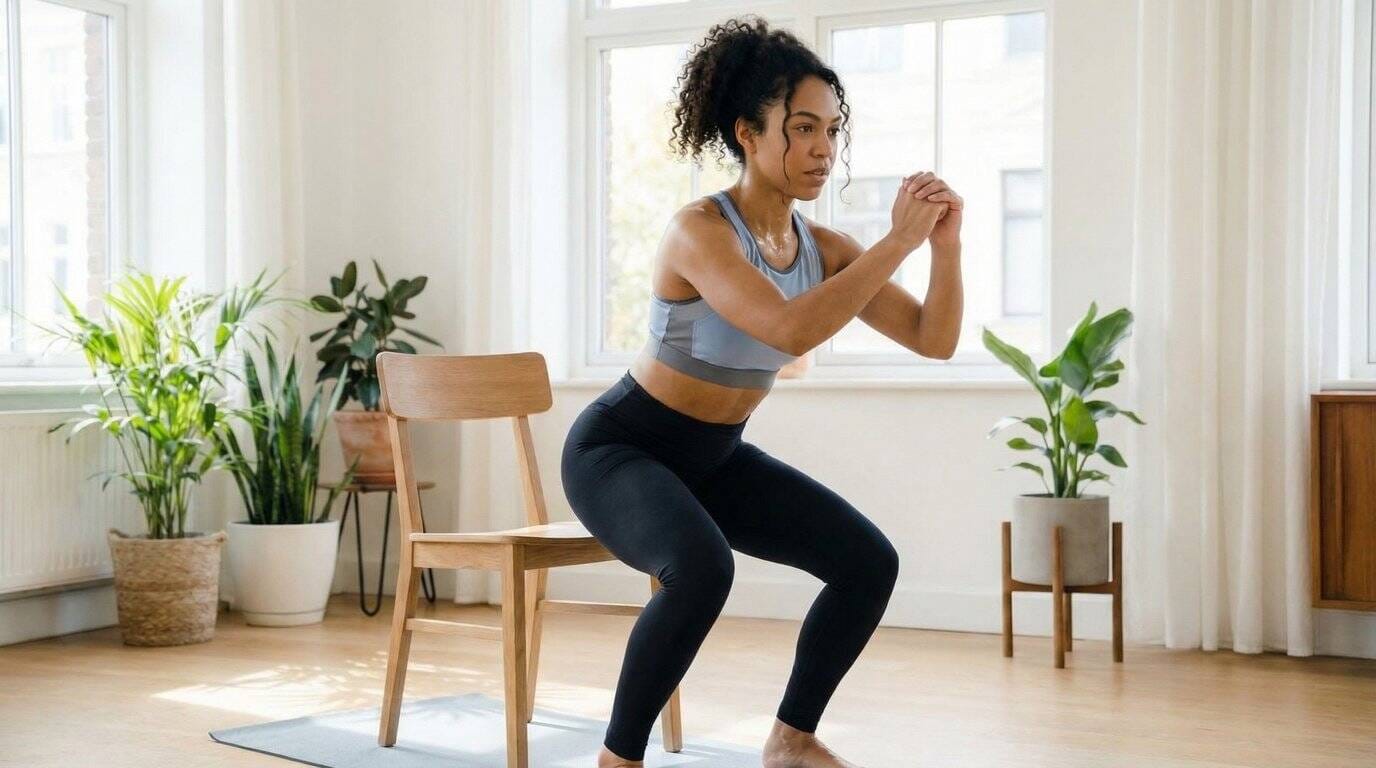
Push your hips back, keep your chest up, and sit with control.
Squats are a foundational move in a total-body workout.
They build muscle in your quads, hamstrings, and glutes, especially when you push your hips back and keep your weight into your heels.
Set up with feet about hip-width apart.
Inhale, brace your core, then bend your knees and sit back like you're reaching for a chair.
Keep your chest up and your knees tracking in line with your middle toes.
Beginner modification: do a “box squat” to a chair. Lightly tap the chair, then stand back up and squeeze your glutes at the top.
Progression: raise your arms, hold a dumbbell at your chest, or hold a tote bag with books.
Target: aim for 10+ controlled reps in your 30-second work block.
Knee push-ups
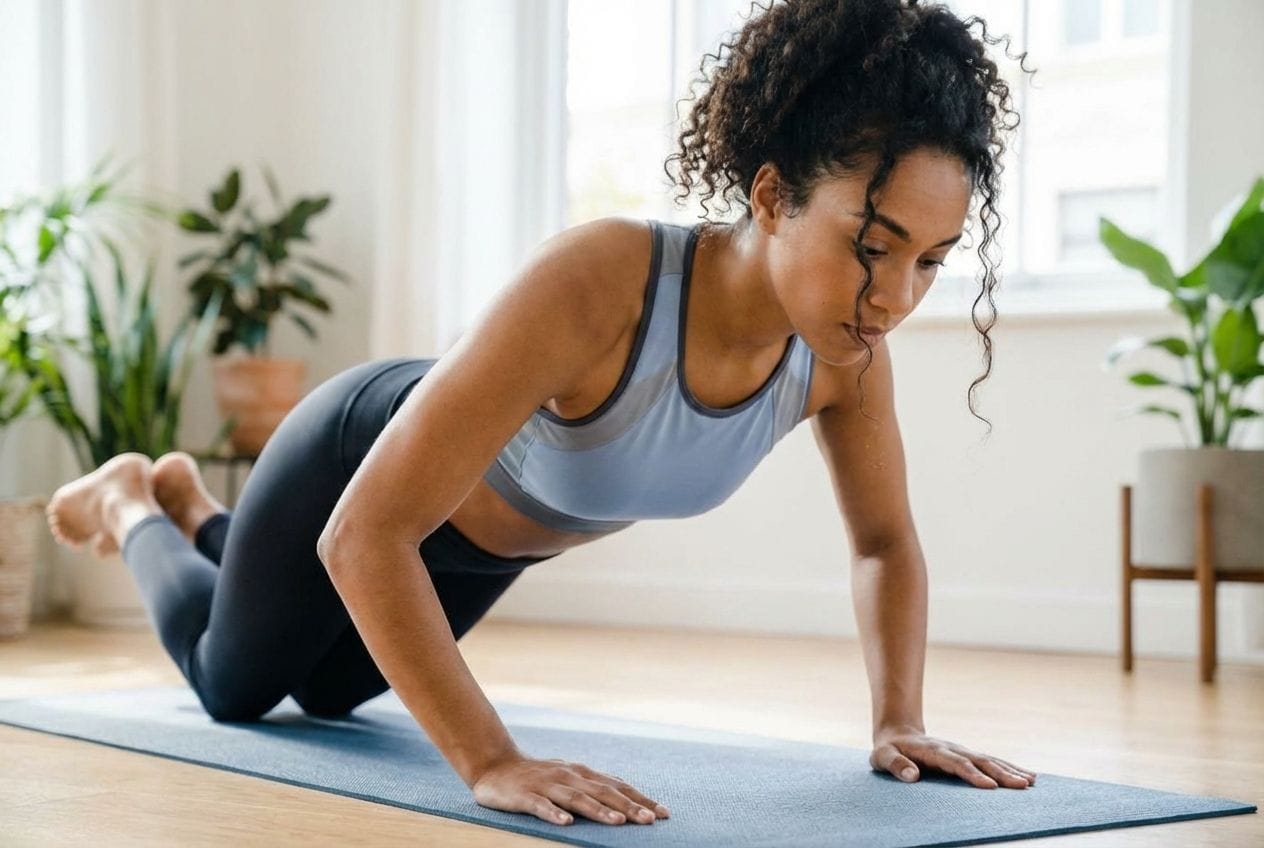
Set up in a plank position from your knees: hands under shoulders, knees on a mat, and a straight line from your head to your knees.
Lower your chest by bend your elbows about 30 to 45 degrees from your sides, then return to the starting position. That is one rep.
Make it easier: do incline push-ups with your hands on a sturdy chair or against a wall.
Make it harder: pause for one second at the bottom, or lift one foot off the floor and alternate (only if your trunk stays steady).
Form check: if your lower back sags, shorten your range of motion and focus on keeping your ribs down.
This move trains your chest, shoulders, and triceps. It also builds the upper-body strength you need for full push-ups later.
Bird Dog
Start on hands and knees with hands under shoulders and knees under hips.
Keep a neutral spine, and gently engage your core muscles like you're tightening a wide belt.
Extend one arm and the opposite leg. Keep your hips level, then switch sides with control.
Stability tip: move slowly and pause briefly at full extension, avoid twisting through your torso.
Beginner modification: slide your toes back on the floor instead of lifting the leg, or lift only the arm.
Breathing cue: exhale as you extend, inhale as you come back in.
A 2024 sports medicine study looking at core stability training found bird dog to be one of the stronger options for building deep trunk control.
This is a big reason it shows up in many strength and conditioning plans.
Side-lying leg lifts
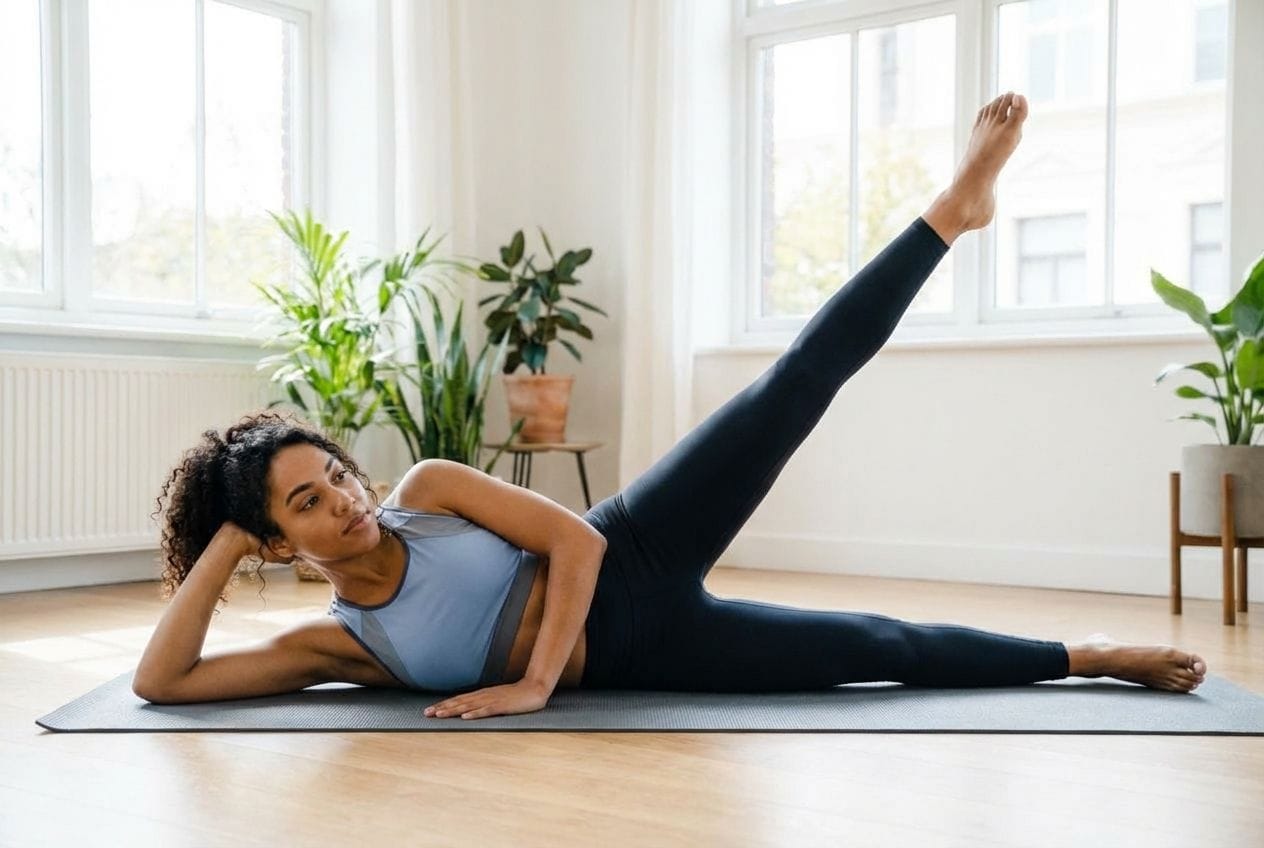
Lie on your side with your legs straight and stacked.
Support your head with your lower arm, and place your top hand on the floor in front of your chest for balance.
Lift the top leg up and down with control.
Avoid swinging, and keep your hips stacked so you target the outer hip, not your low back.
Glute focus: slightly turn your toes down and lead with your heel. Many physical therapy cues use this to help you feel the gluteus medius (outer glute) more clearly.
Target: 10+ reps per side in the work block.
Progression: add a mini resistance band above your knees, or use light ankle weights if your form stays solid.
This is a low-impact way to strengthen the hips and glutes, which can help you feel steadier in squats and lunges over time.
Cool-Down Stretches
Use the cool-down to bring your heart rate down gradually and reset your breathing after your cardio workout.
The American Heart Association also notes that stretching often fits best after activity, and it commonly suggests holding stretches for about 10 to 30 seconds.
Start at 10+ seconds today and add time as you feel more comfortable.
Move slowly, and keep every stretch “strong but not painful.”
Seated forward fold
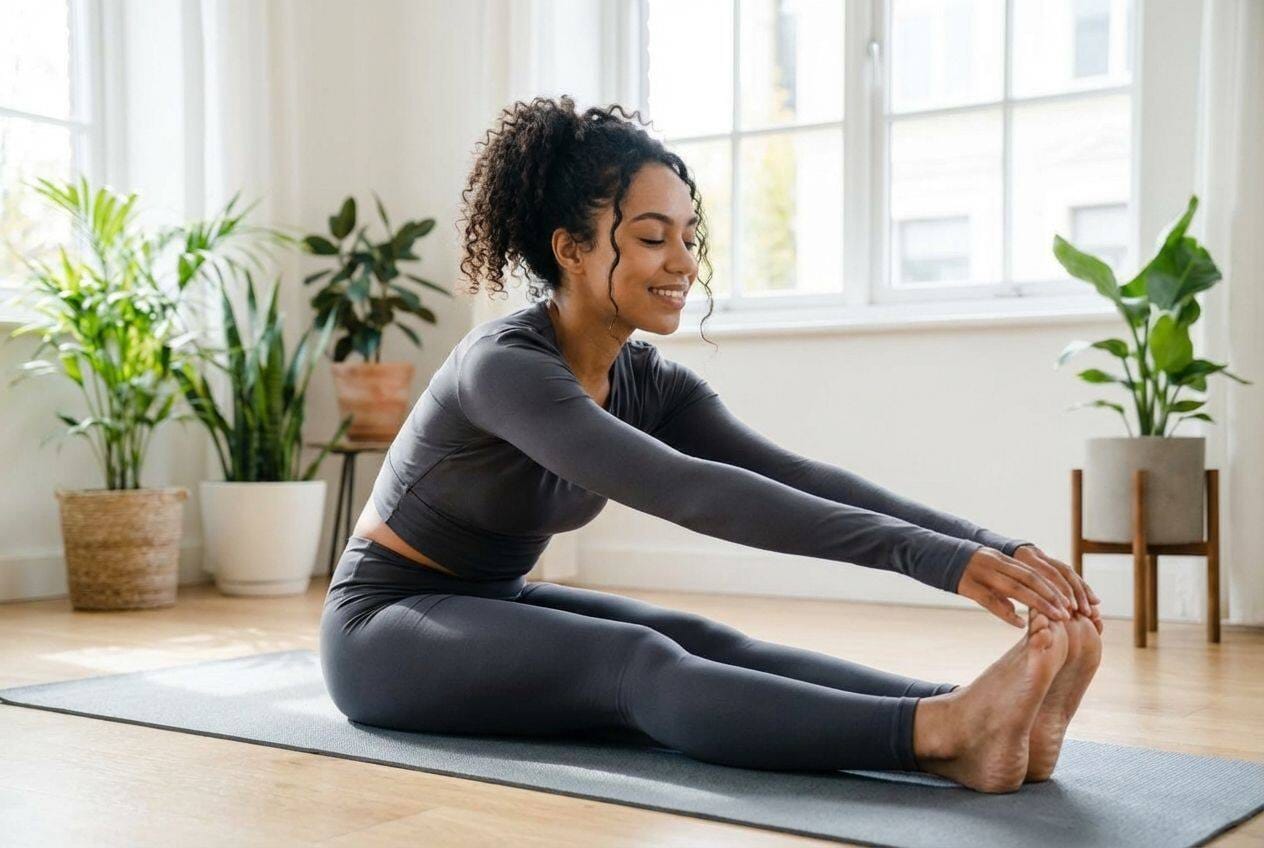
Sit on the floor with legs extended, then hinge from your hips and fold forward. Keep your spine long and your shoulders relaxed.
Hold for 10+ seconds. If your hamstrings feel tight, bend your knees or sit on a folded towel to lift your hips slightly.
If the floor is uncomfortable: do a standing version with knees bent and hands resting on your thighs.
Breathing cue: take slow breaths, and try to relax your neck and jaw as you hold.
Child’s pose
Kneel on a mat, lower your hips toward your heels, then reach your arms in front. Rest your forehead down if that feels good.
Hold the pose for at least 10 seconds, then extend the hold as your flexibility improves.
Knee-friendly option: place a pillow behind your knees or between your hips and heels.
Shoulder-friendly option: walk your hands slightly to one side, then switch sides to open the lats gently.
Breathing cue: inhale through your nose, and exhale slowly to help your body downshift.
Conclusion
You can finish this 15-minute workout in your living room and feel proud of the work you put in.
Keep it simple: do each move for 30 seconds, then add 30 seconds of easy cardio between sets.
Use small weights, a cast iron weight, a chair, or a water bottle for resistance, but only if you can keep good form.
This free 30-day plan builds strength, improves mobility, and supports fat loss.
If you have health concerns, talk with a provider before you start.
On rest days, go for a walk to add more minutes of moderate physical activity, and adjust the routine based on your goals.
Ready to Take This Further?
If this article showed you that the world is your gym, you’re already thinking differently than 95% of people out there.
But knowing it is one thing - having a system to execute it is another.
The Steps Stack System is the exact framework I use with my readers to turn everyday "dead time" - waiting for coffee, walking to the car, pacing during a phone call - into a powerful fat-burning routine.
No gym membership.
No 5:00 AM alarm.
No willpower required.
Just a simple, proven system that works on your busiest, laziest days.
👉 Grab the Steps Stack System here and start burning fat today →
Join hundreds of busy people who are already "stacking" their way to a leaner, healthier body - without ever setting foot in a gym.
FAQs
What is a 15-minute living room workout for complete beginners?
It is a short home workout with easy moves to build strength and fitness. It can help start a habit and aid in keeping your weight.
Will short sessions really help with fitness and weight?
Yes, short sessions are not useless, research shows brief, regular workouts raise calorie burn and improve fitness. They work best with good food and steady effort.
Should I go for a walk after the routine?
You can go for a walk to add low-impact cardio and help recovery.
How often should I do this, based on your goals?
Aim for about five 15-minute sessions each week, based on your goals. If you want to lose weight, add more activity and watch food. If you want more strength, add reps or more time.
A Quick Word from Weight Loss with Ken
Just so you know, I'm here to empower you with knowledge, not to replace your doctor. The ideas in this article are for your information and education. Before you make any changes to your health routine—be it diet, exercise, or anything else—please have a chat with your physician or a qualified healthcare professional. Your health is your greatest asset, so let's manage it together with the right team.
Created with ©systeme.io