The Best No-Equipment Fat Loss Routine For Beginners
A few years back, I hit a stretch that most people reading this will recognize. Long shifts at the plant, barely getting home before dinner, family pulling me in every direction.
My workouts disappeared. I wasn't going to the gym, wasn't doing much of anything, and I felt it.
Low energy. Clothes getting tighter. Just not feeling like myself.
What got me back wasn't a gym membership. It was my living room floor, 15 minutes, and a decision to show up three times a week.
Squats. Push-ups. A little cardio. No equipment, no commute, no excuses.
Within two weeks my energy came back. Within a month, my clothes were fitting differently, and the weight had started moving.
I missed days. Some weeks were rough. But I kept showing up, and that made all the difference.
That's the whole idea behind a no-equipment fat loss routine. You don't need a gym. You need a plan, a little space, and the willingness to start.
Here's what this guide covers:
The real principles behind fat loss and how a calorie deficit works
The best bodyweight moves for burning fat at home
A beginner circuit with a 4-week progression plan
Practical tips for staying consistent when life gets in the way
This works because it's simple, accessible, and fits into the life you actually live.
Why a No-Equipment Fat Loss Routine Actually Works
Most people don't quit fitness plans because they're lazy. They quit because the plan doesn't fit their life.
Gym commutes, crowded equipment, awkward hours, it's a lot to ask from someone who's already stretched thin.
A no-equipment routine removes all of that. Your living room, backyard, or hotel room becomes your workout space. The barrier to starting drops to nearly zero.
Bodyweight training is also easier on your joints than most people expect. You control the depth of every squat and the speed of every lunge.
A beginner does push-ups on their knees. Someone further along does them with one hand lifted.
The same exercises grow with you, which means lower injury risk and more room to progress at your own pace.
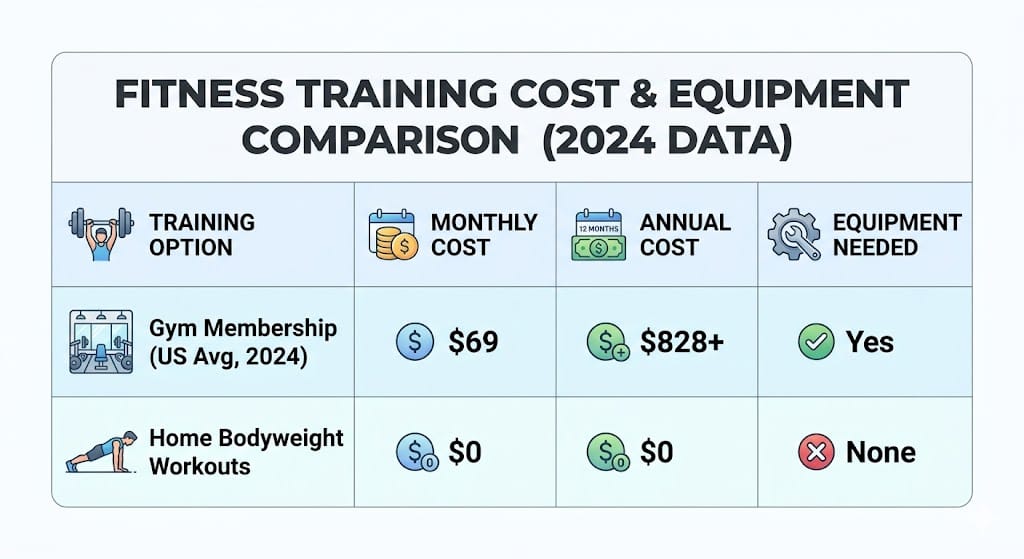
The cost argument is straightforward.
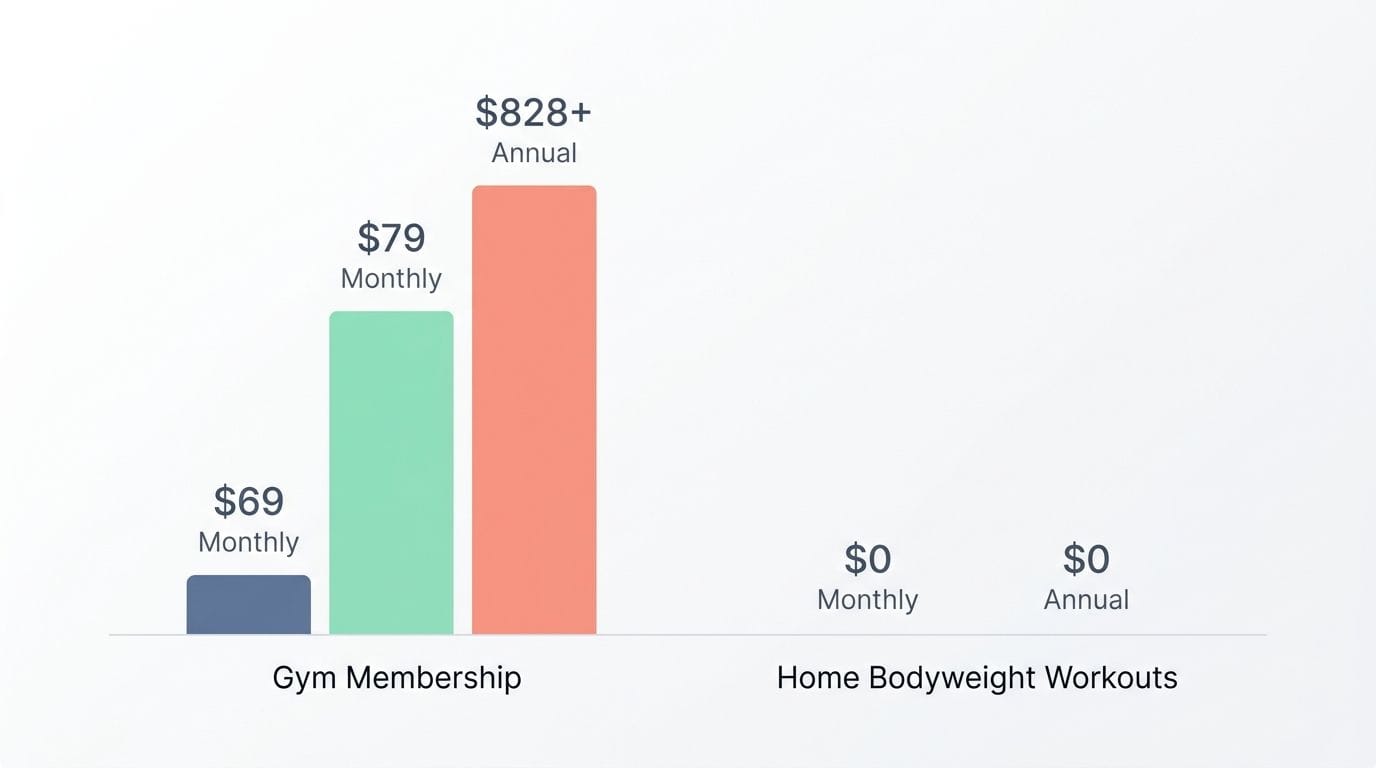
According to the Health and Fitness Association's 2025 Benchmarking Report, the average gym membership in the US hit $69 a month in 2024, which is over $800 a year before initiation fees.
Your bodyweight costs nothing.
The Key Principles Behind Fat Loss
Before you move a single rep, it helps to understand what's actually driving fat loss.
These three things work together, and none of them requires a gym.
Creating a Calorie Deficit
Fat loss starts with one idea: burn more calories than you eat. That gap is called a calorie deficit, and it's the engine behind real change.
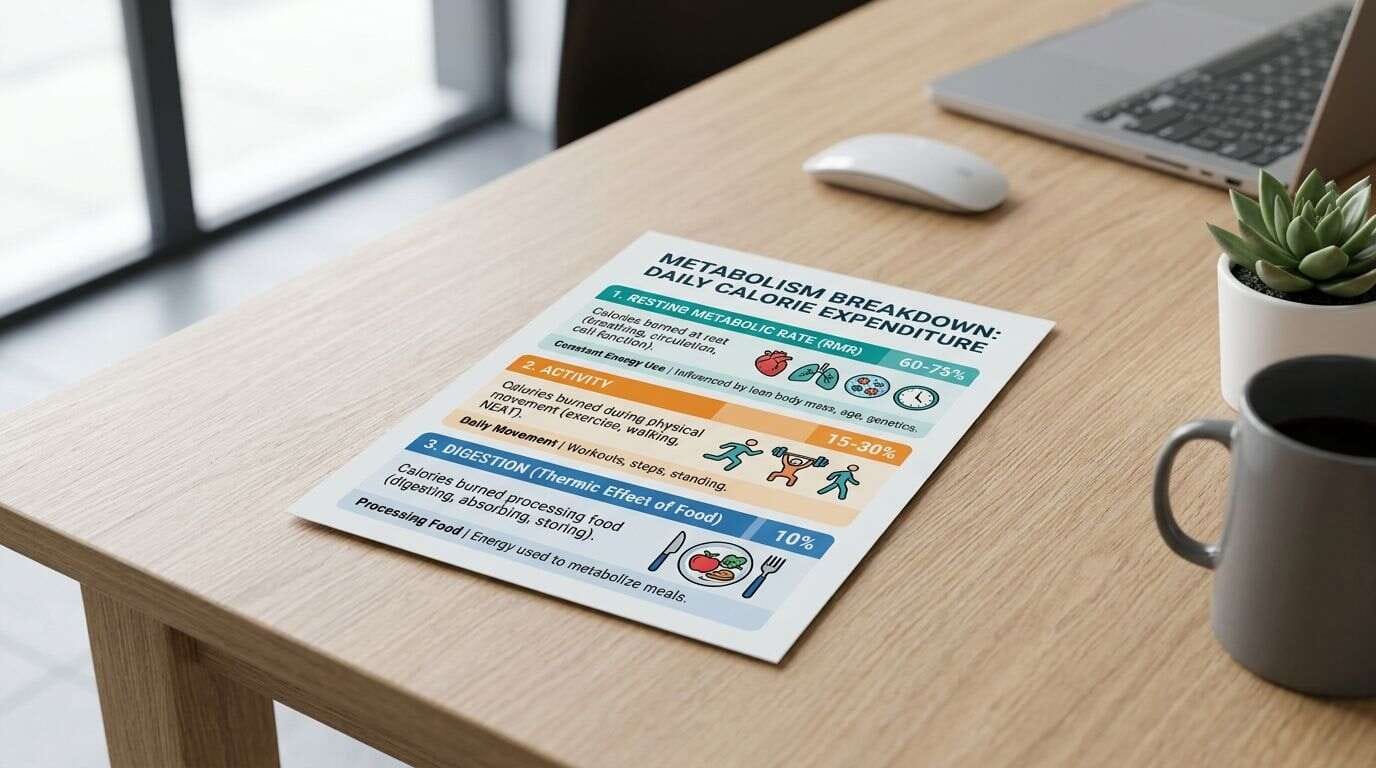
Your body burns energy all day just by breathing, moving, and existing. That's your resting metabolic rate at work.
Add exercise on top of it, and you widen that gap. Your body starts pulling from stored fat for fuel.
Energy expenditure breaks down into three parts:
Resting metabolic rate - calories burned just sitting still
Activity - formal exercise plus everyday movement like taking the stairs or walking to your car
Digestion - your body burns a small amount of calories just processing food
That everyday movement adds up more than most people realize.
According to a 2025 breakdown by Naked Nutrition, NEAT (non-exercise activity thermogenesis) - things like doing chores, fidgeting, and walking around - accounts for 15% to 30% of your total daily calorie burn.
Every bit counts, not just your formal workouts.
How Your Metabolism and Movement Work Together
Your metabolism runs all day. When you add regular movement like squats, push-ups, and high knees, your muscles demand energy, and your body burns through more of it.
High-intensity interval training (HIIT) is especially effective for fat loss. After a hard session, your body keeps burning calories for hours.
Building muscle matters for the long game too. Muscle tissue burns more calories than fat, even while you rest.
Short daily sessions of 15 to 20 minutes are enough to start seeing real results.
Why Nutrition Matters Too
You can do this routine consistently and still stall if your eating is working against you.
It doesn't have to be complicated. Whole foods like chicken, eggs, beans, and vegetables keep you full longer and give your muscles what they need to recover.
Protein from fish, Greek yogurt, or lentils helps repair muscle after every session.
Stay hydrated.
A simple multivitamin fills nutritional gaps.
These aren't fancy fixes. They're solid basics that support everything else you're doing.
The Best Exercises for Your No-Equipment Fat Loss Routine
These moves require nothing but your body. Mix them together and you've got a full-body, fat-burning routine that works anywhere you have floor space.
Strength Moves That Build and Burn
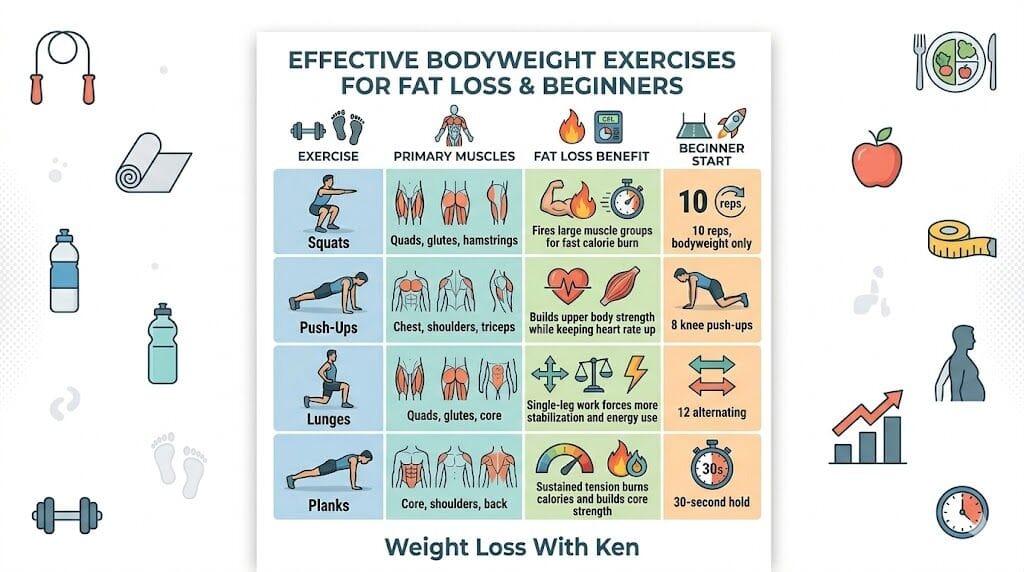
Four exercises form the foundation of this routine. They hit every major muscle group and they work in any room.
Start with 10 reps of each, rest 30 seconds, and repeat the circuit three times. Straightforward and effective, and you can do it right now.
Cardio Moves That Torch Calories
These four moves spike your heart rate fast, no treadmill needed:
Jumping jacks - 30 seconds, full arm and leg spread each rep
High knees - 30 seconds, lift each knee to hip height
Mountain climbers - 30 seconds, steady rhythm in plank position
Burpees - 30 seconds, squat into push-up, then jump up
Burpees are no joke. According to a 2026 data breakdown by Protéalpes based on the Compendium of Physical Activities, burpees burn an estimated 9 to 14 calories per minute, depending on your body weight and intensity.
That's some serious output for a move that costs nothing.
Mix these into circuits of 30 seconds on, 15 seconds rest, move to the next one.
Start with two or three rounds. Build from there.
How to Build Your No-Equipment Fat Loss Routine
Warm Up and Cool Down First
Don't skip these. Five minutes of walking in place, arm circles, and leg swings gets your blood moving and cuts injury risk.
Skipping it doesn't save time; it makes your workout less effective and leaves you sore the next day.
Cool down for three to five minutes when you finish. Easy walking, light stretching. Let your heart rate come down naturally.
Your muscles need this to start repairing, and it's what keeps you ready to go again next session.
The Beginner Circuit
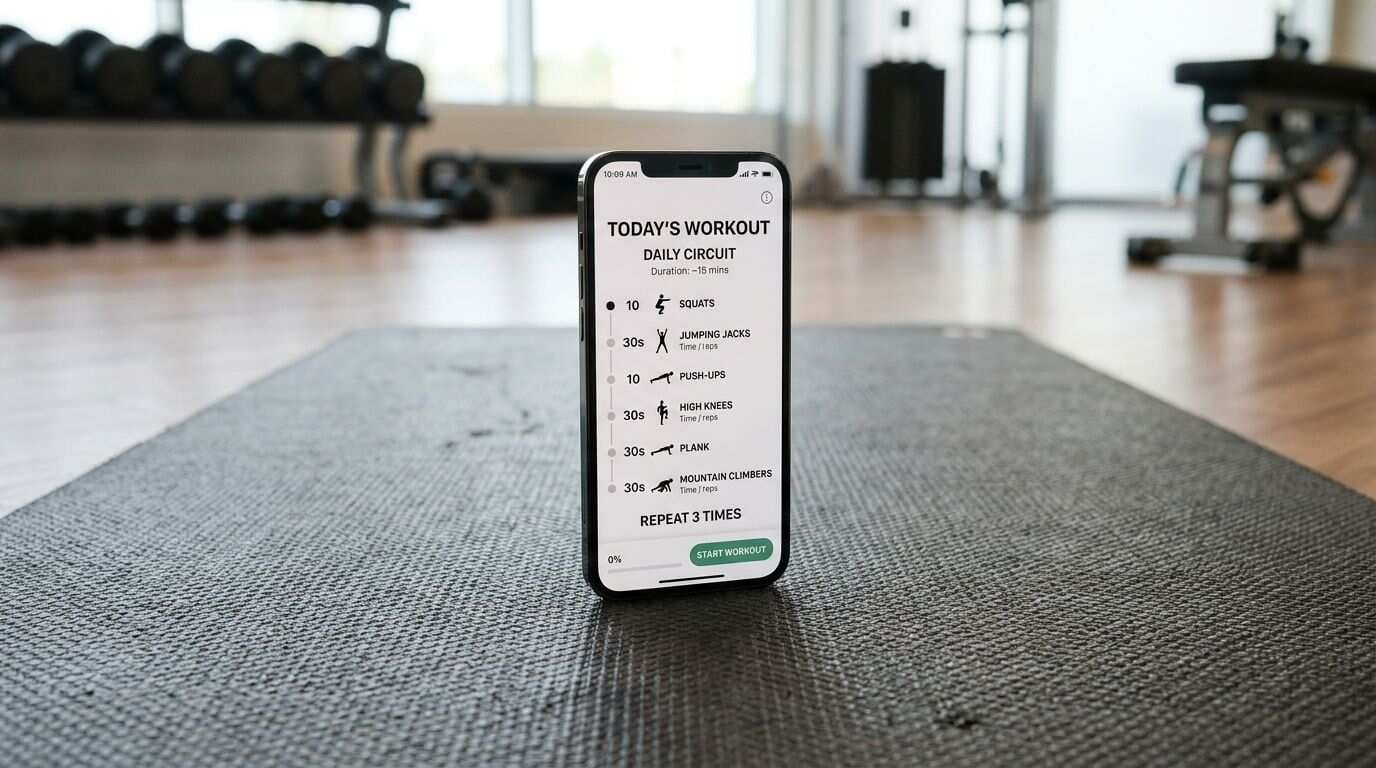
Here's a simple starter circuit that combines strength and cardio in one session:
10 squats → 30 seconds of jumping jacks
10 push-ups → 30 seconds of high knees
30-second plank → 30 seconds of mountain climbers
Rest 60 seconds → repeat 3 rounds total
This is circuit training. Strength and cardio, alternating back-to-back.
Your muscles stay active while your heart rate climbs and drops, and that combination trains your body to burn fat more efficiently over time.
A small group of people who normally avoided gyms ran a version of this 12-minute living room circuit three times a week for four weeks. Nearly 9 out of 10 sessions got done.
Most reported better energy after just two weeks.
One person said it "felt doable and quickly became part of my week."
That's exactly what a good beginner plan should feel like.
4-Week Progression Plan
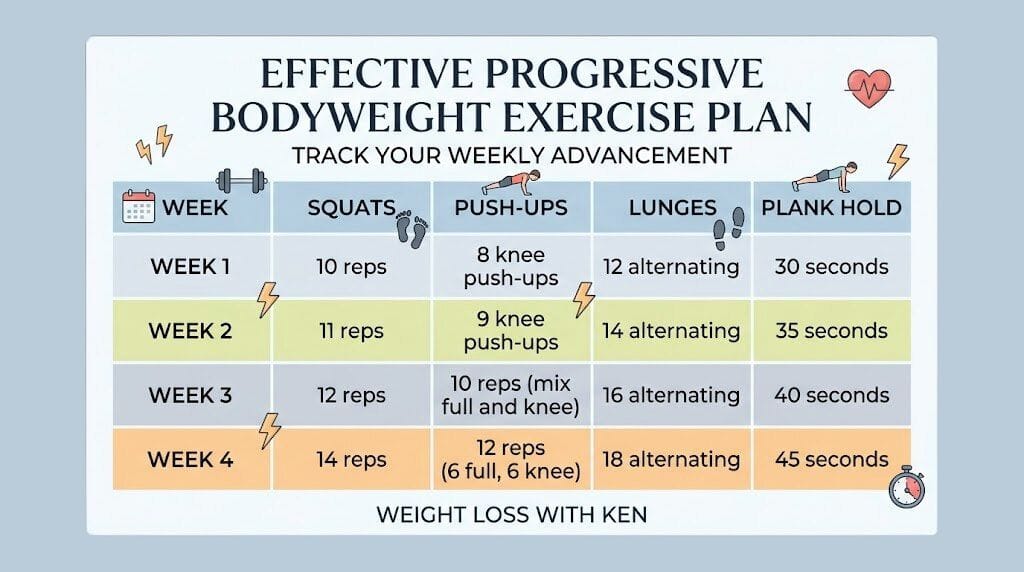
Do this 3 days a week with a rest day between sessions. Your muscles grow while you rest, not during the workout itself.
Small increases each week, two extra reps, 10 fewer seconds of rest, create a realistic weekly workload increase of around 8% to 12%.
That's enough to keep progress moving without wearing you down.
Stick with the same exercises for all four weeks before you switch anything. That consistency is what builds the habit.
Staying Consistent and Making Progress Stick
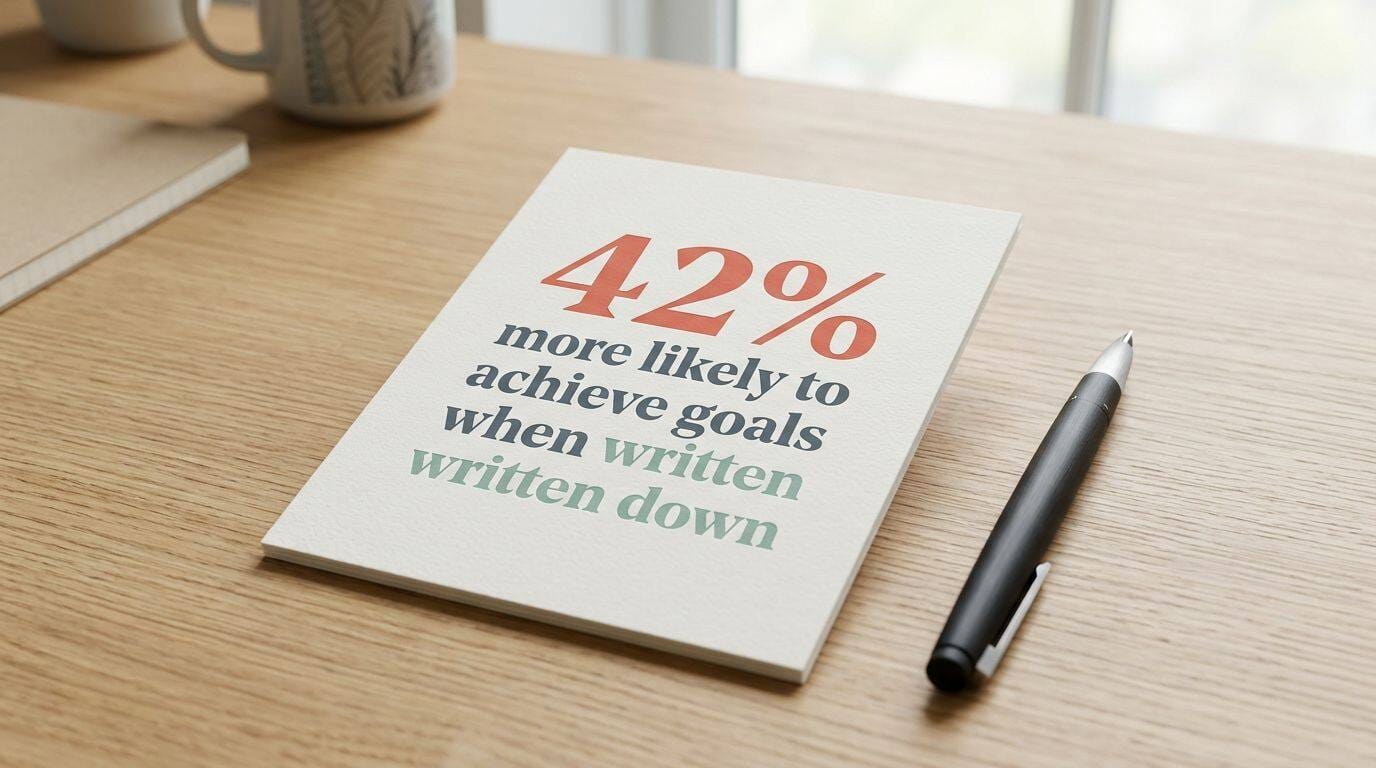
Don't aim for vague. Pick one clear target, like losing two pounds in two weeks or completing 10 push-ups without stopping, and write it down.
Research from Dominican University, cited frequently in 2026 performance reports, found that people who write down their goals and action steps are 42% more likely to achieve them compared to those who keep goals only in their heads.
That's not just motivational talk. That's a backed-up habit worth keeping.
Track what actually matters to you, how your clothes fit, your energy level, or the number of workouts you finish each week. Not just the scale.
Check in every seven days, adjust what isn't working, and keep going.
Seeing small wins builds momentum faster than any perfect plan ever could.
Keep Showing Up, Even When It's Not Perfect
Your biggest challenge isn't the workout. It's the voice in your head that says you're too tired today.
On low-energy days, just commit to ten minutes. Half a workout still counts. The habit stays alive, and most of the time, once you start, you keep going anyway.
Boredom will come. Your body adapts. When it does, swap one exercise.
Replace jumping jacks with high knees. Try burpees instead of mountain climbers. Flip the order of your circuit.
Small shifts like these keep your body working and your mind engaged without needing any new equipment.
Keep a simple log in your phone or a notebook. Seeing your progress written out gives you something real to hold onto.
And when you hit a milestone, such as five more push-ups than last month, a longer plank hold, or two more pounds gone, acknowledge it.
That proof you're moving forward is what keeps you coming back.
Start Where You Are
You've got the moves. You've got the plan. You understand why it works.
All that's left is to start.
Pick three exercises from this list. Set a timer for 15 minutes tomorrow. Do the work. That's how this begins, not with perfect conditions or new gear, just one session done.
Progress comes slowly sometimes. That's normal. Keep showing up, especially when it's not perfect. The results come from consistency, not intensity.
If you want help building a plan that fits your specific schedule and goals, I do one-on-one coaching.
No pressure - just reach out at weightlosswithken.com.
Ready to Take This Further?
If this article showed you that the world is your gym, you’re already thinking differently than 95% of people out there.
But knowing it is one thing—having a system to execute it is another.
The Step Stack System is the exact framework I use with my readers to turn everyday "dead time" — waiting for coffee, walking to the car, pacing during a phone call — into a powerful fat-burning routine.
No gym membership.
No 5:00 AM alarm.
No willpower required.
Just a simple, proven system that works on your busiest, laziest days.
👉 Grab the Step Stack System here and start burning fat today →
Join hundreds of busy people who are already "stacking" their way to a leaner, healthier body — without ever setting foot in a gym.
FAQs
Can beginners really lose fat without any equipment?
How long should a beginner workout session be?
Start with 20 to 30 minutes. The American College of Sports Medicine confirms that short, consistent sessions beat long, sporadic ones — and they're far easier to stick with when you're working out at home.
How many days a week should beginners do this routine?
Three days a week. Your muscles need recovery time between sessions, and that recovery is when the real fat-burning kicks in.
What is the best no-equipment exercise for fat loss?
Burpees. They burn around 10 to 15 calories per minute and hit every major muscle group at once. Hard to do. Hard to beat.
A Quick Word from Weight Loss with Ken
Just so you know, I'm here to empower you with knowledge, not to replace your doctor. The ideas in this article are for your information and education. Before you make any changes to your health routine—be it diet, exercise, or anything else—please have a chat with your physician or a qualified healthcare professional. Your health is your greatest asset, so let's manage it together with the right team.
Created with ©systeme.io