
How To Use Walking For Weight Loss
A few years back, I was coming off a long shift at the plant. I was tired, sore, and telling myself I'd get back to the gym when things slowed down. Things never slowed down. Sound familiar?
So instead of waiting, I started walking. Around the block at first. Then a little further.
Then I found some hills. The weight started moving. So did my energy.
I was sleeping better, my stress dropped, and I stopped dreading exercise for the first time in years.
That's when I realized walking for weight loss wasn't some beginner shortcut.
It was the strategy. And for most people, it's the one that actually sticks.
A 155-pound person can burn between 70 and 316 calories in a single 30-minute walk, depending on pace and effort.
No equipment. No membership. Just you and your shoes.
Here's how to make it work.
What Are the Benefits of Walking for Weight Loss?
Walking burns calories, reduces fat, and protects your joints all at the same time. That combination is hard to find in any other exercise.
But the benefits go beyond the scale. Regular walking can:
Lower your risk of heart disease and type 2 diabetes
Reduce your chances of stroke and certain cancers
Strengthen bones and lower your risk of osteoporosis
Improve sleep quality and reduce daily stress
Support sharper focus and a clearer head
You can do this in your neighborhood, a local park, or even on a portable treadmill in your living room. No fitness studio needed.
How Walking Burns Calories and Reduces Fat
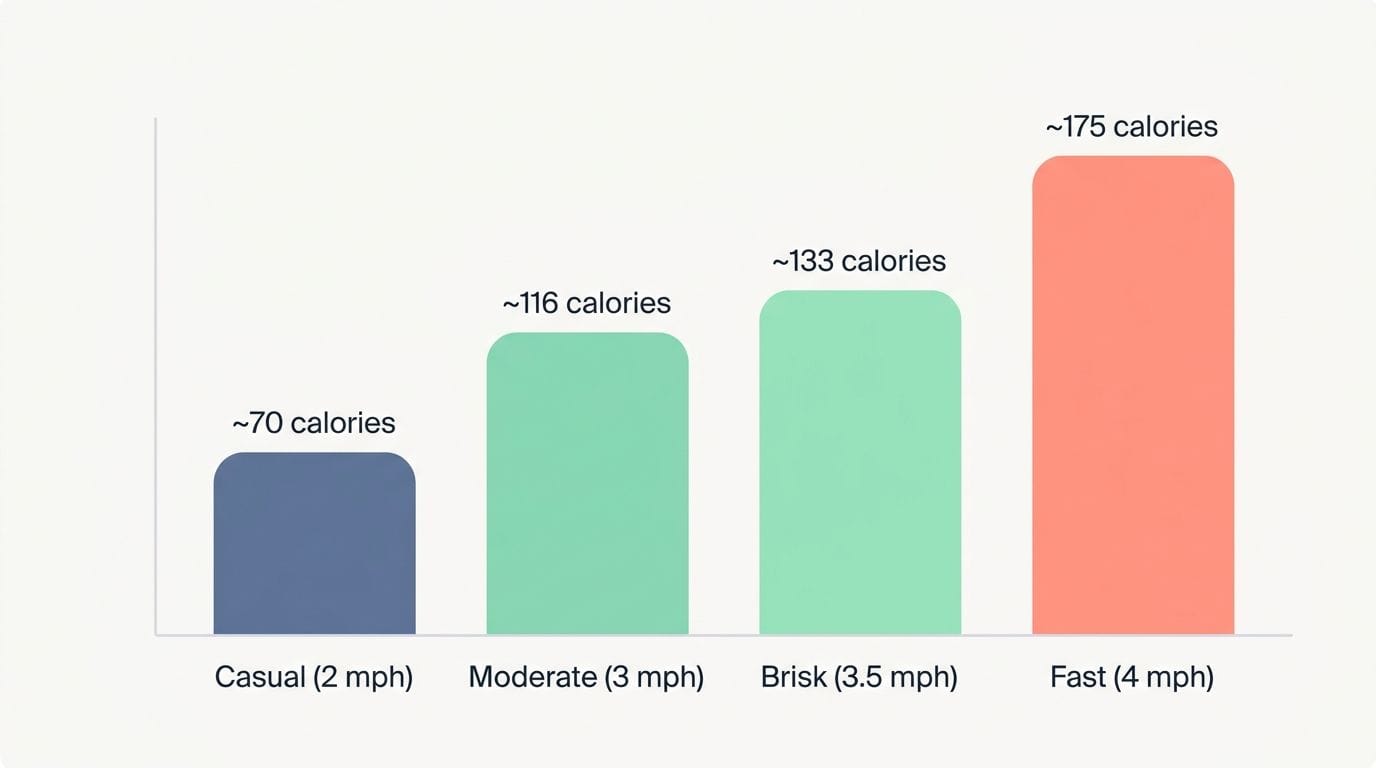
Your body starts burning calories the moment you move. How many depends on your pace, your body weight, and the terrain you walk on.
Here's what a 155-pound person burns during a 30-minute walk at different speeds:
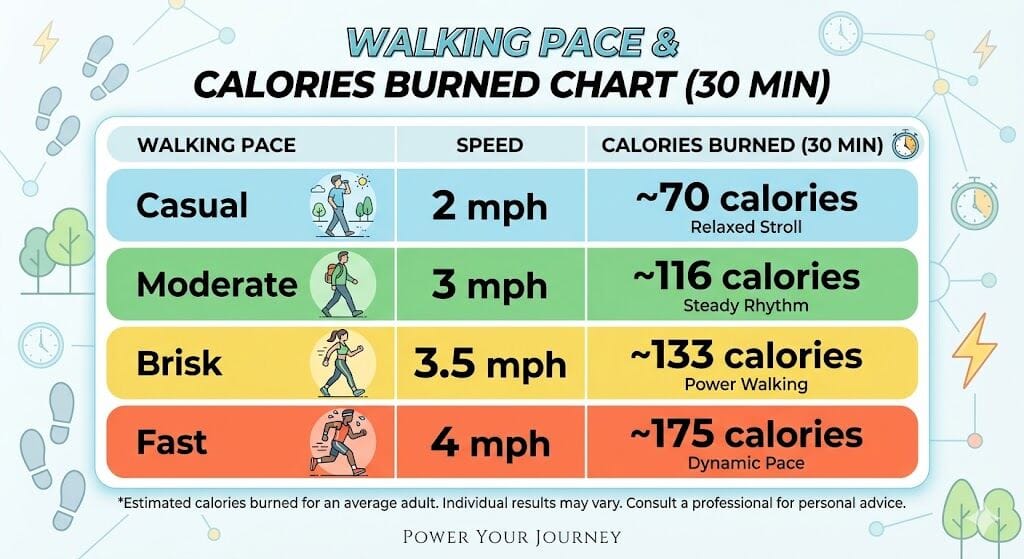
This calorie deficit is what drives fat loss. Burn more than you eat, and your body pulls from stored fat for energy.
Here's something worth understanding about pace. A steady brisk walk keeps your heart in what's called Zone 2 which is roughly 60% to 70% of your max heart rate.
At that level, your body uses stored fat as its primary fuel source, not carbs. So a moderate pace is biologically doing exactly what you want.
Hills push things even further.
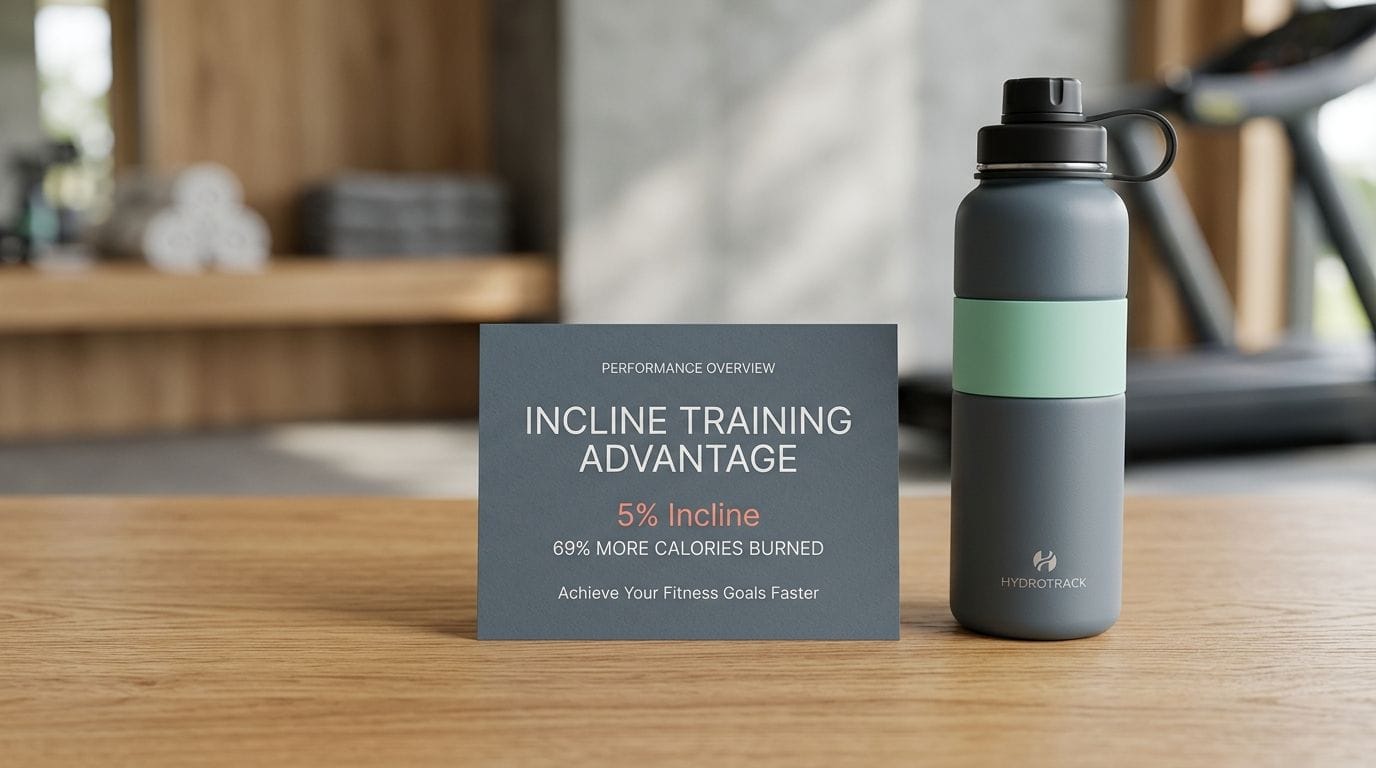
Walking at a 5% incline increases calorie burn by 69% compared to flat ground.
One walker compared two routes on the same day, flat versus three short hill segments.
Flat route: 140 calories. Hilly route: 220 calories. Same amount of time.
Varying your terrain also helps. Grass, sand, and pavement each challenge your body in slightly different ways.
That variety keeps your body from settling into one groove and stops progress from stalling.
Walking Is Low-Impact and That's the Point

One big reason walking for weight loss works for so many people is that it doesn't wreck your body in the process.
Running puts 2.5 to 3.5 times your body weight onto your joints with every step.
Walking puts about 1.0 to 1.5 times your body weight.
That gap matters when your knees have seen better days or you've got an old injury that keeps flaring up when you push too hard.
Walking works especially well for:
People recovering from injuries or surgery
Anyone dealing with joint pain or arthritis
Beginners who haven't been active in a while
Older adults who want to stay moving without the risk
Short walks spread throughout the day count just as much as one longer session.
You don't have to block out an hour. Ten minutes here, ten minutes there - it all adds up toward your weekly total.
Start where you are. Build from there. That's the whole plan.
Effective Walking Strategies for Weight Loss
Walking daily is good. Walking with a plan is better. Here's how to get more out of every session.
How to Keep a Brisk Walking Pace

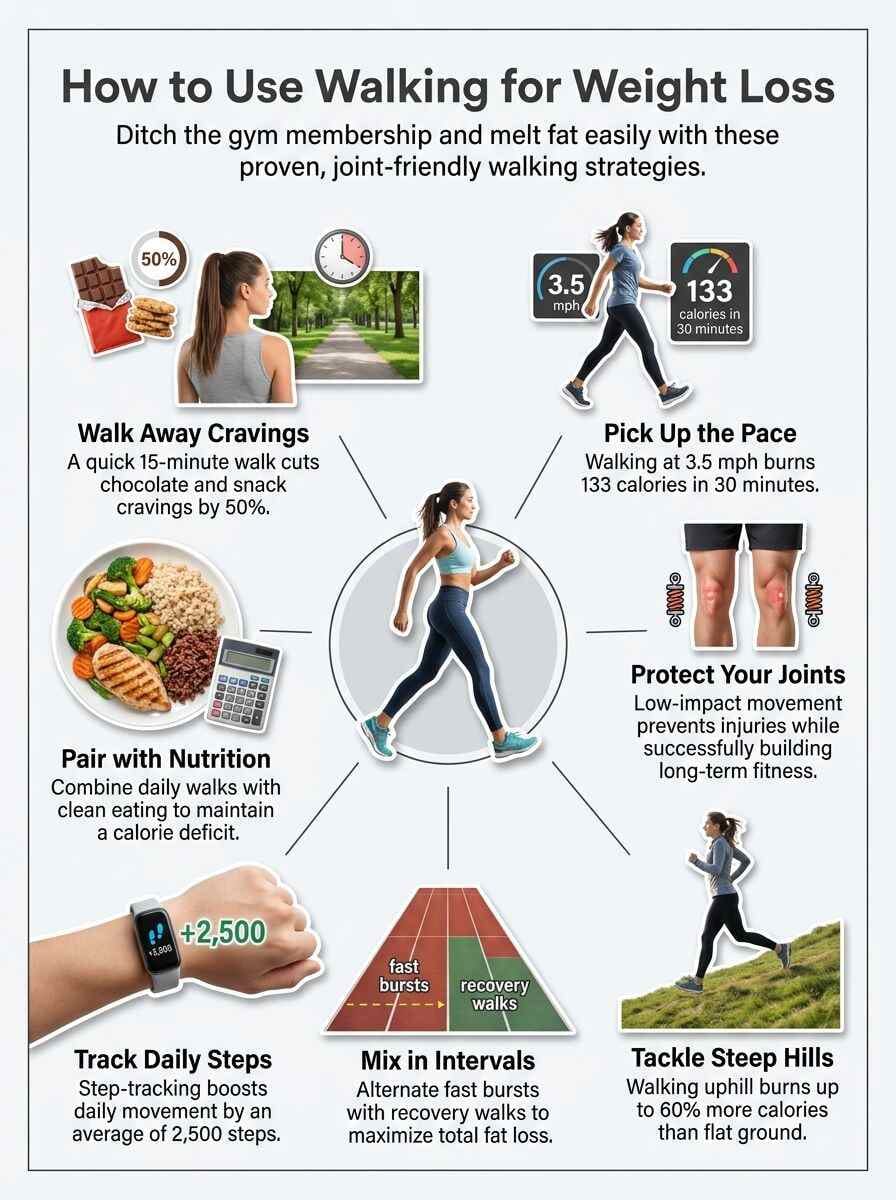
Brisk walking sits around 3.5 mph. That's fast enough that talking takes some effort, but you're not gasping. That's the sweet spot for fat burning.
A few things that help you hold it:
Pump your arms to build momentum and increase calorie burn
Start on flat ground, then add hills once the pace feels comfortable
Aim for five days a week, 30 to 50 minutes per session
Use an app or pedometer to track steps or catch up when you're drifting slow
Wear shoes with proper support because sore feet kill consistency
A neighborhood walking group tracked their pace over six weeks. They started at 3.0 mph and hit 3.5 mph by week four.
And they did it by just focusing on arm drive and a steady rhythm. No running. No gym. Just showing up and paying attention.
When you're ready, push toward 4 mph. That burns around 175 calories in 30 minutes for a 155-pound person.
Why You Should Add Hills and Inclines
Hills activate more muscle fibers than flat ground. Your legs, glutes, and core all fire at once.
The calorie burn climbs without you having to run a single step.
Adding just 3 to 5 minutes of incline per 30-minute walk can speed up visceral fat reduction compared to flat walking alone.
The numbers back it up. A 5% incline increases calorie burn by 69%.
Start with a gentle slope on a local trail or park path. As your fitness grows, look for steeper hills.
The effort stays manageable because you control when to push and when to back off.
Interval Walking: How It Works
Once hills feel manageable, try mixing in interval walking. The idea is simple: go fast for a short burst, back off and recover, repeat.
Here's a basic pattern to start with:
Walk fast for 30 to 60 seconds
Drop to a moderate pace for 1 to 2 minutes to recover
Repeat for 15 to 20 minutes within your walk
Beginners can simplify it: walk fast for one block, easy for two blocks. That still works.
Intervals burn more fat than walking at one steady pace because your heart works harder and your metabolism keeps going after you stop.
One walker tested this during a 20-minute session and recorded a 22% increase in steps per minute during fast bursts, and 12% more time in a higher heart rate zone compared to a steady walk.
No jogging required.
How to Track Your Steps and Stay Honest
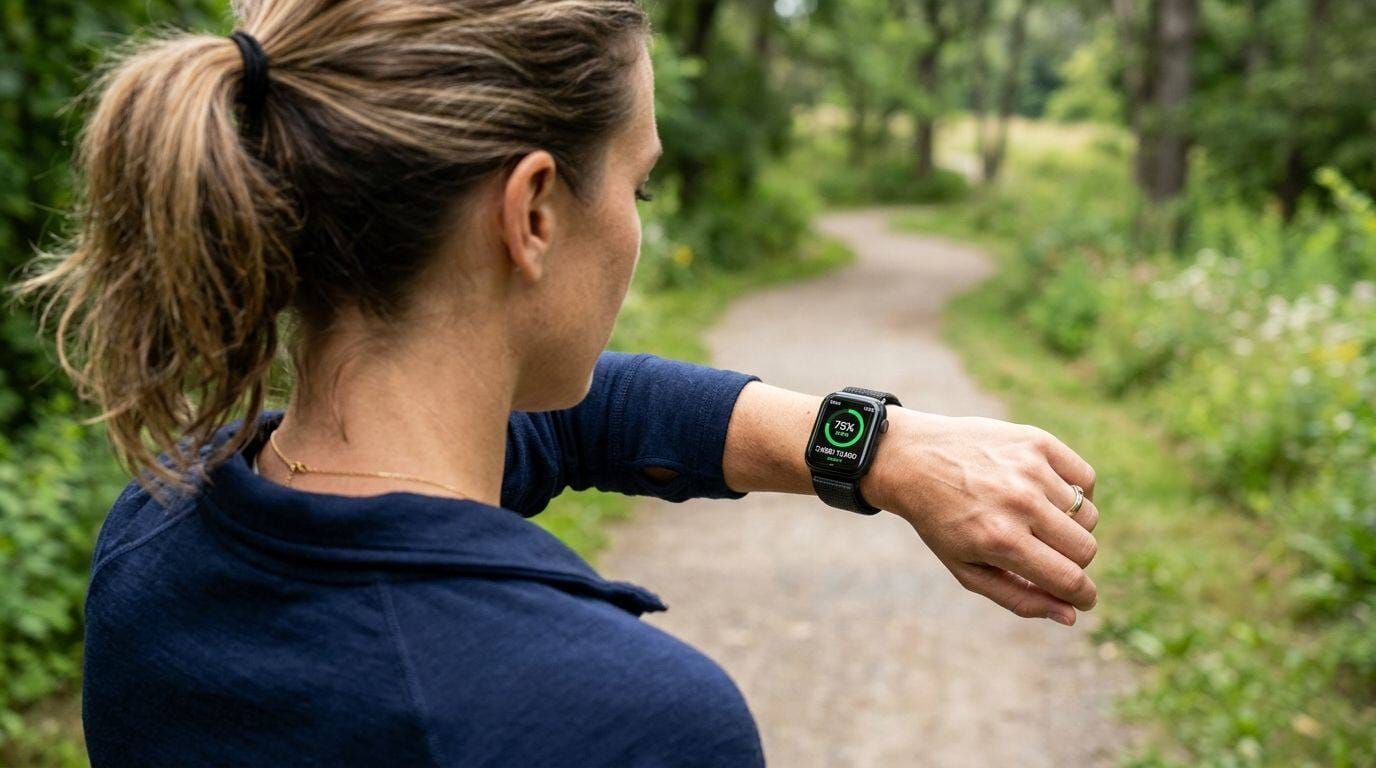
Tracking makes your walking measurable. And that changes behavior more than most people expect.
People who track their steps walk an average of 2,500 more steps per day than those who don't.
The number creates accountability whether you want it to or not.
A common starting target is 10,000 steps daily. But research shows that 7,000 to 8,000 steps per day already delivers real weight loss benefits when paired with a calorie deficit.
You don't have to hit the full 10,000 to see results.
Start where you are. Add steps gradually. Log your pace, time, distance, and how you felt after each session.
Your options for tracking:
A fitness app like Active 10
A basic pedometer
A smartwatch or fitness tracker
A simple notebook
One group of new walkers averaged 4,200 steps per day at the start.
Four weeks later they averaged 6,700 - just from paying attention to the number.
One participant said it best: "Seeing the numbers made me take the long way to the store more often."
Your walking log becomes proof that you're moving forward, even on days the scale doesn't move.
How to Start Your Walking Routine for Weight Loss
You don't need a complicated plan. You need one that fits your actual life.
Setting Goals That Actually Fit Your Life
Be honest about where you are right now - not where you hope to be in three months.
Start with what you can realistically do this week
Build toward 150 to 250 minutes per week over time, not on day one
Increase your time or distance by about 10% each week no more than that
Break your walks into shorter bouts throughout the day if a full session feels like too much
Celebrate small wins - hitting your step count three days in a row is real progress
Test your goals for two weeks before adjusting them. Real data beats guessing every time.
Starting Small and Building Up
Short walks are not a failure. They're how the habit gets built.
Here's a simple plan to get started:
Monday: 10 minutes at a moderate pace
Tuesday: Rest or light stretching to let your body recover
Wednesday: 10 minutes with a couple of hills
Friday: 10-minute interval walk - fast bursts with easy recovery periods
Saturday: 15 to 20 minutes at an easy, comfortable pace
Add a few minutes every week until you can walk 30 minutes without stopping.
Warm up for five minutes at a slower pace before each session. Cool down the same way after. Your heart will thank you.
If one long walk still feels like too much, split it - morning and evening both count toward your total.
Pairing Walking with Better Eating

Walking does a lot of the heavy lifting. But food choices either speed up your results or slow them down.
A few habits that actually move the needle:
Keep a food journal next to your walking log. It keeps you honest about portions and patterns
Take a short walk before reaching for a snack. A 15-minute walk can cut cravings by nearly 50%
Fill half your plate with fruits and vegetables, then add whole grains and lean protein to the rest
Swap sugary drinks for water . This one change alone cuts a surprising number of daily calories
Eat a small snack about an hour before your walk to fuel the session properly
Here's the part most people overlook.
Regular brisk walking helps regulate cortisol which is your body's main stress hormone.
When cortisol stays balanced, your sleep gets better.
When sleep improves, the hunger hormones that make sticking to a healthy diet so hard start working in your favor instead of against you.
Your walks aren't just burning calories. They're making it biologically easier to eat right in the first place.
Let that sink in.
Closing Thoughts
Walking for weight loss is not a backup plan. It's the real thing.
No gym. No equipment. No excuses you can't overcome. Just a routine that fits your actual life and a willingness to show up consistently.
Pick up your pace when you're ready. Find a hill. Try a few intervals. Track your steps.
Pair it with better food habits. Then do it again tomorrow.
Most people overthink where to begin. Don't. Lace up. Take the first step. The habit builds itself from there.
If you want help putting a simple plan together, that's exactly what I do. Just reach out, no pressure at all.
Ready to Take This Further?
If this article showed you that the world is your gym, you’re already thinking differently than 95% of people out there.
But knowing it is one thing—having a system to execute it is another.
The Step Stack System is the exact framework I use with my readers to turn everyday "dead time" — waiting for coffee, walking to the car, pacing during a phone call — into a powerful fat-burning routine.
No gym membership.
No 5:00 AM alarm.
No willpower required.
Just a simple, proven system that works on your busiest, laziest days.
👉 Grab the Step Stack System here and start burning fat today →
Join hundreds of busy people who are already "stacking" their way to a leaner, healthier body — without ever setting foot in a gym.
FAQs
Can walking really help with weight loss?
Yes. A 155-pound person burns around 140 calories during a 30-minute walk at a moderate pace. Add hills, intervals, and consistency — and those numbers add up faster than you'd think.
How long should I walk each day to lose weight?
Start with 10 to 15 minutes and add a few minutes each week. The goal is to work toward 150 minutes per week over time. You don't have to get there on day one.
Does walking help prevent health problems?
It does. Regular walking reduces your risk of type 2 diabetes, stroke, osteoporosis, and some cancers. A 2023 Harvard study found that just 20 minutes of daily walking cuts heart disease risk by nearly 30%
Where can I find a good walking plan?
The Mayo Clinic Diet offers a beginner-friendly program that builds slowly. The free NHS Couch to 5K app also guides you step-by-step from short walks to longer sessions.
Is walking good for older adults on Medicare or Medicaid?
Absolutely. Many Medicare Advantage plans include fitness benefits like SilverSneakers at no extra cost. Walking is free, easy on your joints, and AARP Rewards even gives you points for tracking your daily steps.
A Quick Word from Weight Loss with Ken
Just so you know, I'm here to empower you with knowledge, not to replace your doctor. The ideas in this article are for your information and education. Before you make any changes to your health routine—be it diet, exercise, or anything else—please have a chat with your physician or a qualified healthcare professional. Your health is your greatest asset, so let's manage it together with the right team.
Created with ©systeme.io