The Only Home Workout Equipment Beginners Really Need
Going to the gym sounds like a good plan, until you actually have to go.
The crowded parking lot. The wait for machines. The fluorescent lights and the strangers all around you.
After a while, most people just stop going.
But staying home doesn't mean giving up on your health.
The right home workout equipment for beginners doesn't cost much, doesn't take up much space, and works if you actually use it.
You just need to know what to grab and what to skip.
This guide walks you through the six pieces that actually matter, why each one works, and how to put them together in a way you'll stick with them.
Before and After - A Quick Personal Story
Years ago, I was putting in long shifts at the plant and coming home worn out. Driving to a gym after a day like that felt like more trouble than it was worth.
I had a resistance band and a pair of dumbbells sitting in the corner collecting dust.
One evening I just picked them up. Did maybe fifteen minutes. Nothing fancy. Nothing planned.
I showed up again the next day. Then the day after that. Six weeks later, my pants fit differently. My energy came back. My back wasn't as stiff in the mornings.
The gym membership I'd been paying 20 dollars a month for got canceled. Haven't missed it once.
Why the Right Home Workout Equipment for Beginners Beats a Gym
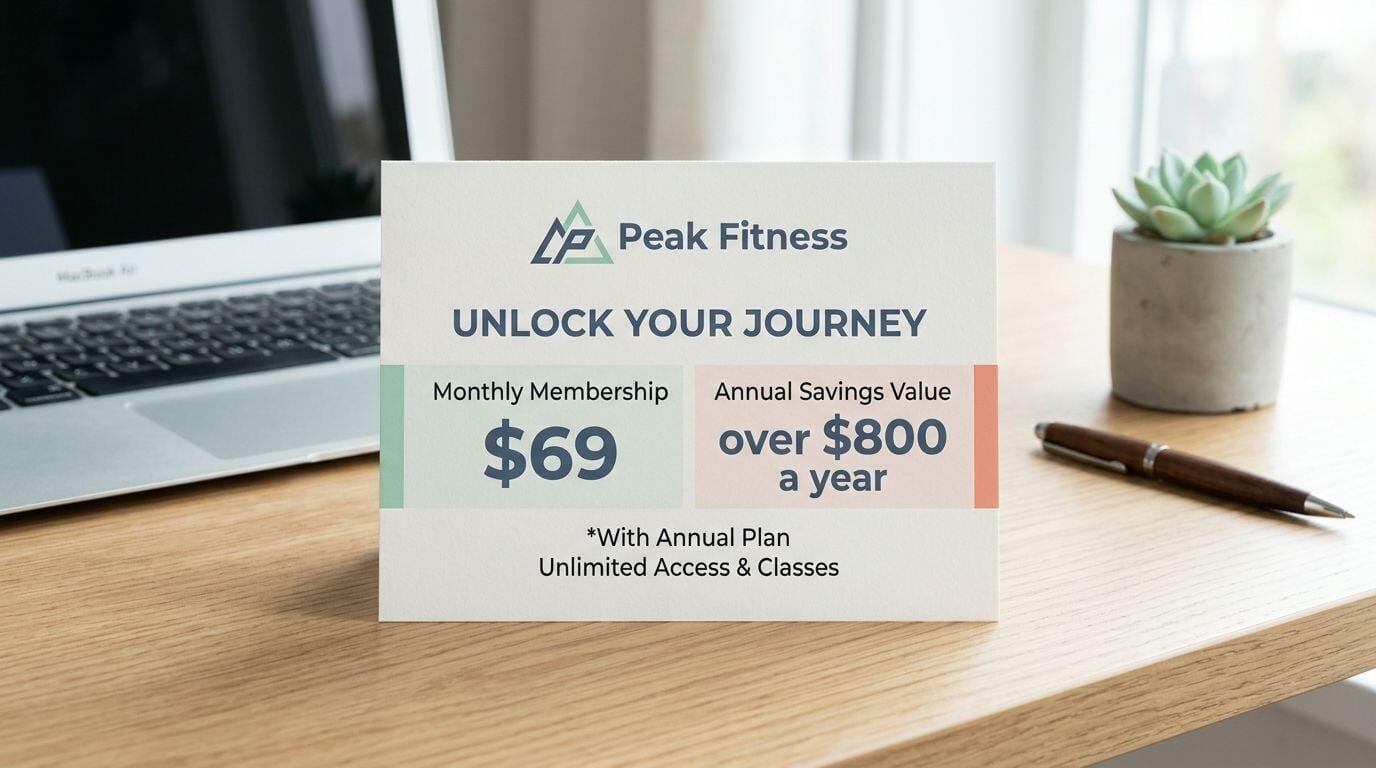
According to the Health & Fitness Association's Benchmarking Report, the average gym membership in the U.S. costs $69 a month.
Add initiation fees and annual costs, and you're looking at over $800 a year. For machines you wait in line for.
A few well-chosen pieces of home workout equipment for beginners cost a fraction of that and require only a one-time purchase.
Here's a real example:
One person picked up a jump rope ($8), a resistance band set ($20), an exercise mat ($25), and a pair of 5-10 lb dumbbells ($30). Total: $83. Everything fit under the bed.
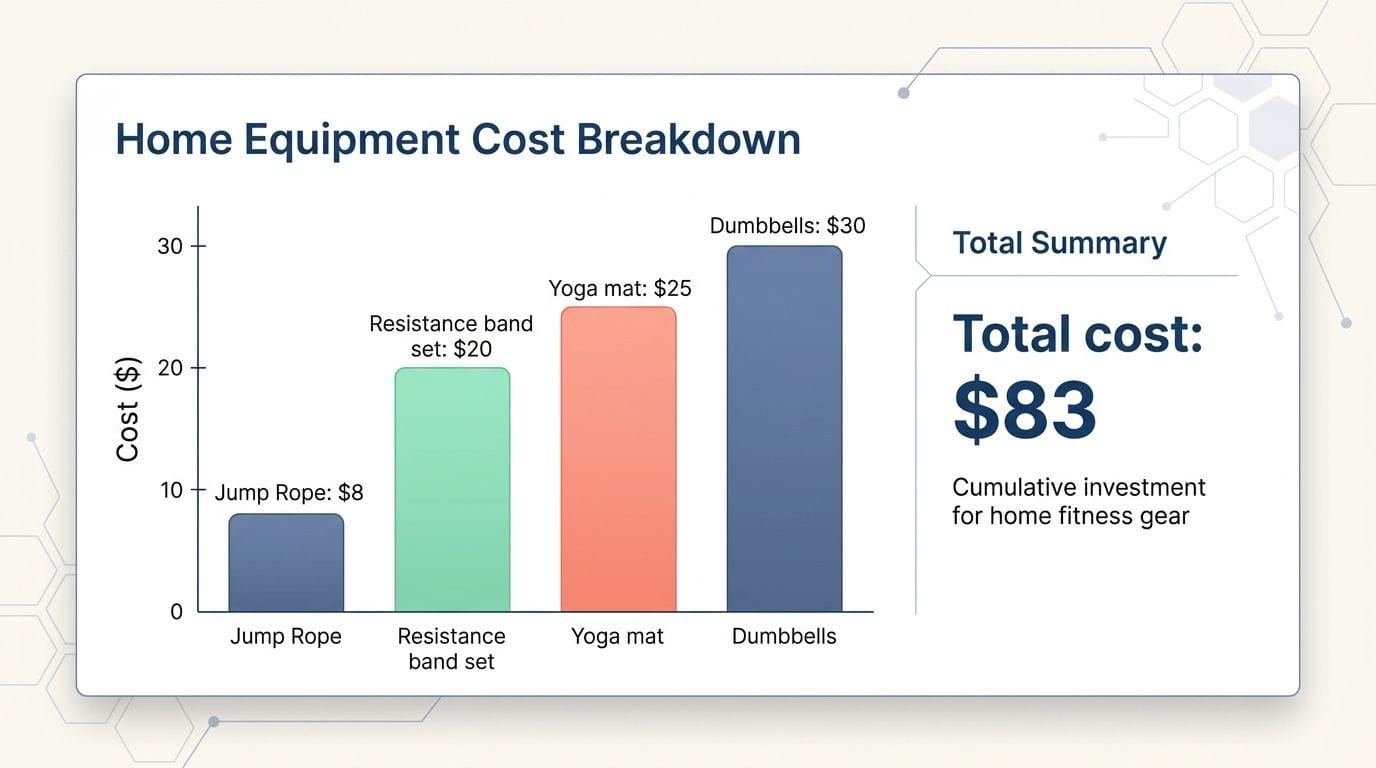
Her home setup paid for itself in less than two months. After that, pure savings every single month.
"I got everything I needed in a small tote and cancelled my membership without losing my workout routine," she said.
That's the math. Spend once, keep what you buy, and stop paying monthly for something you dread going to.
The Best Home Workout Equipment for Beginners
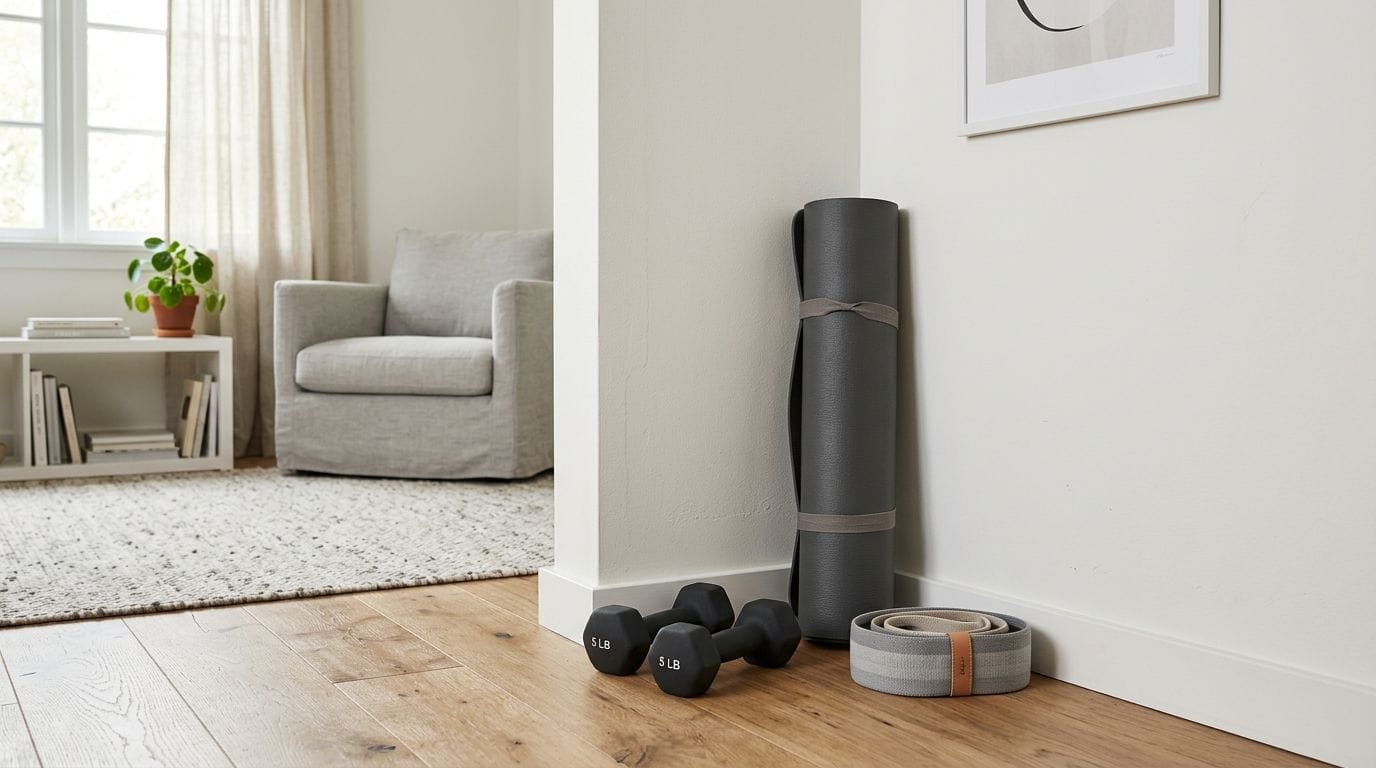
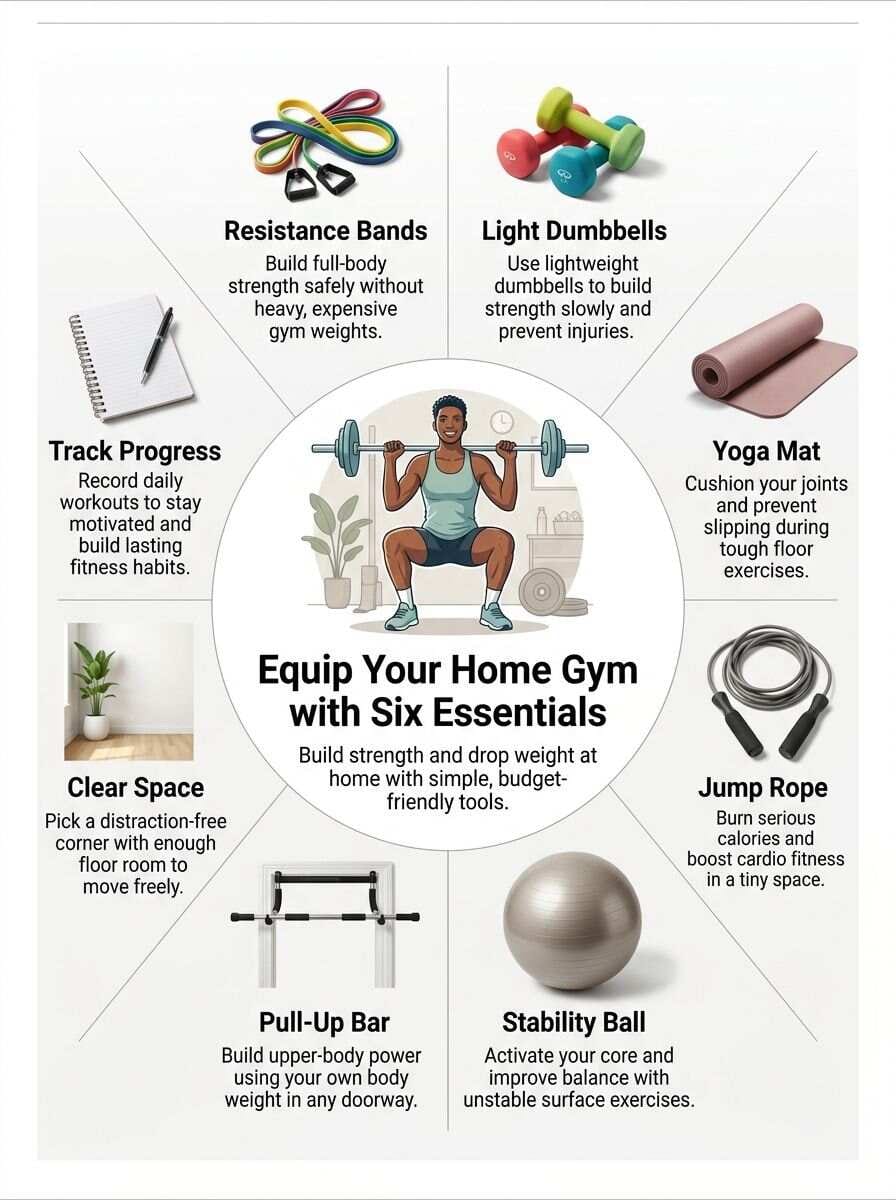
Six pieces. That's it. No machines, no big budget - just tools that work and that you'll actually use.
Resistance Bands
Resistance bands are one of the most underrated pieces of home workout equipment for beginners you can own.
They're inexpensive. They roll up smaller than a water bottle.
And research published in the Journal of Human Kinetics shows they use something called accommodating resistance.
The tension increases as the band stretches, matching your muscles' natural strength curve.
Your muscles are always working at the right level, whether you're just starting out or getting noticeably stronger each week.
You can do bicep curls, chest presses, rows, and leg work all with one band. From your living room. No membership required.
Here's what I've seen when people actually stick with them.
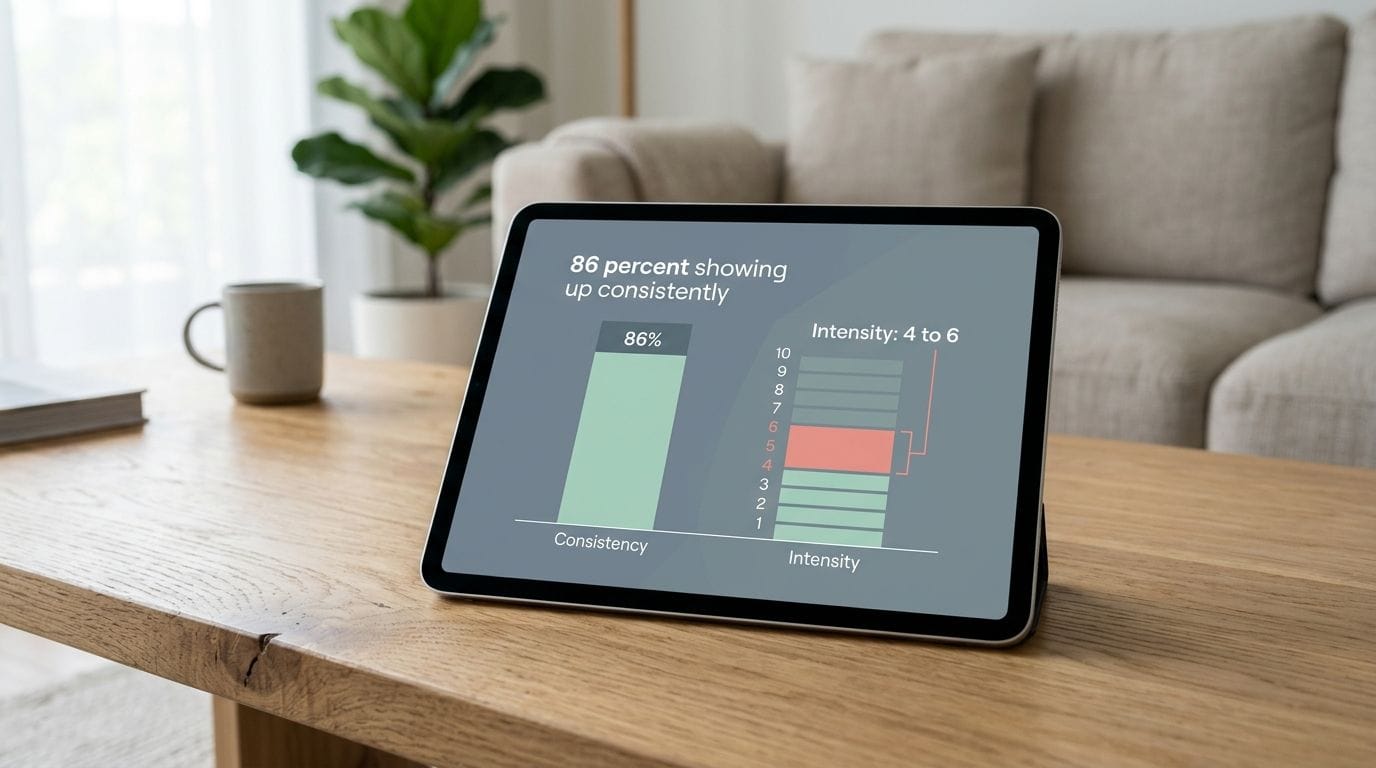
In one 8-week program using only bands and light dumbbells, 86 percent of participants who typically avoided gyms showed up for three sessions a week consistently.
Ten out of twelve improved their squat depth and added more full-range push-ups.
Workout intensity climbed from a 4 to a 6 on a 10-point scale, without ever buying heavier weights.
Bands also protect your joints.
The tension builds gradually instead of dropping on you all at once, which is easier on your shoulders, knees, and elbows, especially early on.
5-10 lb Dumbbells
Light dumbbells take your home routine a step further.
The 5-10 lb range is the right starting point. Your muscles need time to adapt. Starting too heavy leads to injury or burnout fast.
Starting light builds the habit, the form, and the foundation, and ten pounds feels heavier than most people expect when they're doing twenty controlled reps.
Bicep curls. Shoulder presses. Bent-over rows. You can cover your whole upper body without a weight bench.
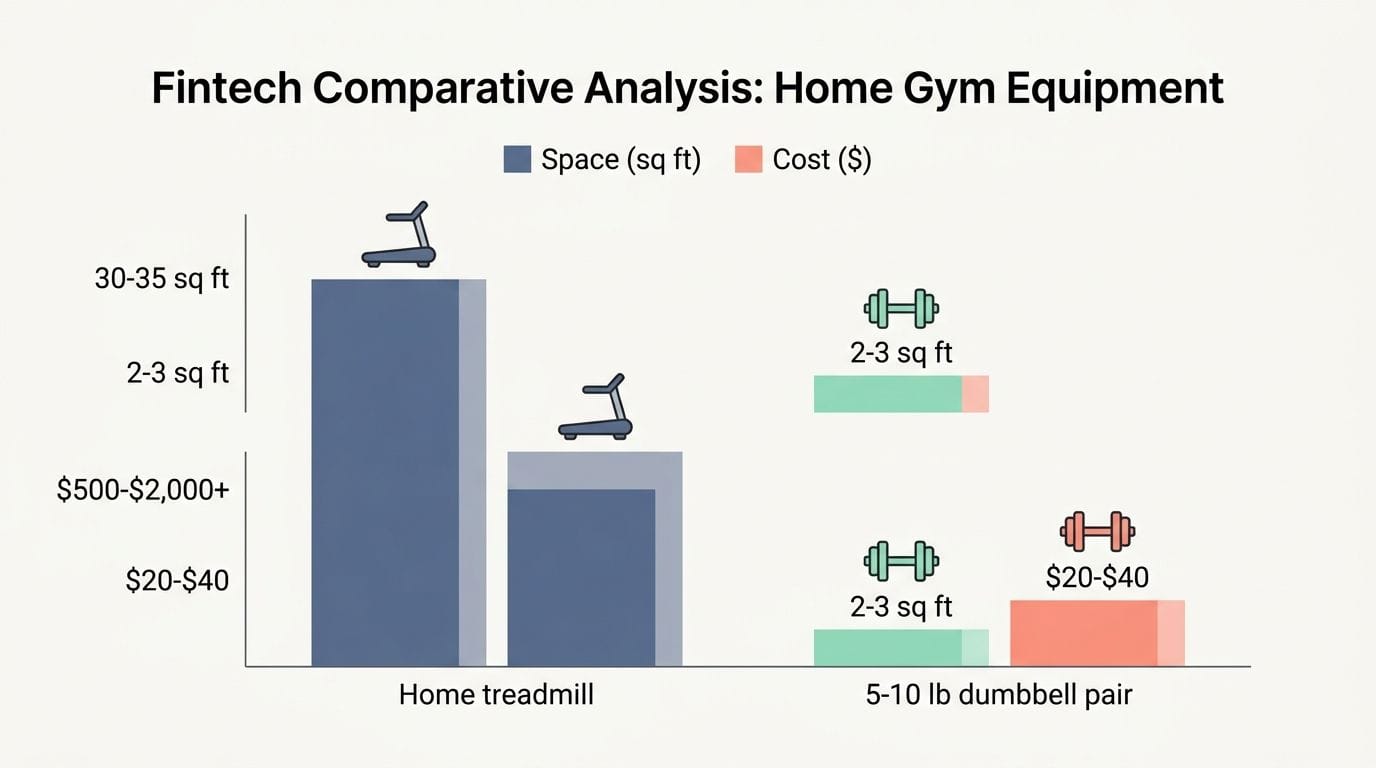
On spaces like garage-gym, they note that a standard home treadmill requires 30-35 square feet of clear floor space.
A pair of dumbbells? Two to three square feet on a shelf or in a closet.
Consistent work with lighter weights beats sporadic heavy lifting. Every time.
Grab them, do your fifteen minutes, and move on with your day. That kind of simplicity is exactly what keeps people coming back.
Exercise Mat
An exercise mat does more than protect your floor. It protects you.
Your wrists, knees, and spine all take impact during floor work. A good mat absorbs that.
Especially when doing things like push-ups, planks, core exercises, and stretching after a session.
It also keeps you from slipping when you sweat.
Most cost under $30 and fold into any closet when you're done.
When you're not sliding around or feeling every hard edge of the floor, you can focus on what actually matters: your form.
That's when the work starts doing what it's supposed to do.
So an exercise mat? Small purchase. But a real difference.
Jump Rope
A jump rope delivers serious cardio in almost no space and for almost no money.
Harvard Health Publishing reports that a 15-minute moderate jump rope session burns roughly the same calories as a 30-minute run at a moderate pace.
You're cutting your workout time in half for the same result. Let that sink in.
It costs $5-$10. Fits in a drawer. Works indoors or outside.
Ten minutes of skipping gets your heart rate up fast, works your legs, your arms, and your core all at once.
And it starts burning fat without a single gym payment.
No setup needed
No waiting for equipment
Works rain or shine with enough ceiling clearance or an open driveway
Stability Ball
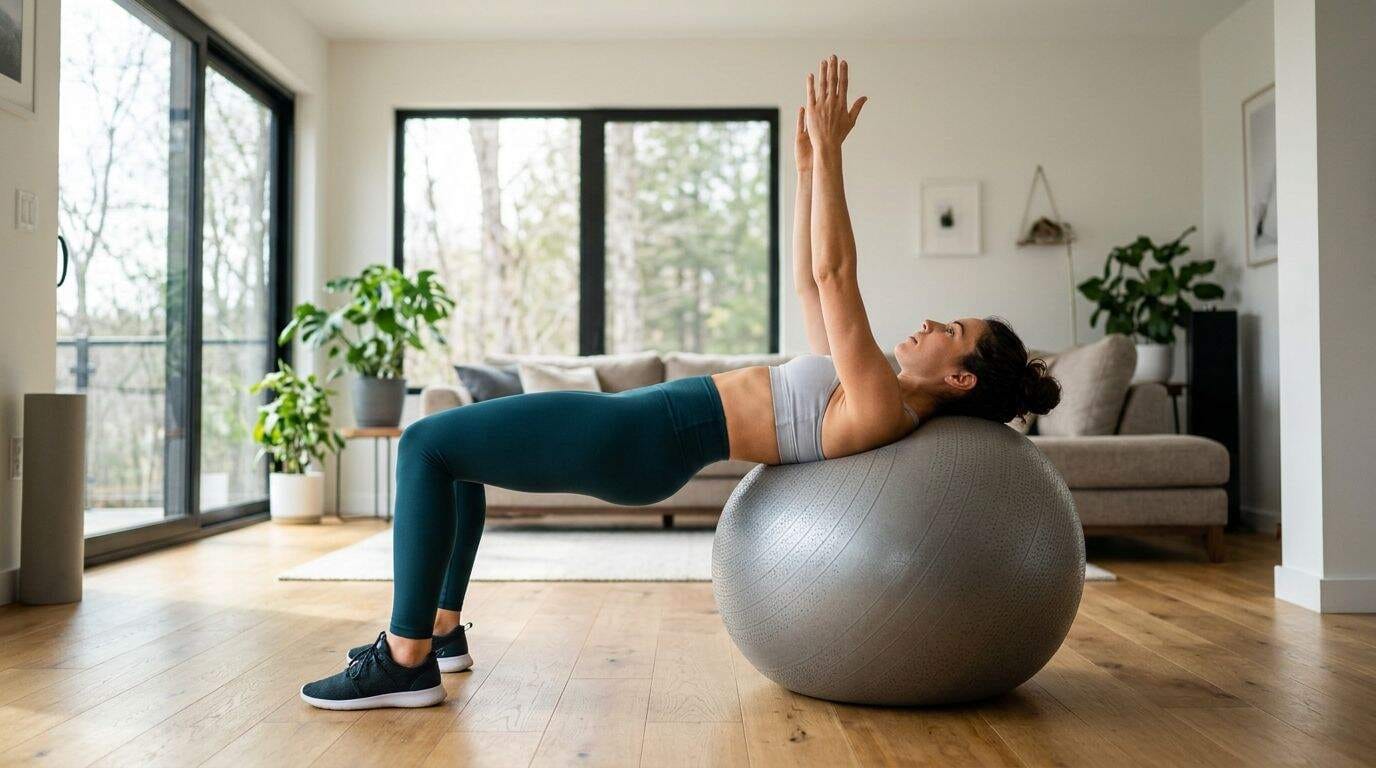
A stability ball turns a regular core exercise into something that actually challenges you.
When you work on an unstable surface, your body fights to stay balanced. That fight recruits more muscle.
Research from the Human Kinetics Journals shows that core exercises on unstable surfaces produce higher activation in the deep stabilizing muscles that protect your spine and control your posture.
You get more out of the same movement without lifting heavier.
Start with ball crunches, wall squats, and bridge holds. Those basics are harder than they look.
After about two weeks, your body adapts, the soreness fades, and you add more challenging variations.
A stronger core shows up in everyday life. Climbing stairs. Carrying groceries. Bending down without your back complaining. That's the real return on this one.
Your home workout space stays small because the ball stores in a corner or deflates flat.
Minimal space, solid results.
Pull-Up Bar
A doorway pull-up bar is the most space-efficient upper-body tool you can own. Most cost under $30. No drilling required.
Your own bodyweight becomes the resistance. That means you're always working with what you've got.
If a full pull-up isn't there yet, start with a resistance band looped around the bar for support, or use a chair to take some of the load.
That's not cheating. That's how you build toward the real thing.
Pull-ups work your lats, biceps, and shoulders all at once. Multiple muscle groups firing together means more energy burned per rep.
Over time, your back tightens up, your arms develop real definition, and your grip gets stronger.
And that strength carries over. Lifting bags, keeping up with kids or grandkids, and reaching overhead without wincing all get easier.
How to Set Up Your Home Workout Space
You don't need a full room. You only need a corner that works.
Here's what to look for:
Enough floor space to move freely, reach your arms out, step back, and turn with a jump rope without clipping anything
A flat, level surface for floor work and balance exercises
Good air flow, such as a window you can crack open or a fan close by
Low clutter. Tripping hazards are real, especially with a jump rope going
Equipment within reach. If you have to hunt for it, you'll skip the workout
A mirror nearby helps you check your form during dumbbell work and keeps you safe. Natural light helps your mood. Privacy helps your focus.
Find a spot that gives you as much of both as you can get.
How to Stay Consistent When No One Is Watching
Showing up once is easy. Showing up again the next day and the day after is where most people fall off.
Here's what actually helps:
Set a specific time and protect it. Before breakfast. After lunch. Right after dinner. Pick your time and treat it like an appointment you can't skip.
Start with ten minutes, not thirty. Short sessions build the habit. Longer ones follow once the habit is solid.
Track your workouts in a notebook or on your phone. A streak you can see is hard to break on purpose.
Rotate your tools. Bands one day, dumbbells the next, jump rope after that. Variety keeps boredom from killing your consistency.
Mark your small wins. Two more reps than last week. A full week of sessions. All that counts. Your brain needs to know the work is paying off.
Find accountability. This could be a workout partner on a video call, an online group, or even just checking in with someone. When someone else shows up, bailing out feels different.
And if you miss a day, don't spiral. Just show up tomorrow. That's how you keep winning.
Wrapping Up
You don't need a gym. You don't need a room full of machines. You need a few solid tools, a clear corner, and the willingness to start.
Resistance bands. Light dumbbells. An exercise mat. A jump rope. A stability ball. A pull-up bar. That's your gym.
Pick one thing from this list and try it this week. Build from there.
If you want help putting it all together into a simple plan that fits your real life, I do one-on-one coaching virtually, from wherever you are.
No pressure. Just reach out.
Ready to Take This Further?
If you’ve realized that you don't need a room full of expensive equipment to get in the best shape of your life, you’ve already won half the battle.
The Step Stack System takes that 'minimalist' philosophy to the next level by turning your existing daily routine into your primary workout
No gym membership.
No 5:00 AM alarm.
No willpower required.
Just a simple, proven system that works on your busiest, laziest days.
👉 Grab the Step Stack System here and start burning fat today →
Join hundreds of busy people who are already "stacking" their way to a leaner, healthier body — without ever setting foot in a gym.
FAQs
What home workout equipment do beginners really need?
You do not need much to get started. A pull-up bar, a jump rope, and a pair of supportive shoes cover most of your bases. Brands like SMAI and MuscleSquad offer beginner-friendly sets that typically run under $100 combined.
Do beginners need a treadmill at home?
A treadmill like the P100 is great if you have the space, but a jump rope burns about 10-15 calories per minute and takes up almost no room.
Are weight benches worth buying for beginners?
Yes, a weight bench opens up more than 20 different exercises for your upper and lower body. Options from Marcy or the Major Fitness B52 give you good value without overcomplicating things.
What equipment helps women who are going through menopause stay active at home?
Low-impact resistance training with a pull-up bar or jump rope helps maintain bone density, which naturally declines during menopause. Coaches like Melissa Neill and communities like the Strong Woman Club offer great guidance too.
Can beginners follow a structured program with basic home equipment?
Absolutely. Programs like the Platinum Program from Sunny Health and Fitness are built for home workouts and can deliver results comparable to gym training.
A Quick Word from Weight Loss with Ken
Just so you know, I'm here to empower you with knowledge, not to replace your doctor. The ideas in this article are for your information and education. Before you make any changes to your health routine—be it diet, exercise, or anything else—please have a chat with your physician or a qualified healthcare professional. Your health is your greatest asset, so let's manage it together with the right team.
Created with ©systeme.io