
The Unseen Workout: How The Japanese Lifestyle Creates Natural Fitness
Hate the gym but still want to stay fit? You’re definitely not alone. The Japanese have managed to stay healthy for generations without boot camps, trendy programs, or piles of workout gear.
Their everyday habits naturally keep them active without ever feeling like a workout.
Let me show you how their simple lifestyle choices can help you get fit too — all without stepping foot in a gym.
Core Elements of the Japanese Lifestyle That Promote Natural Fitness
The Japanese stay in shape almost effortlessly. Their daily routines blend movement into normal life in a way anyone can copy.
How does active commuting and walking support natural fitness?
In Japan, fitness doesn’t come from gym memberships - it comes from everyday walking. People walk to the train, to shops, to work, and back home again.
All that movement throughout the day burns calories, builds strength, and doesn’t require scheduled workout time.
Studies even show that this “Japanese Walking” pattern - switching between fast and slow paces- outperforms steady walking for heart health and muscle strength.
It can even lower blood pressure more than regular-paced walking.
If you hate the gym but want to lose weight, walking is a perfect place to start. It helps cut the risk of high blood pressure by 5% and obesity by 12%.
It also boosts mental health, lowering anxiety risk by nearly 60%.
And the best part? It’s free. No gear, no training. Start with short walks and build from there.
Many people who begin with walking naturally end up adding more activity because they feel better.
What are the traditional dietary habits that contribute to balanced nutrition?
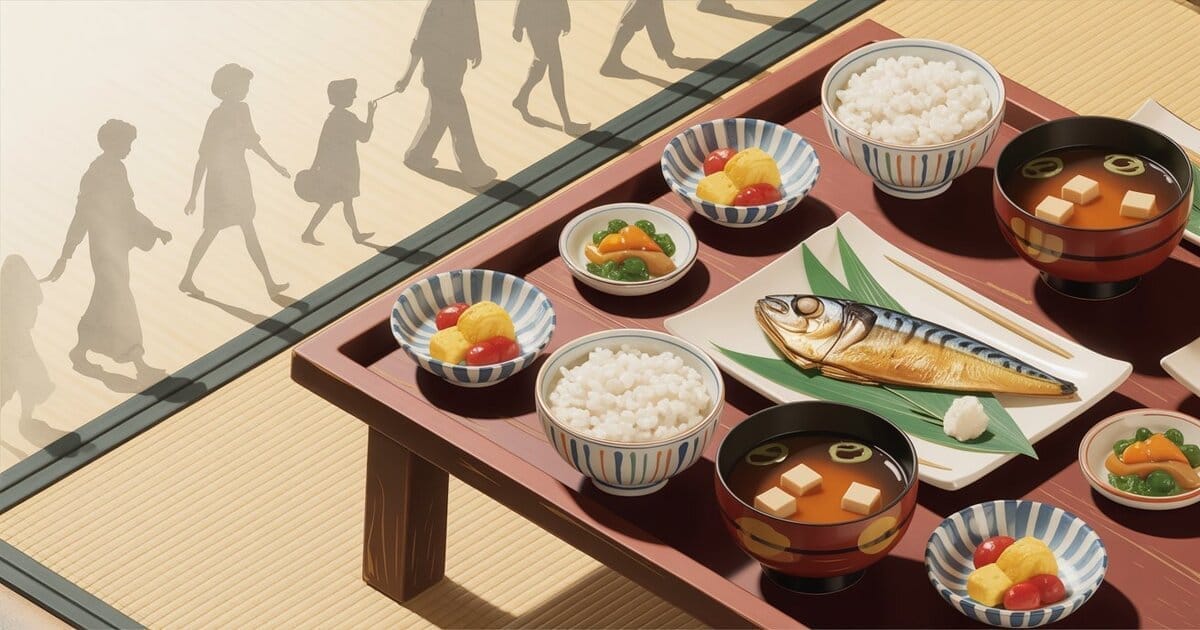
The Japanese way of eating makes staying slim feel almost effortless.
Meals revolve around fish, tofu, vegetables, and fresh seasonal dishes rather than heavy meats or sugary snacks. This traditional “washoku” style focuses on small plates and clean, natural flavors.
Rice and noodles like soba and udon keep you full, while seaweed adds gut-friendly fiber. Meals rarely include lots of added sugar or fat, which quietly helps keep extra weight off.
Another key habit? Eating until about 80% full — a mindful practice that naturally prevents overeating.
With plenty of plant foods, fiber, and fish, it's a diet that fuels the body without piling on calories.
Research shows this eating style supports weight control and lowers the risk of many chronic illnesses.
Now let’s look at how movement seamlessly fits into daily Japanese life — even without a gym membership.
How is mindfulness combined with movement in daily routines?
Mindful movement is part of everyday life in Japan, often without people realizing they’re doing it. Actions like sweeping, cooking, or walking to work become a kind of moving meditation.
A close friend of mine saw this personally during his stay in Tokyo. His host mom cleaned her little garden each morning — slow, steady, intentional movements paired with deep breathing. He told me it wasn’t just a chore; it was a moment of presence.
This blend of mindfulness and gentle movement burns calories without a gym.
Mindful practices bring together body awareness, emotion, and intention.
Research shows that activities like tai chi help people tune into their bodies and reduce stress.
Another program, Movimento Biologico, found that mindful movement boosts mood and emotional wellbeing.
Many Japanese people naturally use slow, conscious movements and calming breathing throughout the day. This simple approach keeps them active without equipment, memberships, or workout plans.
Let’s explore specific daily habits that turn into effortless exercise.
Subtle Physical Activities Embedded in Everyday Life
In Japan, daily life quietly doubles as exercise. Tending plants, hand-cleaning floors, and cooking from scratch all add up to consistent calorie burn — without ever feeling like a workout.
How do gardening and household chores keep you physically active?
Gardening works the body in ways that feel more natural than a gym routine. Studies show home gardeners spend less time sitting and enjoy better overall health.
Digging, planting, and weeding activate multiple muscle groups at once.
You squat, reach, twist, bend - engaging legs, arms, and core without even noticing. Traditional Japanese gardens require careful, detailed work, keeping the body gently active for long stretches of time.
Daily chores offer the same secret benefits. Sweeping uses the arms and shoulders. Scrubbing bathrooms engages the core. Even folding laundry keeps you moving.
Research links these tasks to fewer health issues, especially as people age.
Many Japanese homes rely less on automation, which means more built‑in physical activity. Making the bed, washing dishes by hand, wiping windows - it all adds up to an “unseen workout.”
What role does community engagement and traditional practices play in fitness?
Community plays a huge role in staying active in Japan. You’ll find groups in parks doing morning radio calisthenics — simple, rhythmic movements done together in a friendly, social atmosphere.
My friend told me how he joined one of these routines during his trip to Tokyo, and it amazed him how energized he felt after just 15 minutes.
He quickly realized how traditional practices like tai chi create a relaxed, social way to move without pressure. He loved it so much that he still practices it to this day.
And this is why people stick with these routines because they’re enjoyable - and because the community keeps them coming back.
Research shows that local group programs help older adults stay strong and reduce frailty.
Many neighborhoods have outdoor exercise stations where people gather to stretch and move together. It becomes a daily ritual people look forward to, not something they dread.
The mix of gentle activity and social connection forms a fitness habit that lasts for years.
Health Benefits of the Japanese Approach to Fitness
The Japanese lifestyle supports long life and better health - no gym needed. Simple, daily habits reduce stress, lift mood, and keep the body strong.
How does this lifestyle contribute to longevity and overall well-being?
Everyday Japanese habits offer powerful health benefits. Frequent walking and fresh foods help keep blood pressure down and support heart health.
Their seasonal diet prevents weight gain and reduces long‑term health risks.
Research shows that small bursts of movement throughout the day can be more effective than one long workout.
Combined with wholesome eating and calming daily rituals, these habits create a foundation for longer, happier lives.
Community bonds also matter. Shared meals and group activities offer emotional support, easing stress and improving sleep, which boosts immunity and overall well‑being.
These simple choices lead to less body fat, more energy, and fewer sick days. Now let’s see how this lifestyle strengthens mental health too.
In what ways does active living improve mental health?
Daily movement isn’t just good for the body - it’s essential for the mind. Studies show that just two 30‑minute sessions of exercise per week can significantly raise wellbeing scores.
I used to feel tired and low most days until I swapped my drive to work for a morning walk. My mood lifted almost immediately - and it stuck.
Walking also improves sleep, which is huge for mental health. It can reduce anxiety risk by nearly 60%.
And again, none of this requires a gym.
Mindful movement woven into daily Japanese tasks reduces stress and boosts happiness. Gardening, for example, is linked to greater purpose and joy.
A friend of mine started a small balcony herb garden and swears it’s her “reset button” after long workdays.
Community activities help too - keeping people active while also easing loneliness.
Every bit of it counts toward mental health, even when it doesn’t feel like exercise.
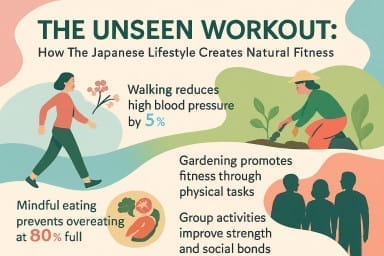
Quick Visual Summary: The Everyday Habits Behind Japan’s Natural Fitness
Conclusion
You don’t need fancy gym equipment to stay fit. The Japanese lifestyle shows how small, everyday actions can build a healthier body.
Walking, eating fresh foods, and doing simple chores all stack together into a powerful fitness routine.
These little habits work just as well as a gym session, and feel a whole lot more natural.
Try weaving some of these Japanese-inspired practices into your own routine, and you may find that staying fit isn’t nearly as hard as it seems.
Your body will thank you, and you’ll feel better too.
Ready to Take This Further?
If this article showed you that the world is your gym, you’re already thinking differently than 95% of people out there.
But knowing it is one thing—having a system to execute it is another.
The Steps Stack System is the exact framework I use with my readers to turn everyday "dead time" — waiting for coffee, walking to the car, pacing during a phone call — into a powerful fat-burning routine.
No gym membership.
No 5:00 AM alarm.
No willpower required.
Just a simple, proven system that works on your busiest, laziest days.
👉 Grab the Steps Stack System here and start burning fat today →
Join hundreds of busy people who are already "stacking" their way to a leaner, healthier body — without ever setting foot in a gym.
References
A Quick Word from Weight Loss with Ken
Just so you know, I'm here to empower you with knowledge, not to replace your doctor. The ideas in this article are for your information and education. Before you make any changes to your health routine—be it diet, exercise, or anything else—please have a chat with your physician or a qualified healthcare professional. Your health is your greatest asset, so let's manage it together with the right team.
Created with ©systeme.io