
Walking for Weight Loss Sectrets Revealed
Does the thought of going to the gym make you groan?
Same here. Good news: walking works better for weight loss than most people think. And I mean really works.
I'm going to show you exactly how to turn your everyday walks into a fat-burning tool that fits your actual life.
No equipment. No memberships. No pretending you love burpees.
Just walking. But we'll do it smart.
How Does Walking Help With Weight Loss?
Walking burns calories and creates the calorie deficit your body needs to drop pounds.
When you move, your metabolism kicks up, turning stored fat into energy. Your muscles work. Your heart pumps. Calories disappear.
But here's what surprised me: walking keeps you in what exercise scientists call "Zone 2" heart rate.
Your body burns about 41% of its calories directly from fat stores. Compare that to running, which only burns 33% from fat.
Walking beats running for fat burning. Let that sink in.
The Numbers That'll Make You Want to Walk Right Now
A 155-pound person burns roughly 150 calories in 30 minutes of moderate walking.
Bump that up to 200 pounds, and you burn about 190 calories doing the same walk.
Your current weight actually works for you here. A heavier starting weight means more calories burned naturally.
Here's what really adds up:
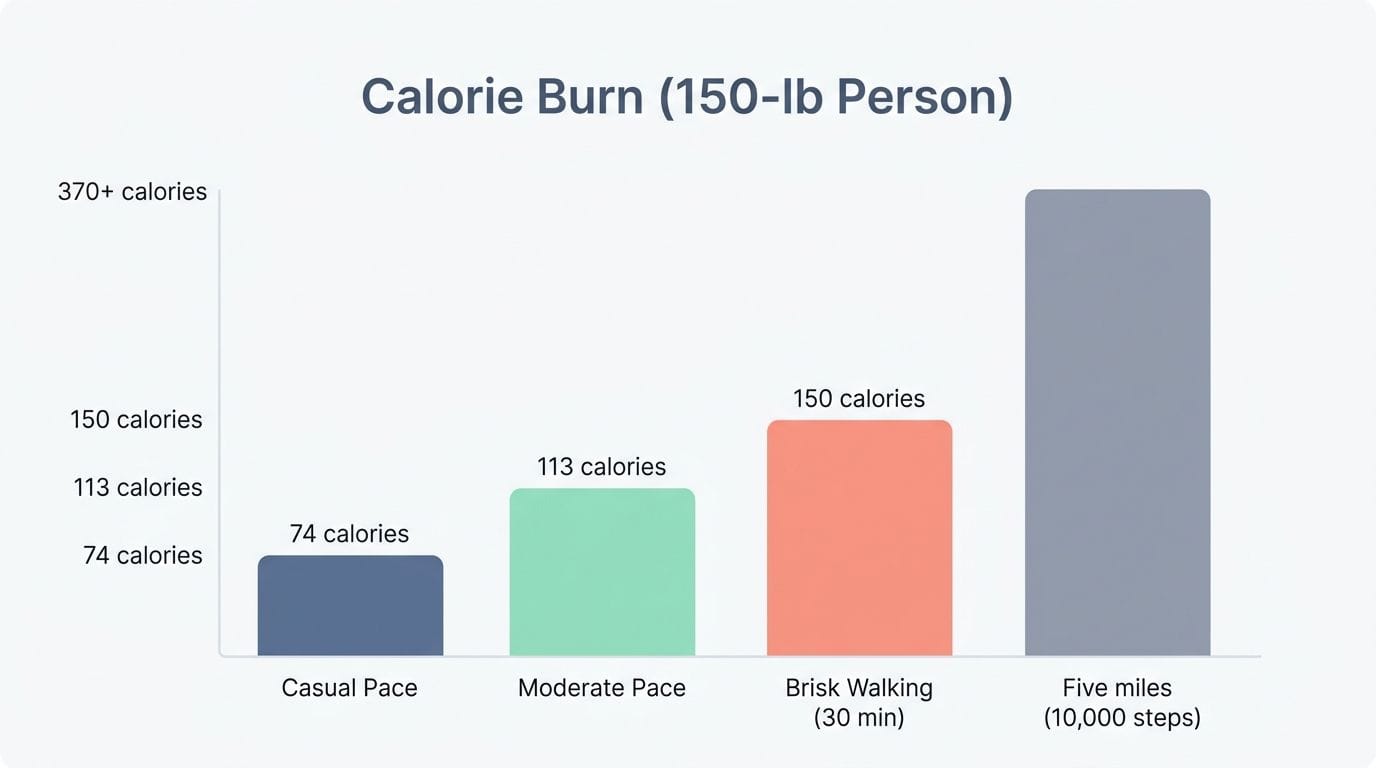
One mile at casual pace: 74 calories
One mile at moderate pace: 113 calories (52% more just from moving faster)
30 minutes of brisk walking: 150+ calories
10,000 steps (about 5 miles): 370+ calories
That last one? Do it daily, and you're looking at nearly a pound per week when combined with smart eating.
I watched my uncle Willie James drop 15 pounds in three months just from evening walks around our block. He never touched a gym.
| Walking Pace & Duration | Calorie Burn (150-lb Person) | Key Takeaway |
|---|---|---|
| One mile in 20 minutes (casual pace) | 74 calories | Easy, sustainable option for beginners |
| One mile in 15 minutes (moderate pace) | 113 calories | Speed matters; faster burns more |
| 30 minutes of brisk walking (3.5-4 mph) | 150 calories | Sweet spot for meaningful fat loss |
| Five miles total (10,000 steps) | 370+ calories | Daily target adds up quickly |
| Heavier body weight | More calories burned | Your current weight works in your favor |
Your Body Keeps Burning After You Stop
Here's something most people don't know: your body burns extra calories for hours after you finish walking.
That's called EPOC (excess post-exercise oxygen consumption), and it's basically free calorie burn while you sit on your couch.
Walking also builds and maintains muscle tissue.
Muscle burns calories even when you're sleeping. More muscle means higher metabolism all day long.
And unlike extreme workouts that leave you wiped out and craving pizza, walking doesn't trigger crazy hunger.
You burn calories without wanting to eat everything in sight afterward.
Three Types of Walking That Actually Work
Brisk Walking (The Sweet Spot)
Brisk walking means about 3.5 to 4 mph. You breathe harder but can still chat with a friend. This is your bread and butter for consistent fat loss.
Start with 15-20 minutes and work up to 30. Five days a week. That's it.
The difference between casual strolling and brisk walking is huge for results.
Interval Walking (The Secret Weapon)
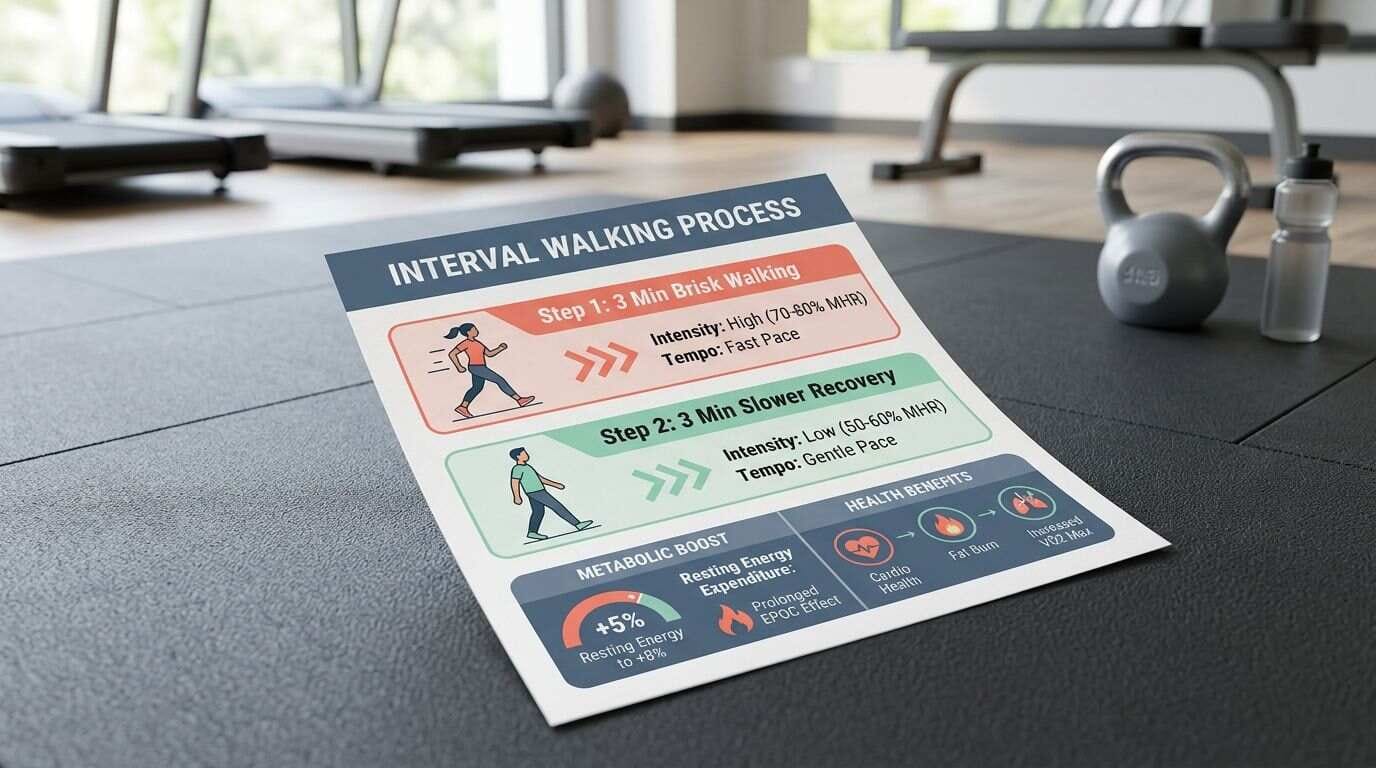
This one changed everything for me. Walk fast for 30-60 seconds, then slow for 1-2 minutes. Repeat.
Your metabolism gets a real boost from those quick bursts.
Studies show alternating 3 minutes of brisk walking with 3 minutes of recovery increases your resting calorie burn by 5-8%.
Steady walking only bumps it up 2-3%.
The time flies by because your mind stays engaged. Way better than staring at a treadmill screen.
Incline Walking (The Calorie Killer)
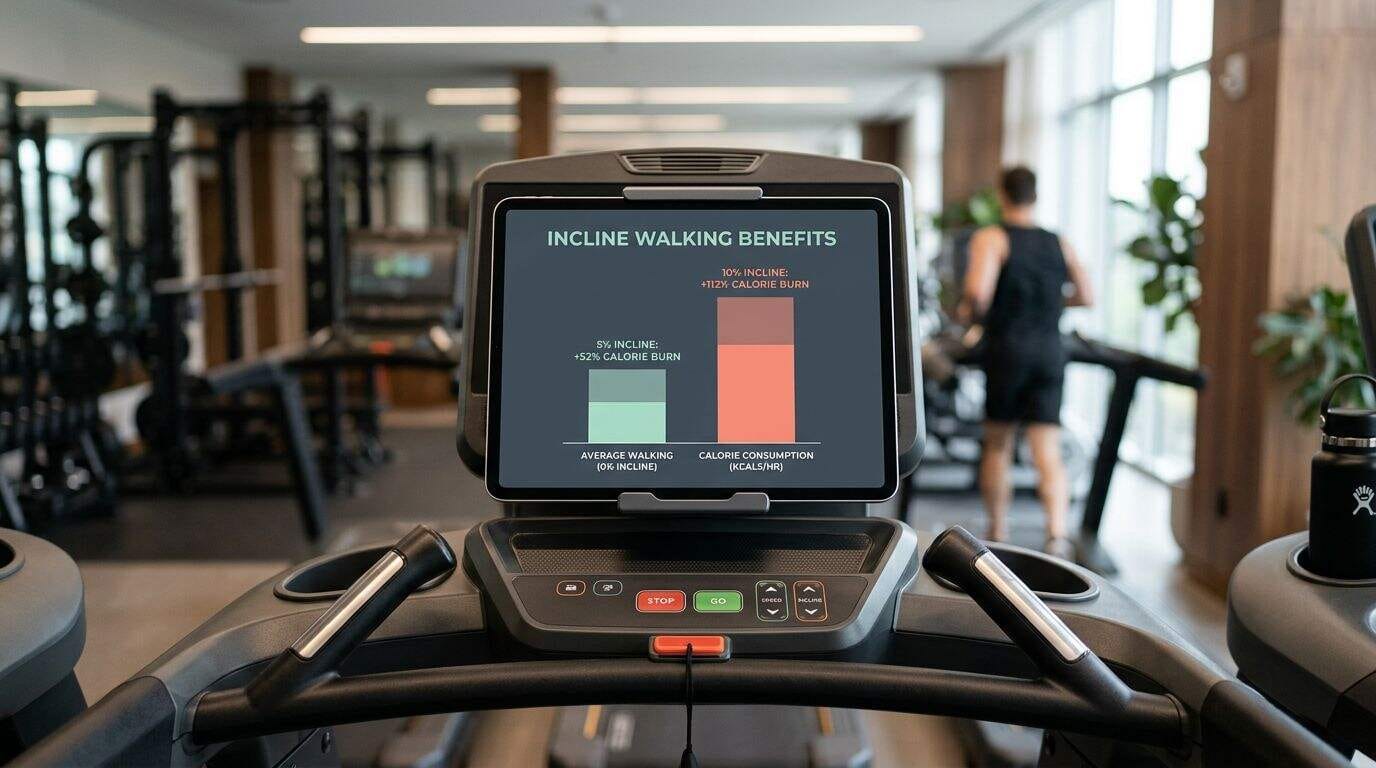
Hills change everything. A 5% incline increases calorie burn by 52%. A 10% incline more than doubles it with a 113% increase.
Find a hill in your neighborhood. Or stairs. Or set the treadmill to incline if you have one at home.
Your glutes, quads, and calves work harder, which means more calories disappear.
I started walking the hill behind my house twice a week.
My legs got noticeably stronger within a month, and the scale started moving again after hitting a plateau.
How to Make Walking Work Better
Small changes to how you walk, and what you do before and after, can make a real difference in how much weight you shed.
Here's what actually works.
Stay Consistent (This Matters Most)
The people who succeed aren't the ones who push hardest for two weeks. They're the ones who show up day after day.
Here's how to build the habit:
Start with 10-15 minutes daily
Add 5 minutes each week until you hit 30
Aim for 5 days a week
Track your progress somehow
Missing a day happens. Missing two days in a row breaks the habit. Get back out there.
Add Some Weight
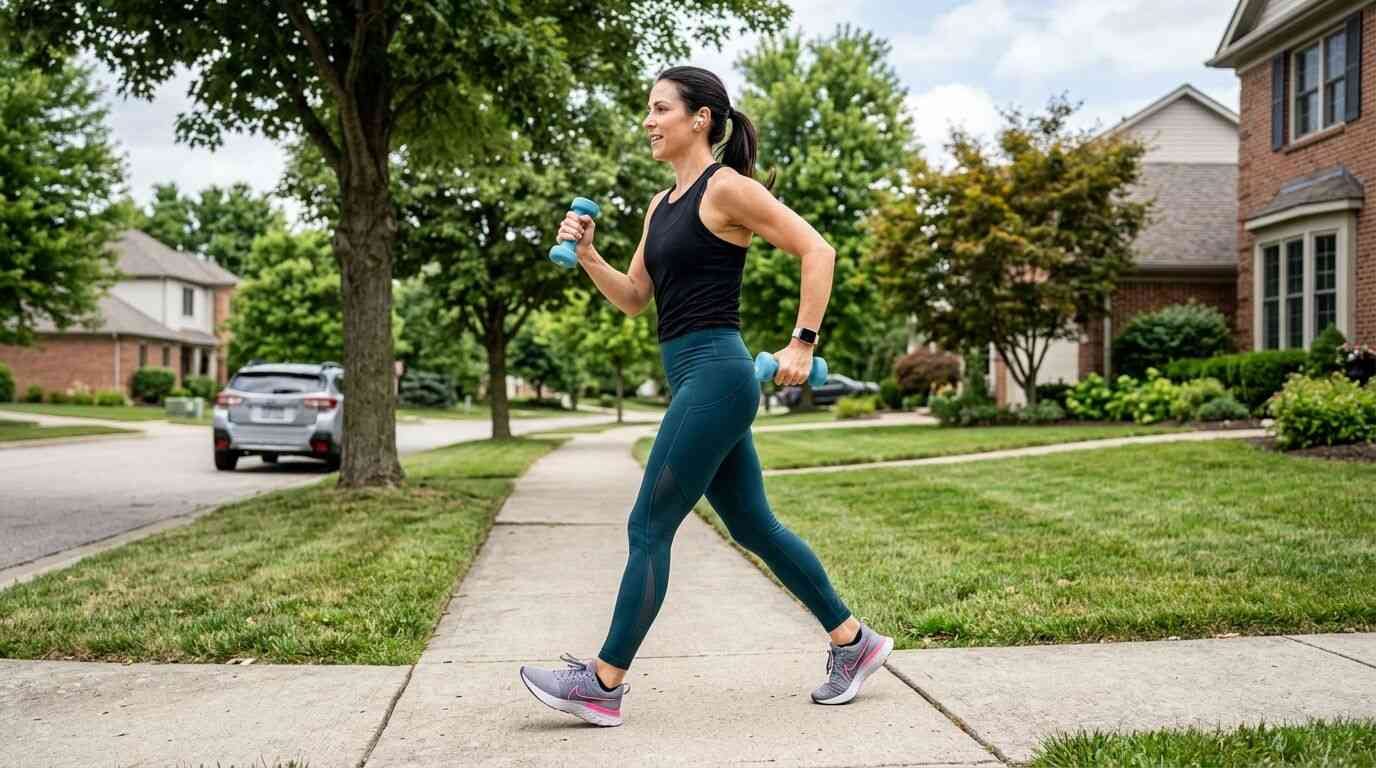
I started carrying light hand weights on my walks a few months back. Noticed a difference in how my clothes fit within weeks.
A weighted vest equal to about 15% of your body weight increases calorie burn by roughly 12%.
Hand weights work too. Even a backpack with some books makes a difference.
Hills and stairs add natural resistance without carrying anything extra.
Walk Like You Mean It
Good posture turns your walks into better calorie burners:
Head up, looking forward
Arms swinging naturally with a slight elbow bend
Core engaged, back straight
Roll from heel to toe with each step
Wear comfortable shoes. Warm up slow, cool down slow. Stretch afterward if you want to keep going tomorrow.
Why Walking Beats the Gym for Real People

Your heart gets stronger with every step.
The American Heart Association says 150 minutes of moderate activity per week keeps your cardiovascular system healthy.
Walking gets you there.
But here's the bonus: walking cuts stress right out of your day. Your mood improves. Your thinking gets sharper. You sleep better at night.
Social walks with friends add extra benefits. Music makes the time go faster. Outdoor routes beat indoor every time for stress relief.
That improved mental outlook is what keeps you going long term.
You feel better, you stick with it, and the weight loss follows.
The whole thing works together.
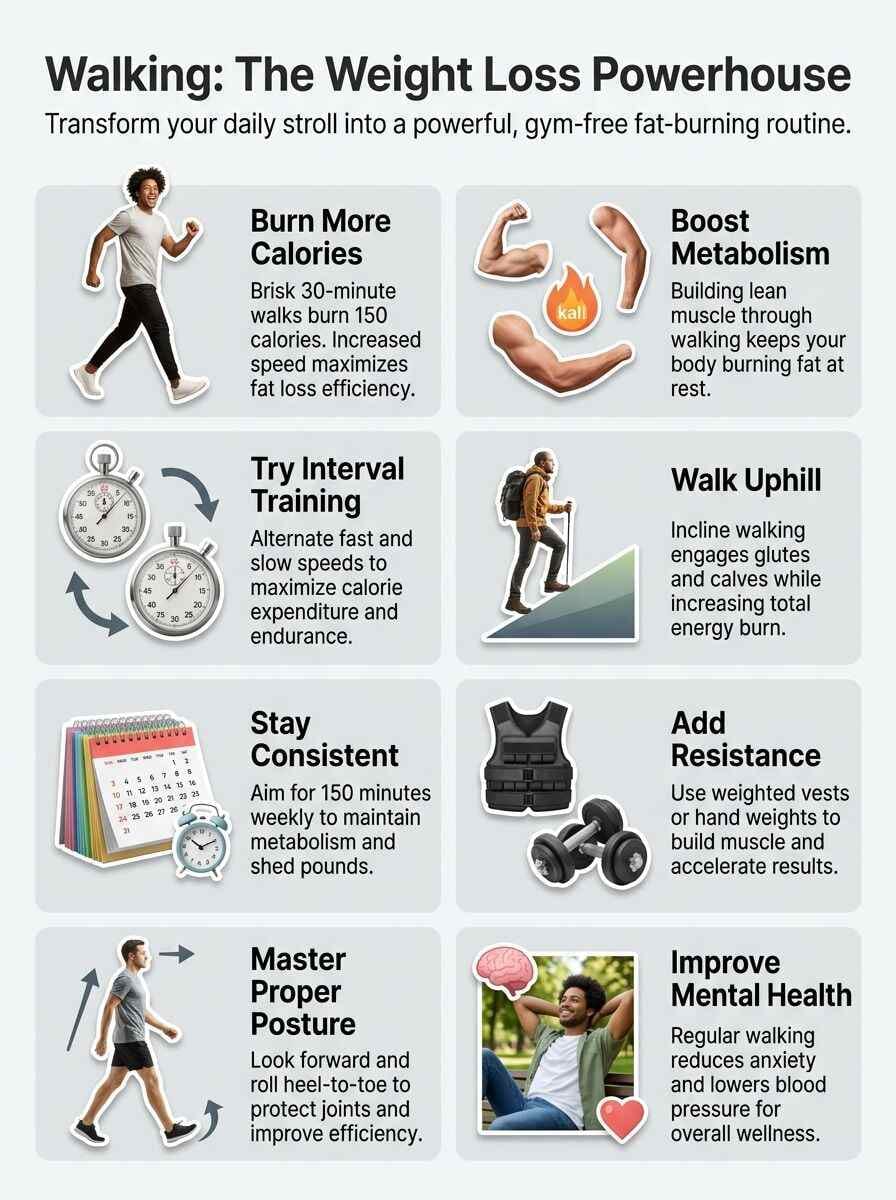
Your Walking Game Plan
You don't need a gym membership to drop pounds and feel great.
Start with 15 minutes tomorrow. Pick a time that works - morning, lunch break, or after dinner.
Doesn't matter when; just pick one and stick with it.
Walk at a pace where you breathe harder but can still talk. Add 5 minutes each week. Throw in some hills when you're ready.
Pair your walks with eating real food instead of processed junk. Stay consistent. The results will show up.
Your heart gets stronger. Your stress fades. Your energy goes up. And you never had to set foot in a gym or pretend you love burpees.
That's the kind of weight loss that actually lasts.
Ready to Take This Further?
If this article showed you that the world is your gym, you’re already thinking differently than 95% of people out there.
But knowing it is one thing—having a system to execute it is another.
The Step Stack System is the exact framework I use with my readers to turn everyday "dead time" — waiting for coffee, walking to the car, pacing during a phone call — into a powerful fat-burning routine.
No gym membership.
No 5:00 AM alarm.
No willpower required.
Just a simple, proven system that works on your busiest, laziest days.
👉 Grab the Step Stack System here and start burning fat today →
Join hundreds of busy people who are already "stacking" their way to a leaner, healthier body — without ever setting foot in a gym.
FAQs
Can walking really help with weight loss?
Absolutely! Research from the Journal of Nutrition and studies on pmc.ncbi.nlm.nih.gov show that walking 30 minutes daily can help you burn around 150 calories. That adds up to real weight loss over time, no gym required.
How does walking fit into a healthy diet plan?
Walking pairs perfectly with programs like the Mayo Clinic Diet because it helps you burn extra calories while you focus on eating better.
Does Medicare or Medicaid cover walking programs for weight loss?
Some Medicare Advantage plans and certain Medicaid programs do cover fitness benefits like SilverSneakers. Check your specific plan or visit AARP the Magazine's website for details on what's available in your state.
How can I stay motivated to keep walking every day?
Make it fun by treating it like a game, track your steps with an app, or try AARP's Staying Sharp program to set goals and celebrate your progress.
Are there risks of fraud in online walking or weight loss programs?
Yes, scammers target people looking for quick fixes, so stick with programs backed by real research and always use a secure browser when signing up. If a deal sounds too good to be true, it probably is.
A Quick Word from Weight Loss with Ken
Just so you know, I'm here to empower you with knowledge, not to replace your doctor. The ideas in this article are for your information and education. Before you make any changes to your health routine—be it diet, exercise, or anything else—please have a chat with your physician or a qualified healthcare professional. Your health is your greatest asset, so let's manage it together with the right team.
Created with ©systeme.io