How to Start Exercising When You Hate Working Out
The gym was never your thing. Maybe you tried it once. Maybe the sweaty machines, the fluorescent lights, and the feeling of being watched sent you straight back to your car.
Maybe you never even walked through the door because you already knew it wasn't for you.
That doesn't make you lazy. It means you haven't found the right way to move yet.
Exercise doesn't have to mean a gym membership or a trainer pushing you past your limit.
Your body can move in more ways than most people realize, and some of those ways will actually feel good.
Walking, dancing, hiking, cycling, shooting hoops, and gardening in your backyard all count.
The CDC confirms that regular movement prevents heart disease and strengthens your body.
And your brain releases natural chemicals that lift your mood and calm your nerves during any kind of movement, not just gym sessions.
You get to choose what that looks like. That's the whole point.
Before We Get Into It - A Quick Story
I know what a packed schedule feels like.
I spent over 28 years as a wastewater treatment plant operator, working long shifts, coming home dragging, eating whatever was fast, and telling myself I'd get back on track tomorrow.
When I finally did try to build a routine again, I made it harder than it needed to be.
I forced myself into workouts I hated. I pushed too hard too fast. I burned out before anything stuck. The weight stayed on. The energy stayed low.
The shift happened when I stopped fighting what didn't work and started doing what I actually liked.
Walking every day. Getting back on the basketball court. Moving in ways that made sense for my body and my schedule.
The weight started coming off. My energy came back. And I stopped dreading movement altogether.
That's what I want to help you find.
Why It's So Hard to Start Exercising When You Hate Working Out

Here's something worth knowing before you blame yourself for skipping another session.
A 2018 study from the University of British Columbia, published in Neuropsychologia, found that the human brain is literally wired to choose rest over movement.
Picking physical activity over staying still actually takes more brain power.
That's not a personal flaw; that's millions of years of biology doing exactly what it was built to do.
So when you choose the couch over the sneakers, your brain is functioning normally.
The real problem is that most traditional fitness options don't fit most real people.
Treadmills, crowded classes, trainers who push too hard, and gym schedules that don't match your life - none of that works for everyone.
And if it hasn't worked for you, your brain learned to say no. That makes complete sense.
You're not broken. You just haven't found the right fit yet.
What Moving Your Body Actually Does for You
Most people focus on the scale and miss everything else that starts changing first.
The CDC confirms that regular movement of any kind lowers your risk of heart disease, diabetes, and weight gain.
And according to research published in BBC Science Focus, what people call the "runner's high" isn't actually caused by endorphins.
It comes from endocannabinoids, natural chemicals your body produces that reduce anxiety and create that calm, clear feeling during and after exercise.
Endorphins can't cross the blood-brain barrier the same way. Endocannabinoids can. That's why a short walk can completely shift your mood.
Here's a rough timeline of what to expect when you start moving consistently:
Within the first hour, a noticeably calmer mood
Within the first week, better sleep
Two to three weeks in, more energy during the day
First month, clothes starting to fit differently
These changes show up before the scale moves.
That matters because they give you a real reason to keep going, long before weight loss becomes obvious.
Understanding What's Really Stopping You
Before you can fix the problem, you have to name it. Most people blame willpower. That's usually not what's actually going on.
The Real Reasons People Skip the Gym
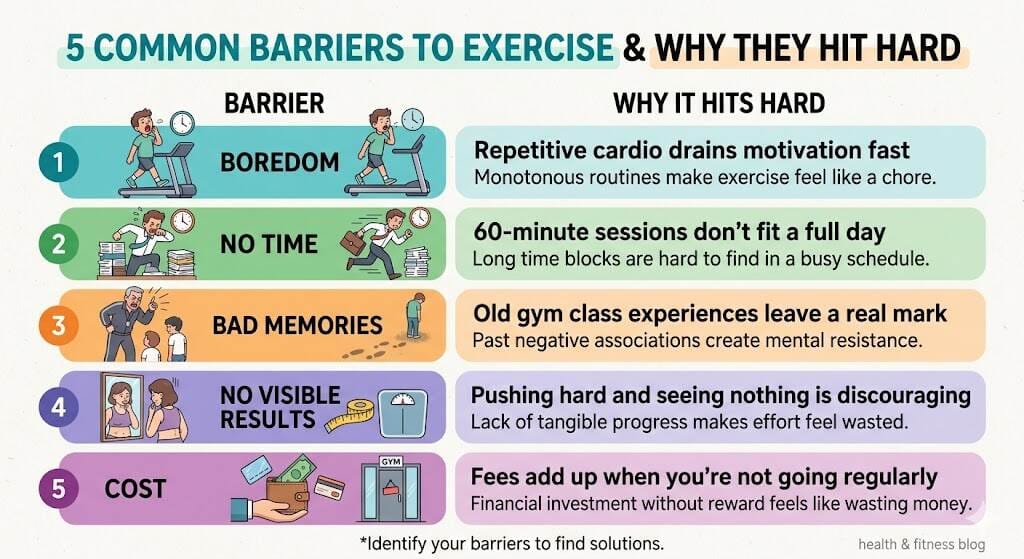
Boredom tops the list. Running on a treadmill while staring at a wall for 30 minutes is genuinely hard for most people to enjoy.
And once it stops being fun, it stops happening.
Tight schedules make it worse. Work, family, and everything else fill the day fast.
A 2026 ZipDo industry report on gym statistics found that traditional gym memberships carry a 25% cancellation rate.
Of those who quit, 30% left because of time constraints, and 25% left because they saw no results.
That's a lot of people walking away from a model that simply wasn't built for their real life.
The Mental Blocks That Hold You Back
Your brain holds onto past experiences, especially the painful ones.
If gym class was humiliating, or the last time you pushed hard you felt sick for two days, your brain filed that away.
Now every time you think about working out, that warning system fires before your body even tries.
You might tell yourself you hate exercise. But what you really hate is the version of it that felt like punishment.
Here's what actually helps: you don't fix your mindset first and then start moving.
You move in a way that feels at least tolerable, and the mindset shifts on its own.
Movement is the medicine, not the reward for getting your head right first
Finding Activities You Actually Enjoy When You Hate Working Out
This is the most important step. Stop forcing yourself into a routine that never fits.
Start looking for movement that makes you want to show up.
Try New Activities Until Something Clicks
You don't need a gym to get real results. You just need something that makes time pass without you watching the clock.
Walking costs nothing, takes 15 minutes to start
Dancing burns real calories, and you'll actually enjoy the music
Team sports turn exercise into social time with other people
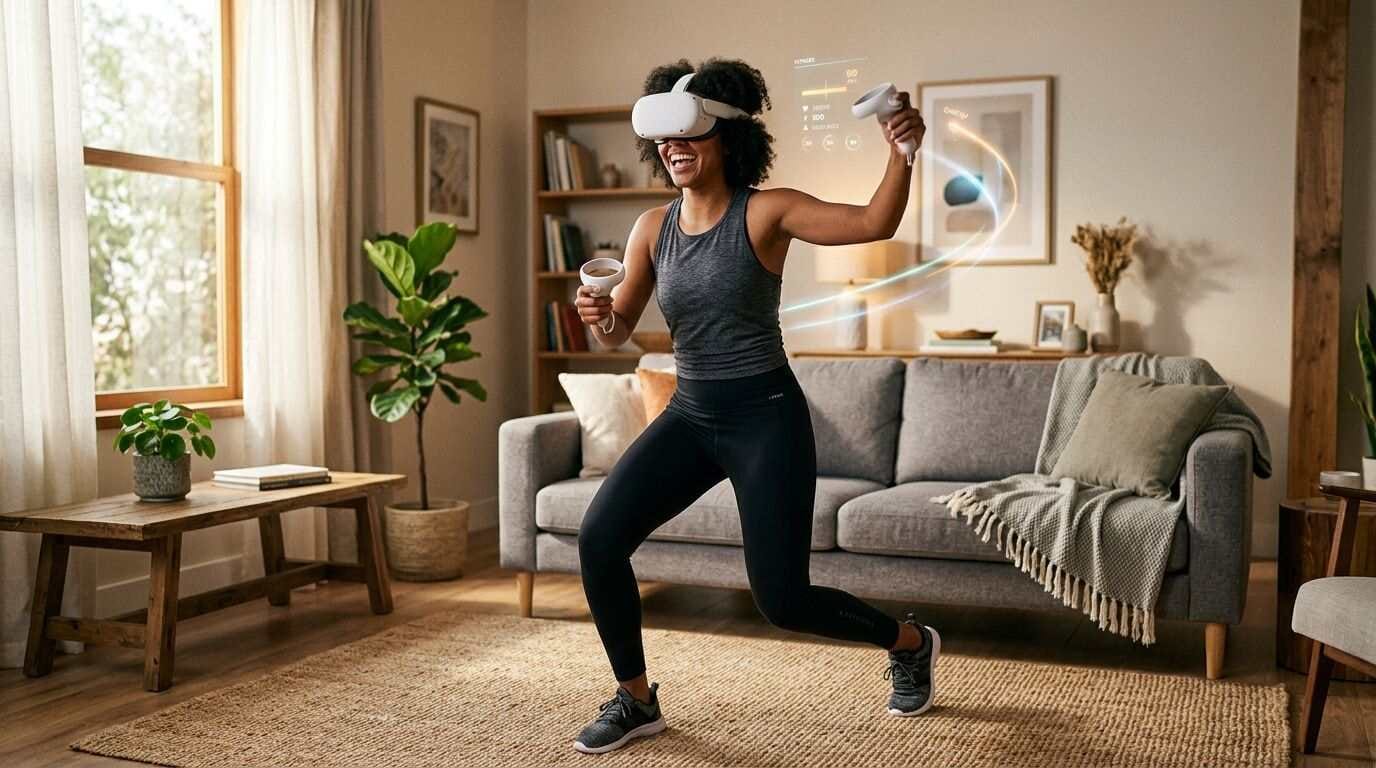
Active video games are a great and fun way to pass the time and get good results.
A 2026 VR fitness market report found that VR fitness games burn 8 to 12 calories per minute, which rivals traditional treadmill running.
Your brain just doesn't notice because you're having fun.
A two-week experiment was conducted to see exactly how different groups of people responded to different types of exercise.
The experiment worked better than most people expected.
A group of self-described gym-haters tested four different low-barrier activities, two weeks on each.
Fourteen people started, and ten completed at least three of the four activity blocks.
Average sessions lasted around 22 minutes, and enjoyment scores jumped from a 3 out of 10 to a 7 out of 10 by week eight.
One participant said it well: "Trying short, two-week tests let me drop what I hated and keep what felt fun."
Try one activity this week yourself. Pick something that sounds even a little bit interesting.
Try it for two weeks. If it's not clicking, try something else.
Mix Fitness with What You Already Love
You don't have to reinvent your schedule. You just have to look at what you already enjoy and ask: is there a way to move while I do this?
Love music? Dance to it in your living room.
Love your neighborhood? Walk it with someone you like talking to.
Love the outdoors? Hike a trail, kayak a nearby lake, or garden. Yes, gardening counts.
Love competition? Find a casual sports league.
Some other ideas worth trying:
Casual cycling around the neighborhood
Rock climbing with a friend
Mall walking with a family member
Shooting hoops with friends
When movement becomes part of what you already like doing, it stops feeling like a chore.
Your brain connects it to something good. And that connection is what keeps you coming back.
Setting Goals That Don't Set You Up to Quit
Going from zero to five days a week almost always ends the same way - a hard push, burnout, then nothing.
Your body and your schedule need a slower ramp-up, and that's not weakness. That's smart.
Start Ridiculously Small — It Works
Ten minutes. That's the starting point. Walk around your block. Dance to three songs. Find a quick movement video on YouTube that doesn't feel like torture.
These count as real exercise and real progress.
People who started with 10-minute sessions and tracked their effort saw their weekly activity climb from 30 minutes in week one to 95 minutes by week six, with only 8% dropping out along the way.
One person summed it up: "Small, daily wins added up faster than any strict plan I tried before."
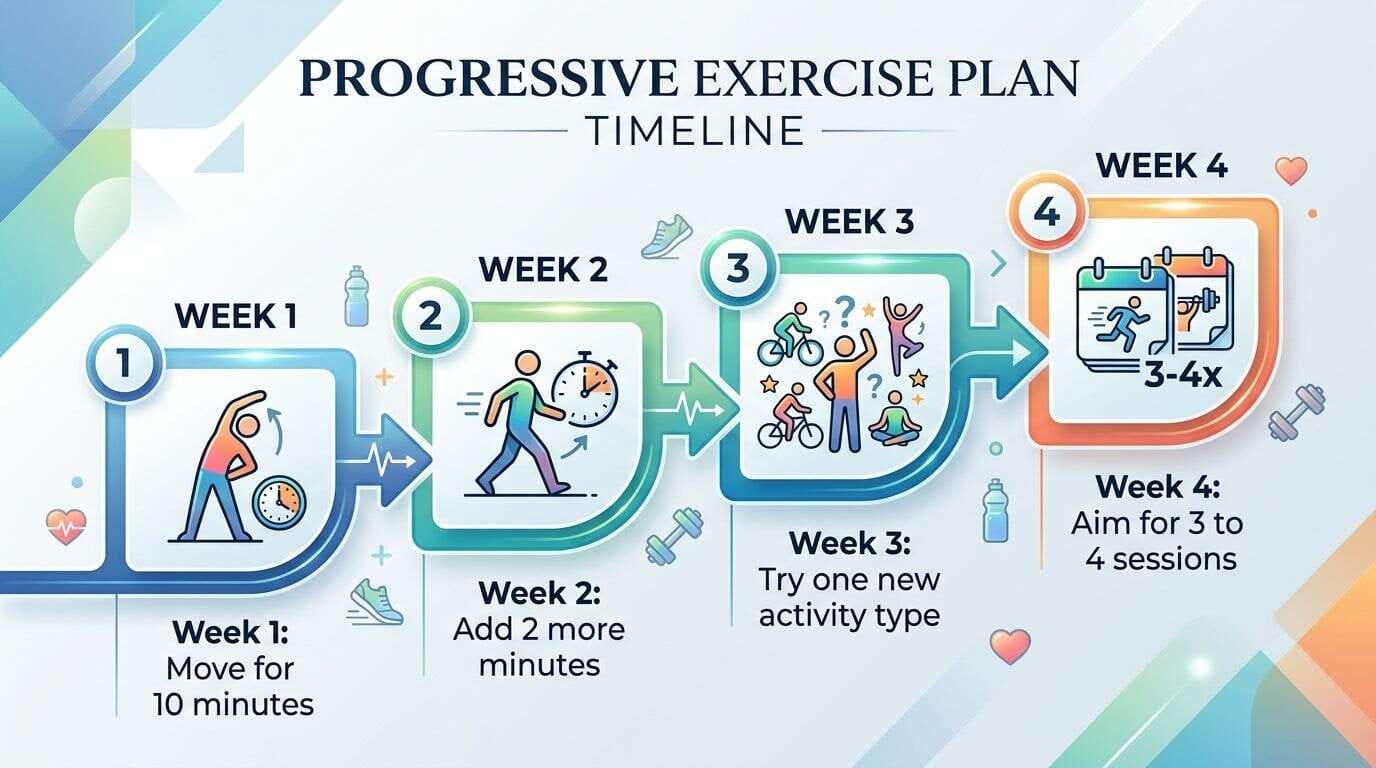
Here's a simple way to build over your first four weeks:
Week 1: Move for 10 minutes, 2 to 3 times
Week 2: Add 2 minutes to each session
Week 3: Try one new type of activity
Week 4: Aim for 3 to 4 sessions
One small addition each week. Not five. Just one.
Why Every Small Win Matters
The scale usually isn't the first thing that changes. Your energy might spike before the weight comes off.
Your mood might shift after just a few sessions. Your clothes might fit differently before the number moves.
These are real results, and if you ignore them, you'll think nothing's working when everything actually is.
Write down what you did. Tell a friend. Take a photo. Drop a dollar in a jar every time you complete a session and spend it on something fun at the end of the month.
These small habits tell your brain that movement brings good things, and your brain starts wanting to come back for it.
Building a Routine That Fits Your Real Life
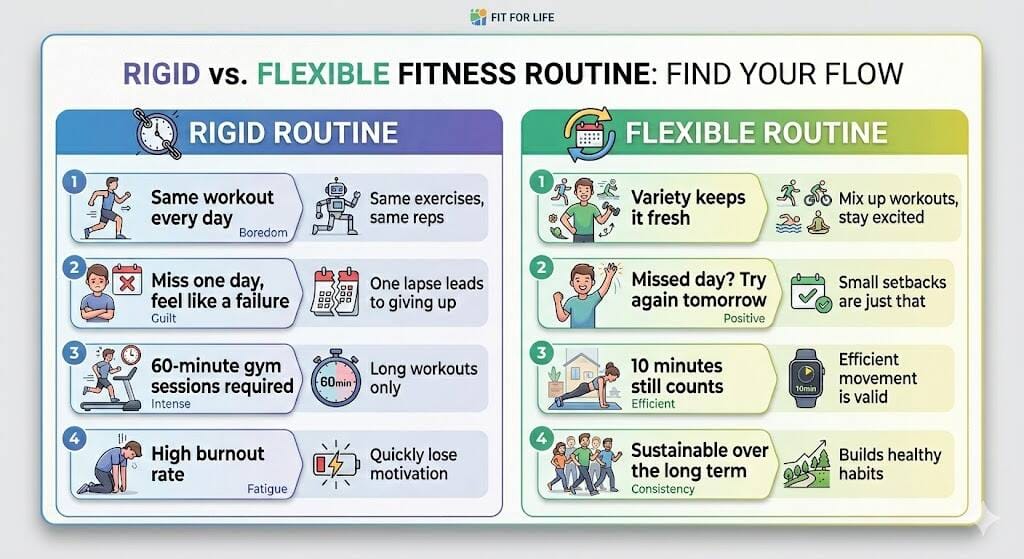
Three sessions a week beats five sessions you dread and eventually quit. Consistency matters more than intensity when you're starting out.
Build in variety so boredom doesn't kill your momentum. Walk one day. Dance the next. Shoot hoops on the weekend.
Your routine should bend with your life, because your life won't stop just because you're trying to build a habit.
Find Your Accountability Crew
Tell someone what you're trying to do. Not to impress them, just to create a small reason to follow through.
An accountability pair who switched from solo gym attempts to outdoor walks with simple text check-ins averaged 3.2 sessions per week.
That's up from about one per week when they went it alone.
Their motivation jumped 60%, and one of them noticed better sleep within two weeks.
One explained it this way: "Having one friend who notices makes skipping feel like a choice, not an accident."
Family works too. A sibling who checks in, a spouse who walks with you, or a friend who's trying to do the same thing.
These people see you regularly and notice when you're showing up. That matters more than most people realize.
And online communities, local walking groups, and weight loss forums can fill that same role if your immediate circle isn't available.
Making It a Habit You Actually Keep
Track Your Progress the Simple Way
You don't need a fancy app. Snap a photo every two weeks. Write down how your clothes feel. Note when the stairs feel easier to climb.
These markers show real change that the scale won't always capture.
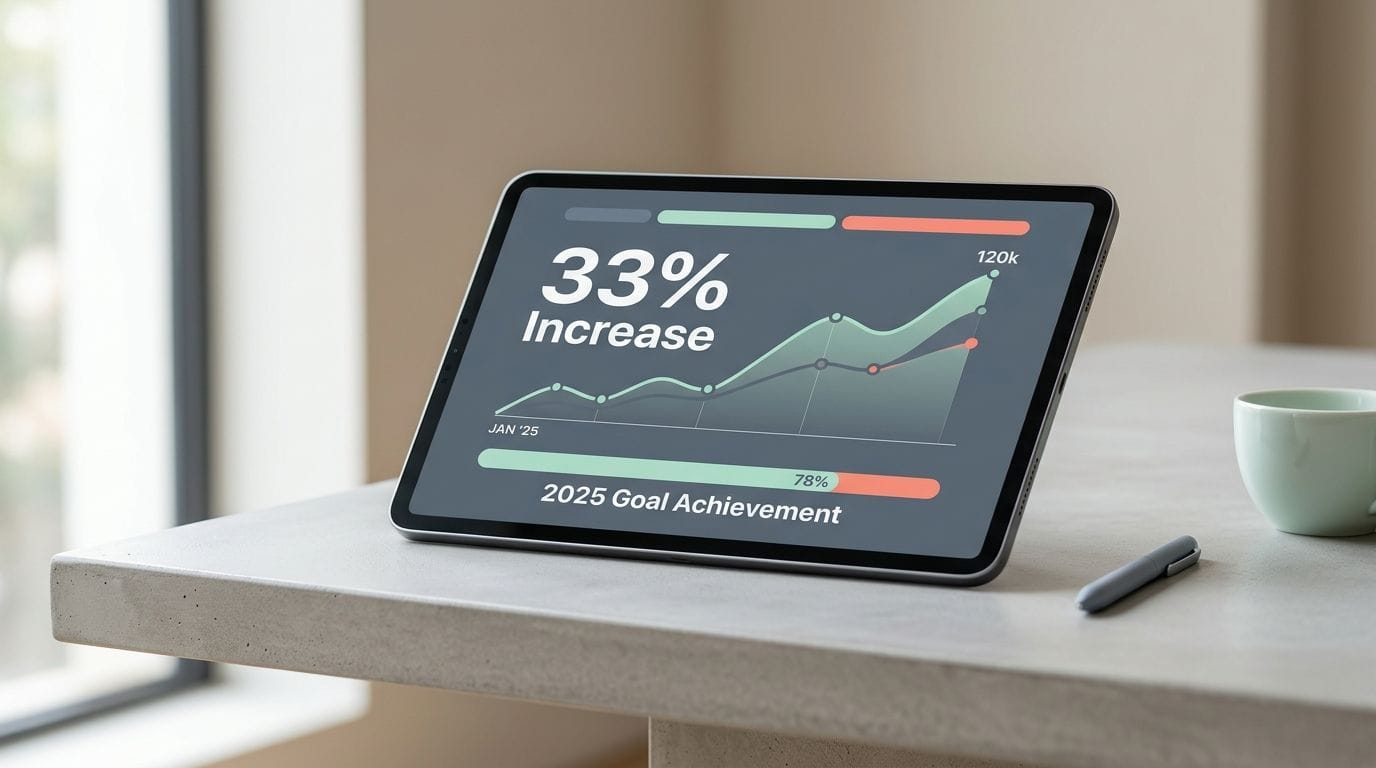
A 2025 behavioral psychology research shows that setting specific, measurable goals and physically tracking them increases achievement rates by up to 33%. That's not a small bump.
Even three sentences in a notebook after each session works.
The point is to see what's happening so your brain stays interested. When you see progress, even small progress, it wants more of it.
After a full week of moving your body, give yourself a reward.
Not food, but something that actually feels good. A movie night, a new book, a long bath.
That positive connection between effort and reward is what turns exercise from something you dread into something you look forward to.
Conclusion
You don't have to enjoy the gym to get healthy. You don't have to run a mile, follow a strict schedule, or do workouts that make you miserable. You just have to move.
Pick one thing that sounds even a little bit okay, and do it for ten minutes today. That's where this starts.
Small steps build real habits. Real habits build real results. And real results are what make you want to keep going.
One step at a time. You've got this.
Ready to Take This Further?
If you’re done with the 'no pain, no gain' culture and ready for a smarter, lower-friction approach to fat loss, you’re in the right place.
The Step Stack System is designed for your worst, laziest days—not just your best ones—so that progress becomes automatic even when motivation is low...
No gym membership.
No 5:00 AM alarm.
No willpower required.
Just a simple, proven system that works on your busiest, laziest days.
👉 Grab the Step Stack System here and start burning fat today →
Join hundreds of busy people who are already "stacking" their way to a leaner, healthier body — without ever setting foot in a gym.
FAQs
Why do so many people hate working out?
Most people hate working out because traditional fitness feels hard, boring, or like it was designed for someone else. A 2024 IHRSA survey found that nearly 50% of new gym members quit within six months. You're not broken — you just haven't found the right fit yet.
How do fitness experts suggest starting small?
Start with just 10 minutes a day. Fitness writer Melanie Radzicki McManus says small steps like this are what build real habits over time — and the data backs that up consistently.
What is the easiest way to start exercising when you dread it?
Pick a movement you don't hate — even just walking. The CDC recommends walking as one of the safest and most accessible starting points for beginners. Do it at the same time each day and it starts feeling normal faster than you'd think.
Can you actually learn to like exercise?
Yes. Research from University College London found it takes an average of 66 days for a new behavior to become automatic. Give yourself time, keep it simple, and celebrate every win along the way. The consistency gets you there — not the intensity.
Resources
A Quick Word from Weight Loss with Ken
Just so you know, I'm here to empower you with knowledge, not to replace your doctor. The ideas in this article are for your information and education. Before you make any changes to your health routine—be it diet, exercise, or anything else—please have a chat with your physician or a qualified healthcare professional. Your health is your greatest asset, so let's manage it together with the right team.
Created with ©systeme.io